
Narrow Margin, 1952
Manhattan Melodrama (1934)
Return to Glennascaaul (1952, a short with Orson Welles)
Having spent the long weekend with best friend Clint Morgan and his wife, I knew that I would be treated to a series of classic film options, especially of the film noir variety. After reviewing a huge list of films I had hardly heard of, we decided to see The Narrow Margin, a film that redefines taut, snarky, lean-and-mean film noir.
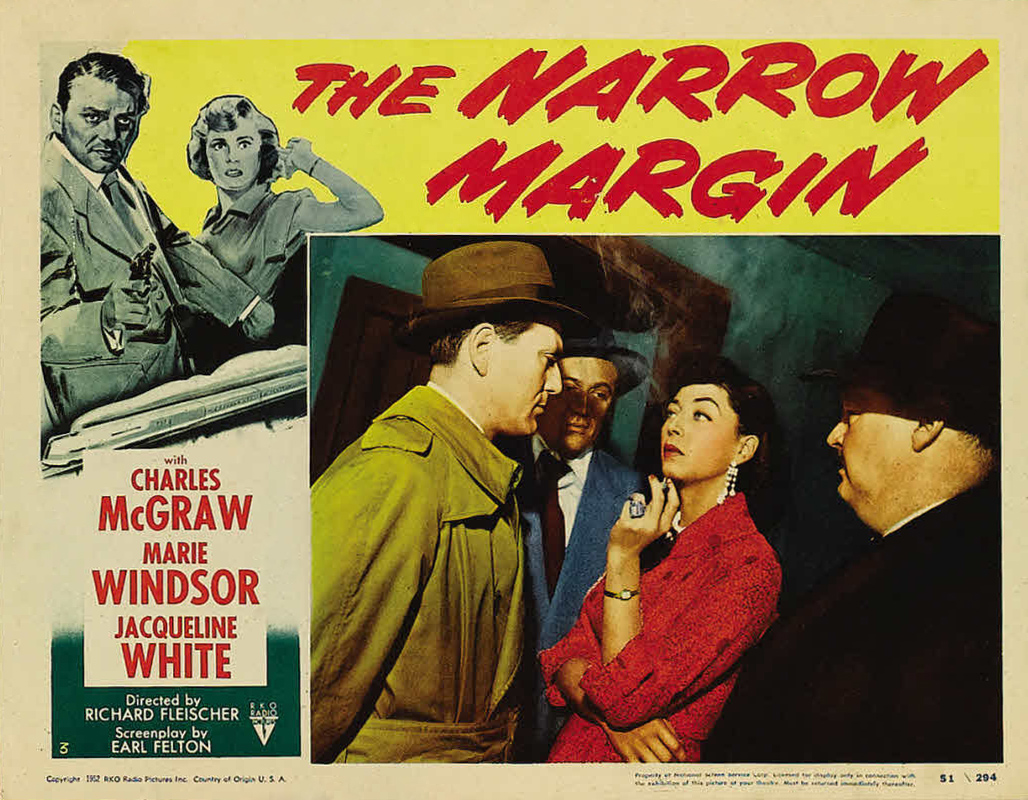
Directed by Richard Fleischer (20,000 Leagues Under the Sea, Soylent Green, Fantastic Voyage, Conan the Barbarian, Barabbas, etc., plus an Oscar for 1948’s documentary Design for Death), The Narrow Margin stars bit-or-supporting-part actor Charles McGraw in a rare lead role as a tough detective with a challenging assignment. The lead female is tough-as-nails Marie Windsor in one of her strongest performances and best parts. The dialogue between them is almost surreal in its energy, intelligence, and hard-boiled attitude. It was nominated for Best Writing, Motion Picture Story, unusual for a B-bordering-on-A picture.
In short, the story is fast and takes some fascinating turns, and the pace by Fleisher is an economical wonder. It’s well worth watching for the story, the completely unsentimental and cynical dialogue, and the ups, downs, and surprises along the way.
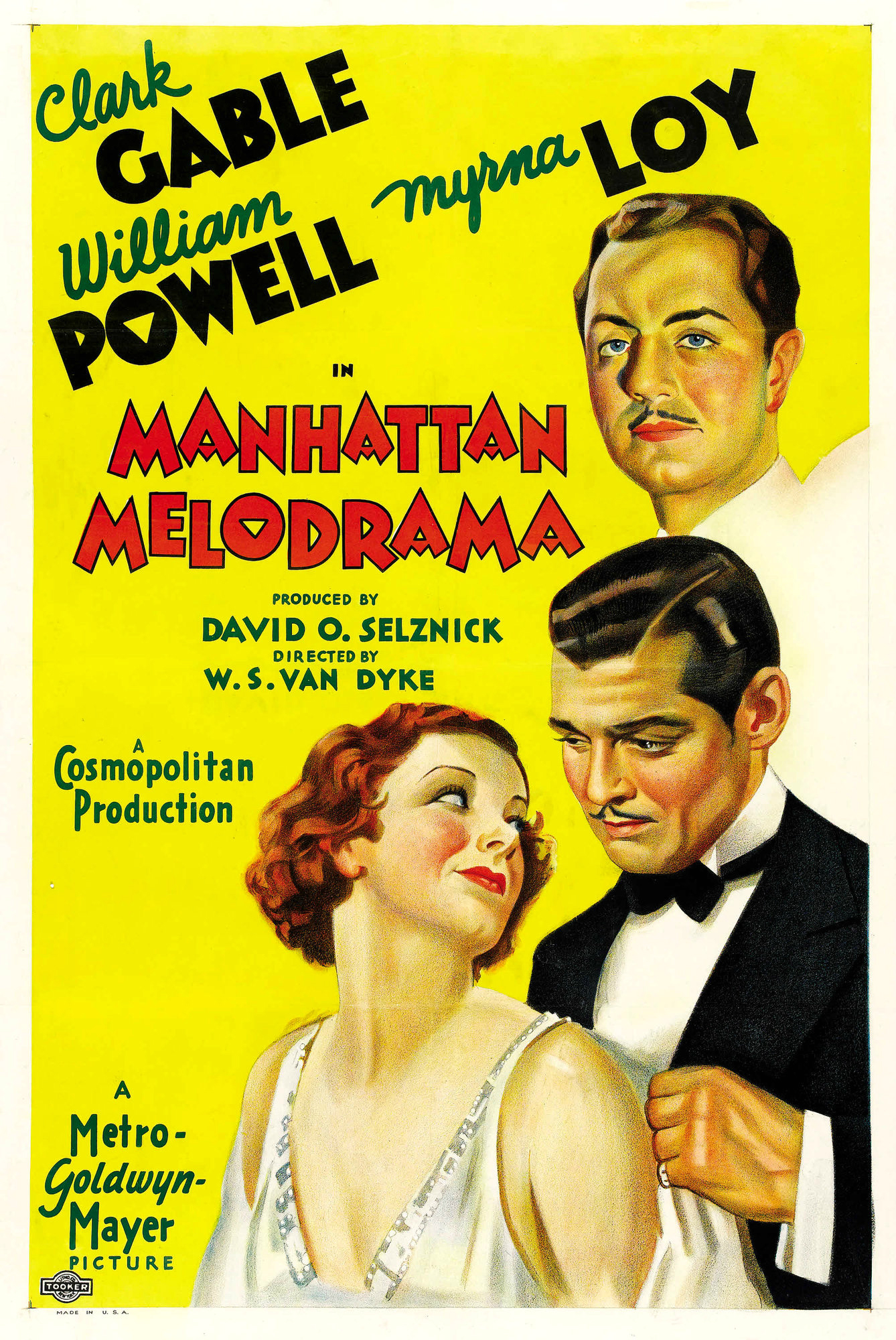
Manhattan Melodrama is perhaps best known now as the film that gangster John Dillinger had just seen before he was gunned down in Chicago. It’s also known as the first pairing of Thin Man stars William Powell and Myrna Loy. But it also stars Clark Gable, which clearly means that this is a different film, considering what was to come from the other two leads.
The credited director is W.S. Van Dyke, who went on to direct many of the Thin Man movies. But apparently Jack Conway and George Cukor had a hand in directing it as well. Film nerds, be alerted: Joseph L. Mankiewicz was one of the writers, and Donald Ogden Stewart was an uncredited one. Also, the film was produced by David O. Selznick, and the cinematography was by James Wong Howe. The name Slavko Vorkapich also jumped out at me, as he was a famous editor/special effects/montage expert who was clearly influenced with the great Soviet directors. The quickly edited montage sequences in the 1930s and ‘40s were often called “a Vorkapich.” Great names, all.
The story is one of the earlier sound films to incorporate the (eventually) tired trope of the two youngsters who are best friends, with one following a bad path and the other a good one. (Note: the young Gable is played by a very young Mickey Rooney, who went in his own unique direction). Gambler/murderer vs. clean cut and honest politician. The girl (Loy) is first tied rather unbelievably to the bad guy (Gable, of course) but leaves him for the more stable Powell, a move that is almost equally unbelievable. Rather as incredible is that the film won the Oscar for Best Writing, Original Story in what must have been a weak year (Adapted Story Oscar of course went to the classic It Happened One Night), which also featured Gable in his only Oscar-winning performance.)
I’m a big Loy fan, so it was fun to see her in anything at this time, as she is usually the smartest person in whatever film she was in. As an actress (rather than the character she’s playing), she pairs well with Powell, though the emphasis here is on drama and ethics, and lacks the dynamism she enjoyed with Powell in the Thin Man films. No spoiler alerts here, but the film seems to head in a predictable but satisfying direction when it suddenly takes a strange and confusing term that ends up with more strangeness and confusion by the end. Both Loy’s and Powell’s characters make moves we didn’t see coming and which seem out of character and out of sense. The movie ends up being a head-scratcher by the time all is said and done.
If you’re a Powell/Loy completist, you may want to see it. If you’re a Gable completist, the same thing applies. If you’re looking to see all historically important films connected to the demise of real-life gangsters, you might want to see it. But if you want a see a promising film that looks great, is edited well, and acted by three stars about to explode, but has turnabouts that only confuse, this one’s for you.
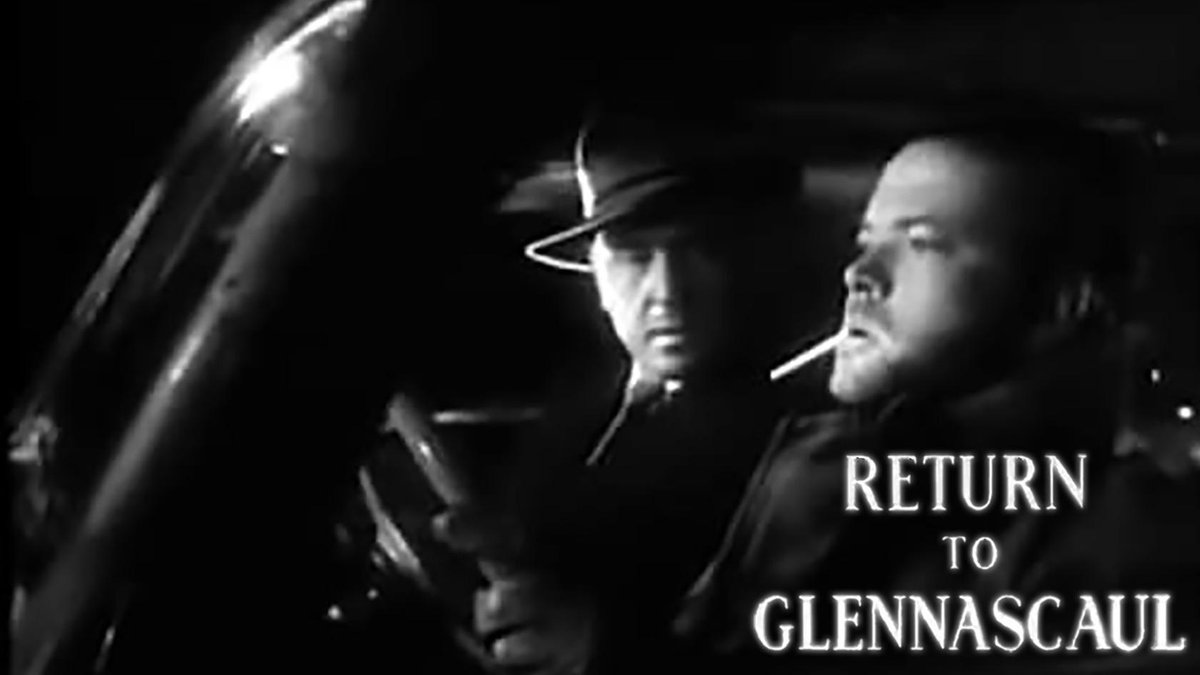
Lastly, I was introduced to the 23-minute short Return to Glennascaul, featuring Orson Welles. It’s a quaint but fun ghost story with just the right amount of action and shivers. The set-up involves the real Orson Welles picking up a person with car trouble, who tells him the spooky tale. Directed by Hilton Edwards, who was an actor first and director last, it had to have been influenced by the great Welles. No spoilers here but keep your ears open for a hysterical throwaway line by Welles early on.


 Film stuff by Mark
Your reference to your deep and long friendship with Clint filled me with joy but also a sad kind of envy for my three darlings from the NYC years who left me too soon for glory: Jenny, Pat and Melinda. All three brought sweet intensity to my life that really has been irreplaceable.
Blessings. Jerilyn