
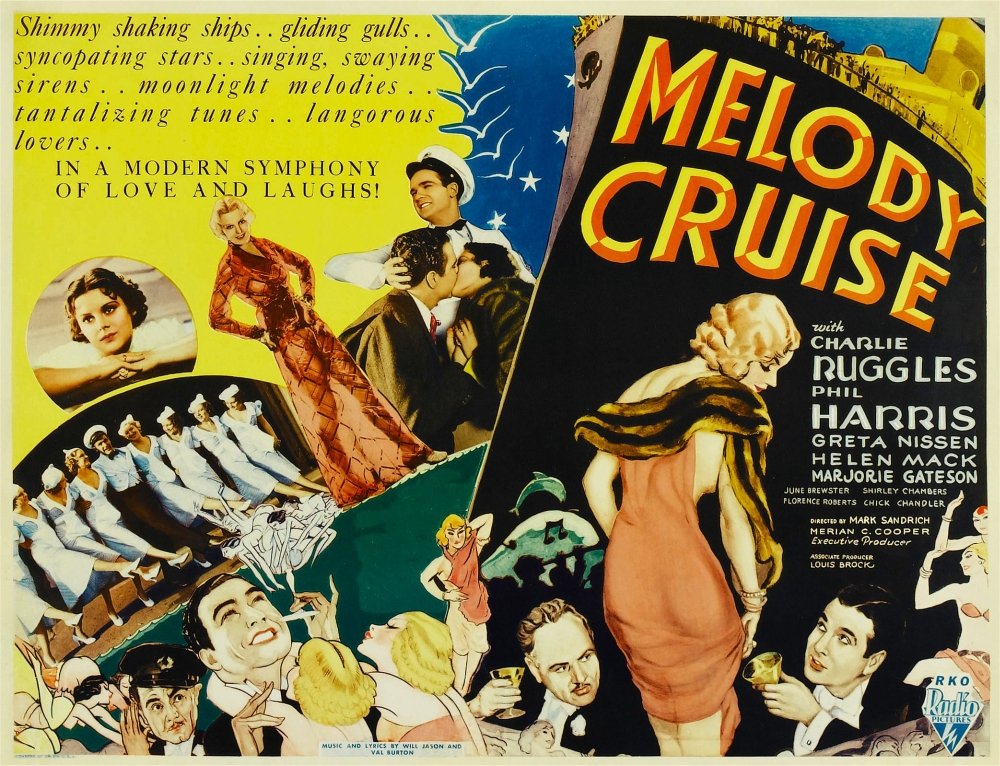
Melody Cruise is a delightful, one-of-a-kind film that’s not quite a musical (but is), not quite a romantic comedy (but is, sort of), a very Pre-Code film (which is definitely is), and a crazy blend of cinematic experimentation and sheer lunacy. For those with any interest in early ‘30s musicals, the work of director Mark Sandrich (who went on to do many of the Astaire/Rogers musicals), or who wonder what a Pre-Code comedic film looks like, this is your chance. It’s nuts, but a great deal of fun.
What most critics have pointed out over the years are the visually arresting ways Sandrich moves from one scene to another. Simple cuts or fades don’t work here. Yes, it can all can seem a bit much, but it is not only fascinating to see an American, working for a major studio (RKO), who dared to do such experimenting in a mainstream film; it is like René Clair on steroids at times. But those who stop at calling it simply experimenting or using cinematic tricks for their own sake, they are overlooking the fact that how one scene moves into another helps keep this film moving so briskly and entertainingly along.
And it often needs that kind of help moving things along. The plot is borderline ridiculous, especially by today’s standards. We have a man who is determined to never get married (you know the end already), an older man/mentor who is determined that he not get married (for his own selfish reasons), and a couple of scantily clad young ladies that somehow (!) end up in the stateroom of the older man. Then, we have sitcom like misunderstandings, etc. It’s all silly and literally incredible. But again, the film has an ace up its sleeve: while never mocking itself, it never comes close to taking itself too seriously.
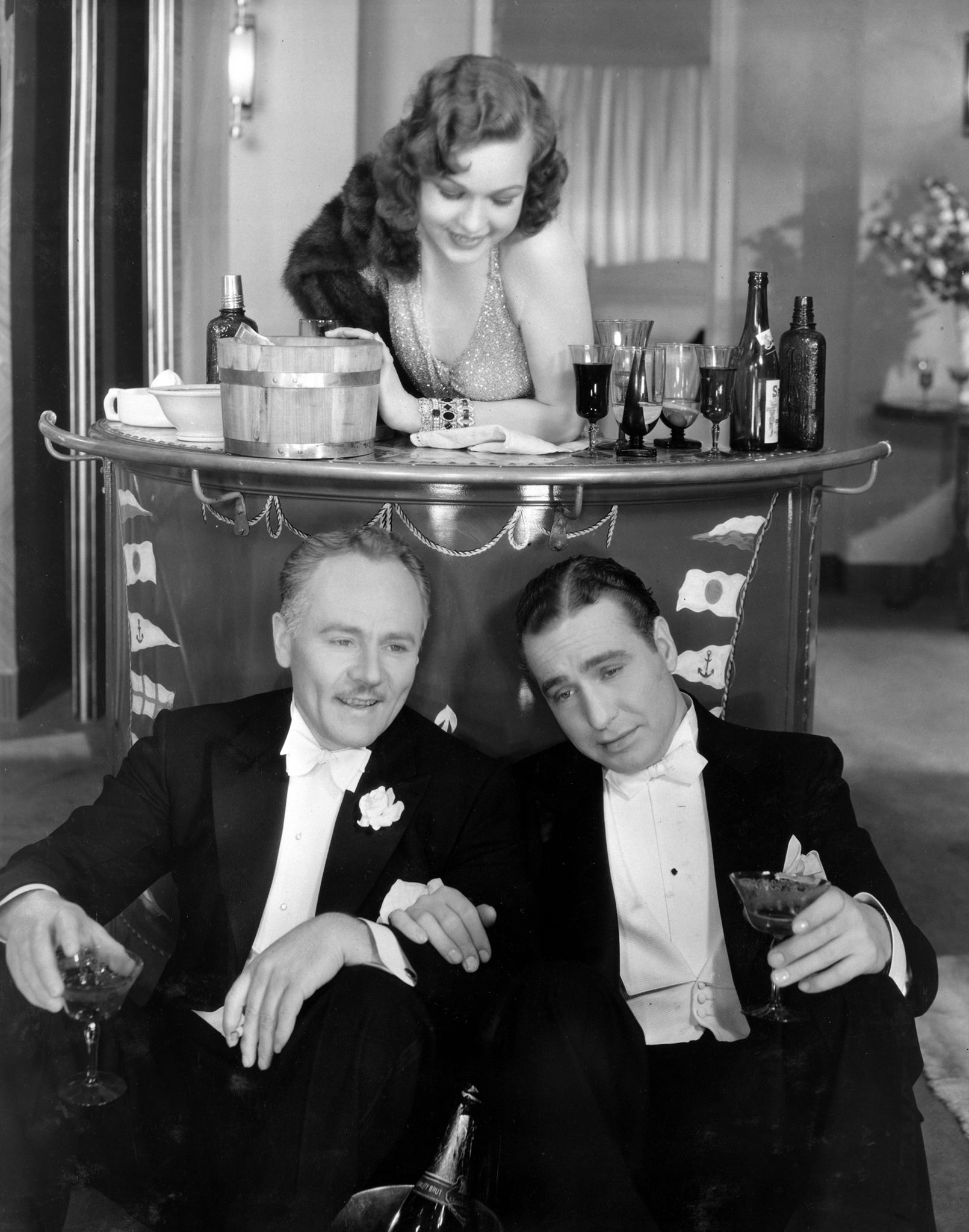
The older man is played by Charles Ruggles (above left, with Phil Harris, right), who didn’t meet a double-take and slow burn he didn’t want to adopt. He was the star of the film and was quite well known then. His facial antics don’t age well, and he comes across as silly and fussy at times, but it works. The other lead is first-time film actor Phil Harris, now pretty much forgotten except for his marriage to and long professional association with the inestimable Alice Faye. You have to swallow a bit to accept him as a leading man as he doesn’t have the look nor really the singing voice, even though he was a band singer and radio singing star for much of the rest of his life. But knowing what a big star he became later helps. The ladies are generally window dressing, except for Florence Roberts and Marjorie Gateson, who play the fussy old aunt and fussy wife with ease.

A secondary player almost stills the film, however. Chick Chandler, above, (later a star of television’s “Soldiers of Fortune” as well as a part of It’s a Mad Mad Mad Mad World (1963) liven every scene he’s in. He’s all of 5’ 9” and looks like 100 pounds dripping wet. But his introductory vaudevillian dance routine is a hoot. The introduction of a specialist actor and act in early ‘30s films is not unusual, and they often don’t work. But it does here, one, because it’s so well done, and two, because this is a crazy film where anything goes. He’s not really an actor at this point, and his overdone reactions are a bit much, but his character is great. And he sneaks in an almost unheard line directly taken from Mae West’s She Done Him Wrong, released that same year. Listen closely or you’ll miss it in the scene where he is serving dinner to the two scantily clad young ladies. Yes, it’s “Come up and see me sometime.” In the rest of the film, he is quite over the top but is a delightful character you’re glad to see when he appears.
Then there are the musical numbers, which sometimes are boringly straightforward, but which occasionally borrow from the previous year’s Love Me Tonight in their sharing of a song over time, space, and different people. That’s a tricky thing to do anywhere, but the lightness of Melody Cruise’s tone allows it to work here. There isn’t a great voice to be found, nor a great song, although “He Isn’t the Marrying Kind” is fun and actually moves the plot forward. And then there is the Busby Berkeley-type ice show, thrown in for no good reason, but again, which somehow works amidst the rest of the cinematic insanity.
The one regretful thought associated with Melody Cruise is that Mark Sandrich, while successful with his Astaire/Rogers pictures, never seemed to recover the creativity he expressed here. After all, those plots were standard and the dance numbers eschewed any kind of inventiveness beyond displaying the terpsichorean virtuosity on display. Sandrich died a very early death in 1945, and after the Astaire/Rogers film, may be best remembered today for Holiday Inn, which introduced “White Christmas” to the world. We’ll never know what kind of inventive films he might have presented us.
If you’re looking for intellectual consistency, logic, great acting, or a film that feels modern, don’t see Melody Cruise. If you’re looking for what some interesting directors were doing with music and film language at an earlier time, this is for you. Plus, it’s bonkers fun.


 Film stuff by Mark