
Black Bag is a cross between the Brad Pitt/Angelina Jolie film Mr. and Mrs. Smith and an Agatha Christie film, albeit modernized and quite slick. It’s a film about marriage (surprisingly supportive of monogamy) and it’s full of schemes and lying and double- and triple-crosses. It’s directed with whip-smart precision by Oscar-winning director Steven Soderbergh (Traffic) and has some of the best actors around, including Michael Fassbender, two-time Oscar winner Cate Blanchett, as well as Mank’s Tom Burke, “Bridgerton”’s René-Jean Page (still on the short list for the new James Bond, though I don’t think this film will further that cause) and James Bond’s Moneypenny Naomie Harris. Great cast, but not used to their fullest.
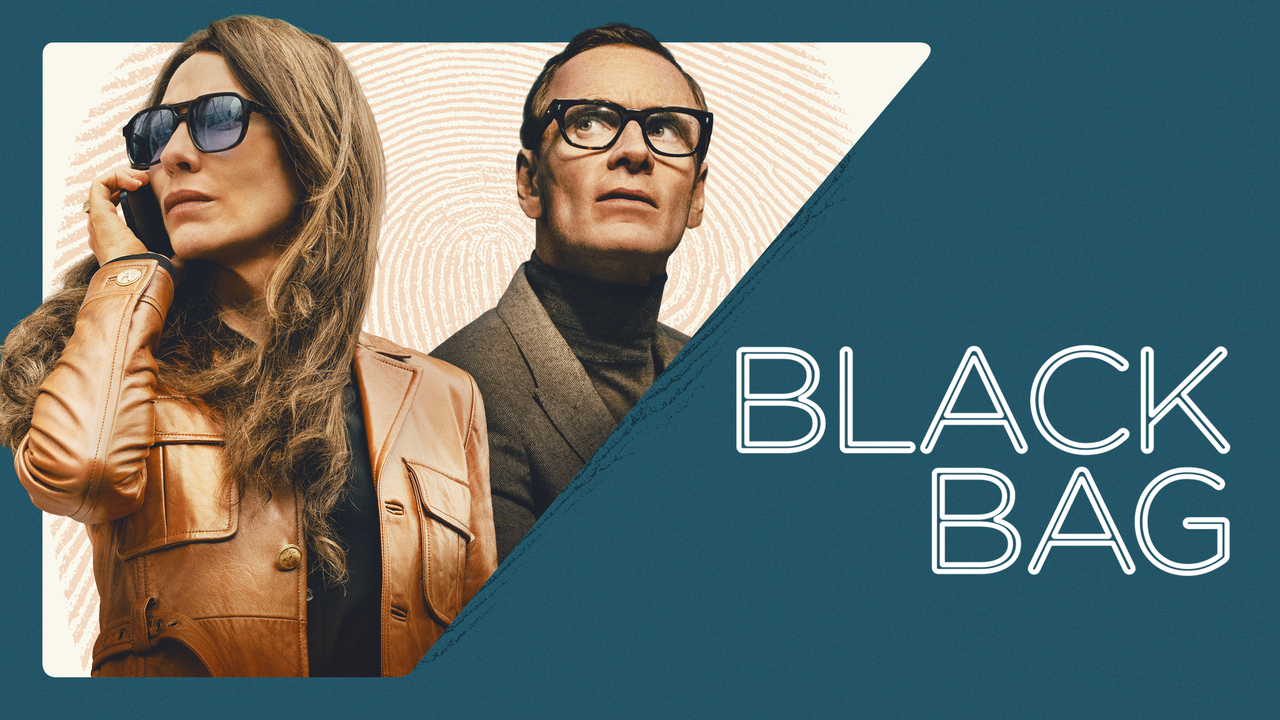
Michael Fassbender can burn through the screen when given the chance, but here he is emotionally unavailable to the rest of the cast and to us. Makes it hard to connect. His wife is played by Blanchett, who wafts ethereally through most of the film like a chiffoned combination of Kay Francis and Tallulah Bankhead at their most removed and elegant. The life in the characters has to come from the second tier, who are the only ones bringing the energy throughout.
I may see this film again, as I respect the actors and the director. But here is where I have to mention my personal experience. I was still post-surgical and very tired, not an ideal situation for seeing this film. The sound was also down in the theater, making the soft-spoken and rapid dialogue almost impossible to understand. Yes, I actually fell asleep until my brother Chris elbowed me. I don’t mind films that demand my close attention, but there was so much going on (quietly), so much just alluded to, and so little light shed in the first part of the film that I gave up trying to understand the plot. Having so many folks lying and conniving and hiding their actions and motives are a bit much for me when I’m fully awake; when I’m still recovering and having a hard time concentrating—not a good combination.
The film is beautiful to look at, but it is overcomplicated (probably not in The Big Sleep category) and can only be put together in pieces, assuming the viewer is able to take in those pieces. My friend Kyle Rice happened to be at the same screening, and he make the excellent point that the central scheme should have been more clearly exposited, especially toward the beginning, so that at least that part of the film wasn’t in the shadows until the end. It’s fine to keep wondering who was doing what to whom, but the parsing out of the central scheme that connected the main players was a bridge too far.
Maybe a second viewing will help.
No Address
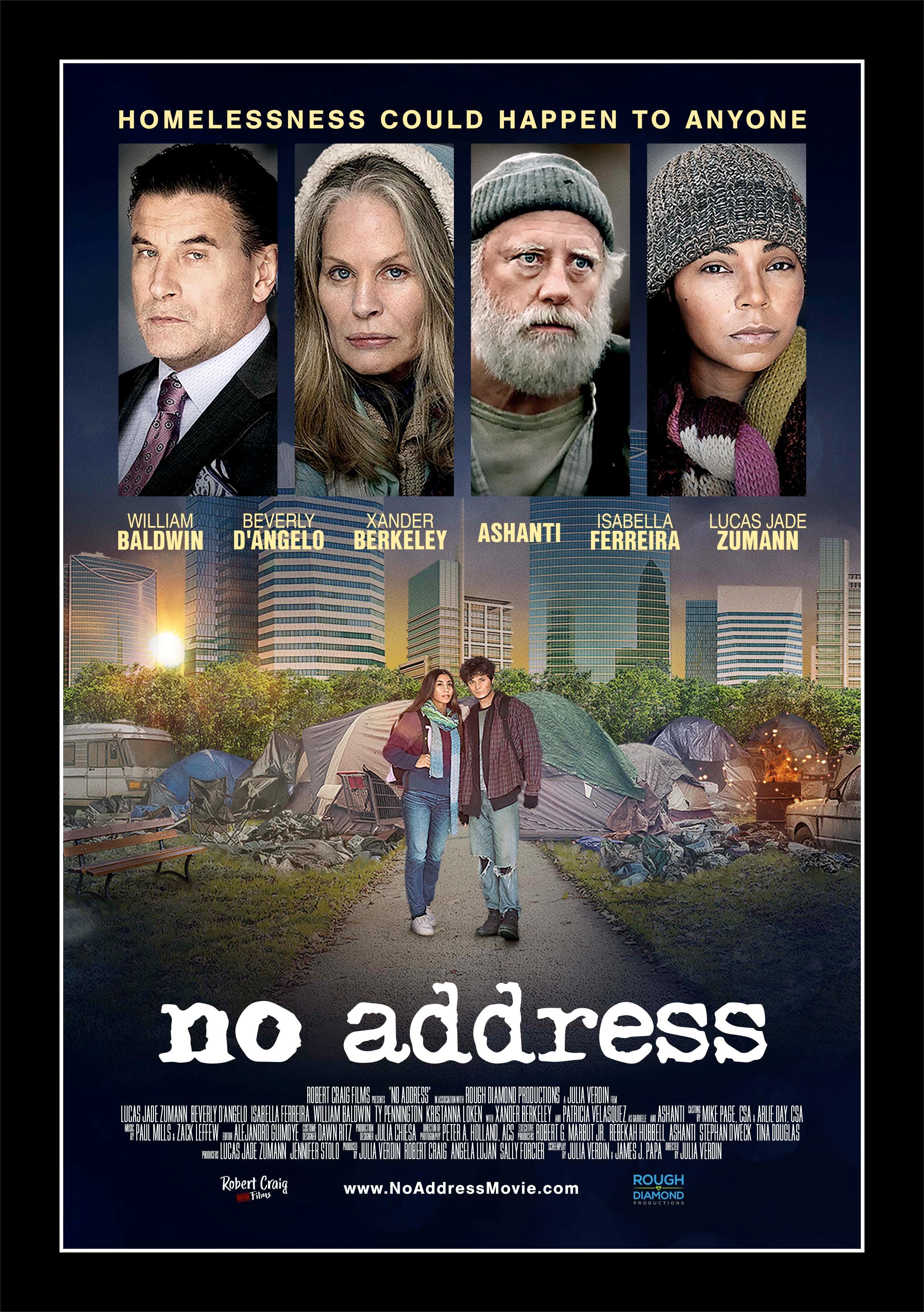
No Address hasn’t been released yet, but I was able to see an advance screening. It’s a message film about homelessness. It’s a bit beyond criticism for two reasons: the theme is about a situation we can all agree is terrible and should be understood and addressed on many levels…and a dear friend was involved in its distribution.
It has a few real stars: William Baldwin of Baldwin brothers fame and Beverly D’Angelo of the Chevy Chase Vacation movies. The rest are relatively unknown but may have a future. What is strong and touching is the reality of the situation the film presents. It gives logical reasons why folks find themselves homeless, what that life can be like, and what can be done. Earnest is the key word here.
This is a first-time effort of this production company, though independent producer/director Julia Verdin has a strong track record (Maya, 2004’s The Merchant of Venice.) Its key strength is the heart-breaking situations that can lead to homelessness. But the characters are often stand-ins for various scenarios rather than deeply-etched and fully human individuals. Their humanity is often sacrificed to the outlines of what they represent.
It’s to the film’s credit that they present one character who is clearly at fault for his situation, rather than portraying everyone as victims. Baldwin’s character makes one bad decision after another and winds up on the street. His fall is a bit cliché, as he begins the film as a businessman wanting to rid a development site he has a financial interest in as a homeless encampment, and ends up, of course, on the street. The other scenarios played out are not the fault of the people who found themselves in this situation, so the film plays it fair that yes, sometimes, back choices lead to bad situations.
What was perhaps the freshest aspect of the film was its view of life in the encampment, presented with a fascinating tension. There is a great deal of support there in the camp, with heavy “we are the family we couldn’t find elsewhere” vibes. The love and deep concern were genuinely touching. Yet…the film also shows how someone can get so caught up with the newly created family dynamics that they might not easily grab the opportunity to get out of that circumstance. In a film that teeters toward paint-by-numbers in its main characters, this is a welcome shading.
Make no mistake. This is a message film first and foremost. But the message needs to be heard. And this film should be seen.


 Film stuff by Mark