
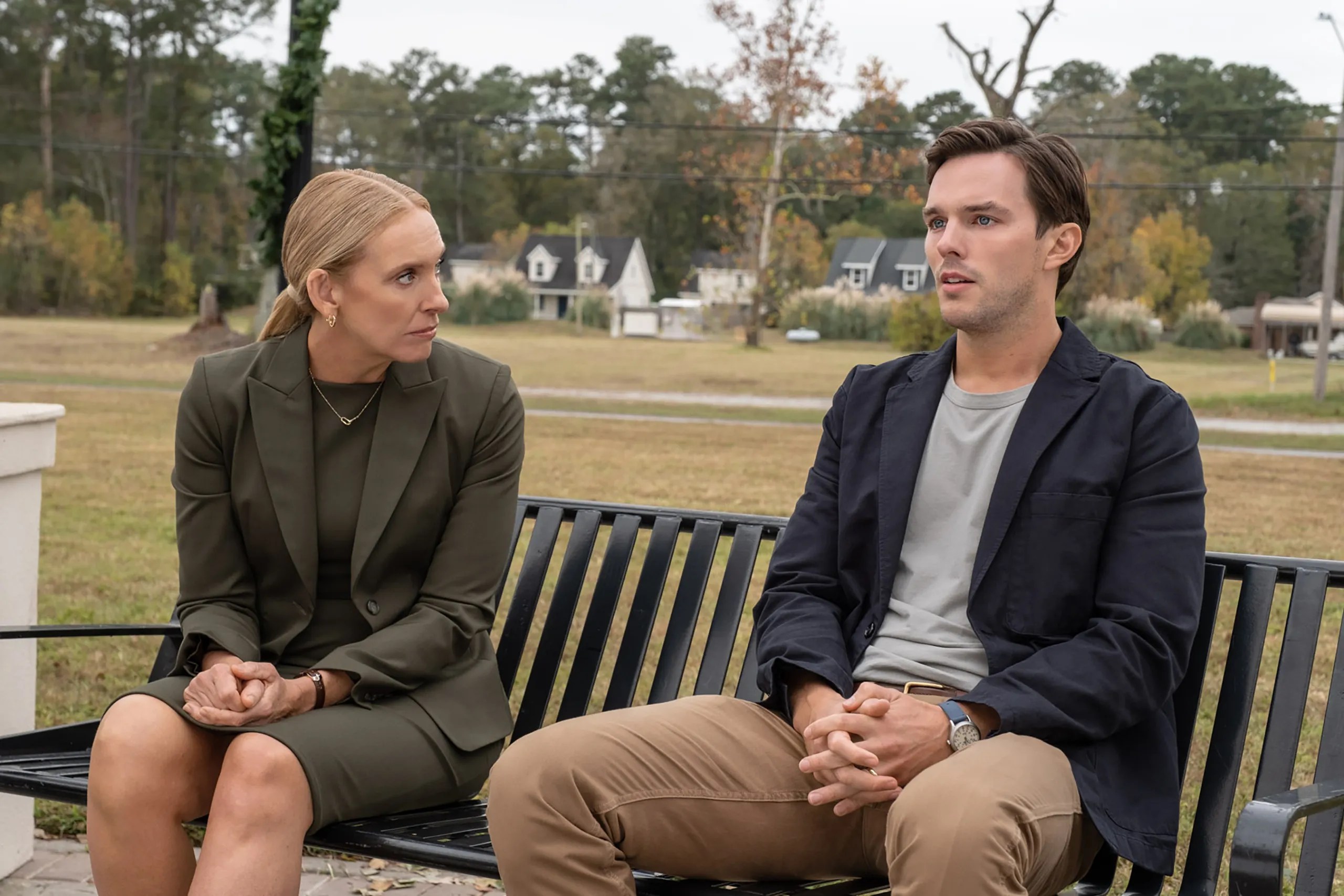
This isn’t a new film, but still a relatively recent one (2024). I saw it on an international flight, obviously not the best context for viewing any film. But Clint Eastwood was the director, so I thought it would be worth the view.
It’s a very mixed bag, with some excellent actors and a fascinating theme. But the actors seemed on their own, with little direction. I have seen many a film that starred good to great actors who seemed to be leaning on their own talents with no one steering them; they do the best they can, but they each seem on their own. This turned out to be one of those films.
The film stars the incredibly talented Toni Collette (Oscar nomination for The Sixth Sense and who should have been in Chicago…) as a lawyer/politician. At first, she appears to be the traditional “win at all costs” legal shark, but as the film moves toward the end, her character backs off from that persona and digs deeper into her case. Collette of course does the best she can, and she makes it believable, but she is afloat here, doing the best for her character and the plot, but not living in a context of consistent tone and energy.
The other lead is Nichoas Hoult, who has an even meatier part, but seems even more left to his own devices than Collette. (I won’t give away the plot, as that is the strongest and most enjoyable part of the film, until it isn’t….). Hoult’s character is meant to be us, and he does his best, which is plenty. But again, there seems an isolation to each of the characters here, and that is most evident in the relationship between Hoult’s character and his wife. Despite their exchanges, there doesn’t seem to be a strong connection, which notably weakens the film. Ironically Hoult has a better connection with Collette in their scenes together, though they are generally antagonists in the film.
There are other significant performances in the film, but they are meant to be on the side, and that seems to work in their favor. The ever-solid Chris Messina gives more than might be evident as the film progresses. Then who do we see—two folks whose star power threatens to override their character. One is Keifer Sutherland in a surprisingly low-key turn as Hoult’s friend and confident. The other is Oscar-winner J. K. Simmons, a reliably solid character actor who 15 years ago would have fit well into the fabric of the film, but who is now such a big star that his presence is simply too big for his role.
What to say about the courtroom scenes, other than they are a color (as opposed to black-and-white) update on 12 Angry Men? The characters in the jury room again seem to be doing their best, but cliches and stereotypes abound almost laughably at times. If I heard one more person say that they needed to give a quick guilty vote so they could get home for one reason or another, I might have walked out. But I was on a plane.
Then there is perhaps the strongest element of the film, which is the theme of guilt and how we respond to it. It’s an eternal issue, and the film seems to deal well with it until it flames out it at the very end. The ups and downs of struggling with what is right and wrong, and the price one might have to pay for doing the right thing is generally well explored. But that ending: wholly unsatisfying on nearly every level. The film has an Act Three as in most other films (spoiler alert), but then there is an anticlimactic scene that enervates rather than jolts us. It appears to be presented as a stunning kind of second climax, and while it could be read by some as intense, disturbing, and thought-provoking, what it primarily provokes is a “Huh?” from the viewer, followed by a sense of wonder—wonder at what it’s supposed to mean. Yes, spoiler alert again, I understand that on one level it means that things aren’t settled, and that unresolved guilt has no place to run and hide forever. But where precision is needed (badly) to pull things together, we have perplexity.
Don’t tell him I’m writing this, but perhaps it’s time for Eastwood to sit back and rest on his many laurels.


 Film stuff by Mark