
I’ve not been the biggest Guillermo del Toro fan over the years, especially with his winning Best Picture and Best Director at the 2018 Oscars for The Shape of Water, one of the Academy’s most egregious errors. His new film, Frankenstein (currently streaming on Netflix), isn’t likely to win the top awards, but it will likely (and deservedly) garner a number of nominations and other non-Academy nominations. It’s a visually stunning film that contains some intriguing performances and will be dissected for years to come in the ways it diverges from the original Mary Shelley book and “what it all means!”

The film fairly begs to be described as sui generis, and I found looking at it that way took the weight off the comparisons to the book and the many film adaptations we’ve been offered over the years, with the 1931 as still the definitive version. It’s not a horror film, though it has some frightening moments, and the Creature is not the film’s monster. It’s a rapturously beautiful film in the most throbbing Romantic Gothic tradition. It’s certainly the stark color equivalent to the 1931 classic with that earlier film’s German black-and-white expressionist influences. Approaching it as its own film on its own terms is probably the easiest way in and the best way to take it all in.
To get it out of the way: Backstories are different, the role of Elizabeth diverges wildly from the original or any other version, Victor is obsessed differently, key supporting characters are missing or different, and the Creature is something altogether different. There are different themes from the book, and the social critique is generally missing. Don’t go looking for anything familiar, and you’ll likely enjoy the film more.
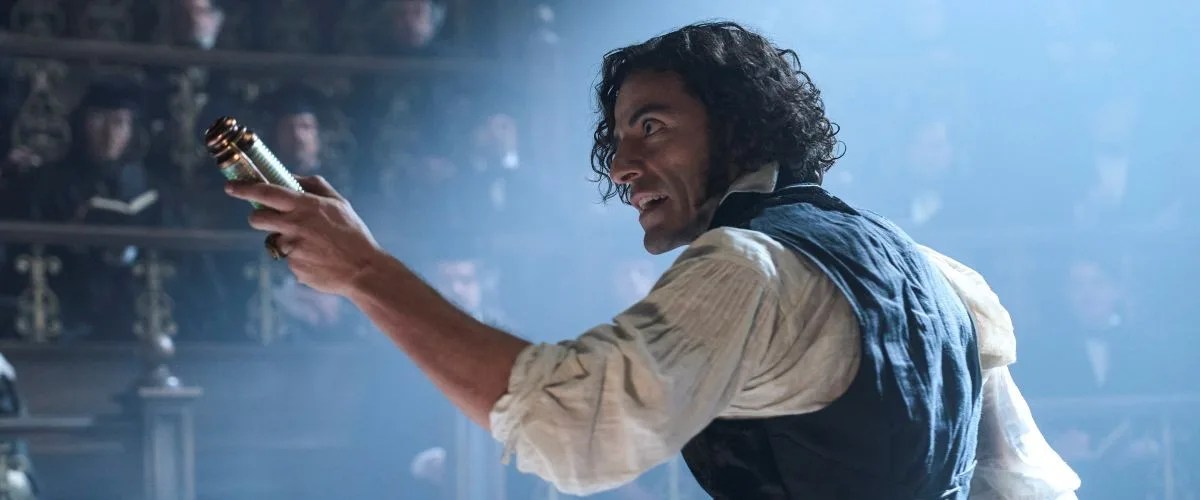
And there is much to enjoy. The cinematography and production design burst with color and beauty, even in the midst of actions taking place in dark and dank surroundings. I was less in favor of what the film does with Victor Frankenstein and more in favor of this new Creature. Victor is played by Oscar Isaac, who tends to smolder in his other performances; here he practically sets fire to the screen with an intensity that seems pushed too far and seems overly frantic. In the category of things that take a viewer out of the film, Isaac is number one. He is half-shirtless and wholly shirtless much of the time and it was more suggestive of time spent in the gym than in invention. Then there is a regrettable and gratuitous nude scene that only needed a missing shirt to succeed narratively, and the forced camera angles employed so as not to expose the actor too much were laughable.
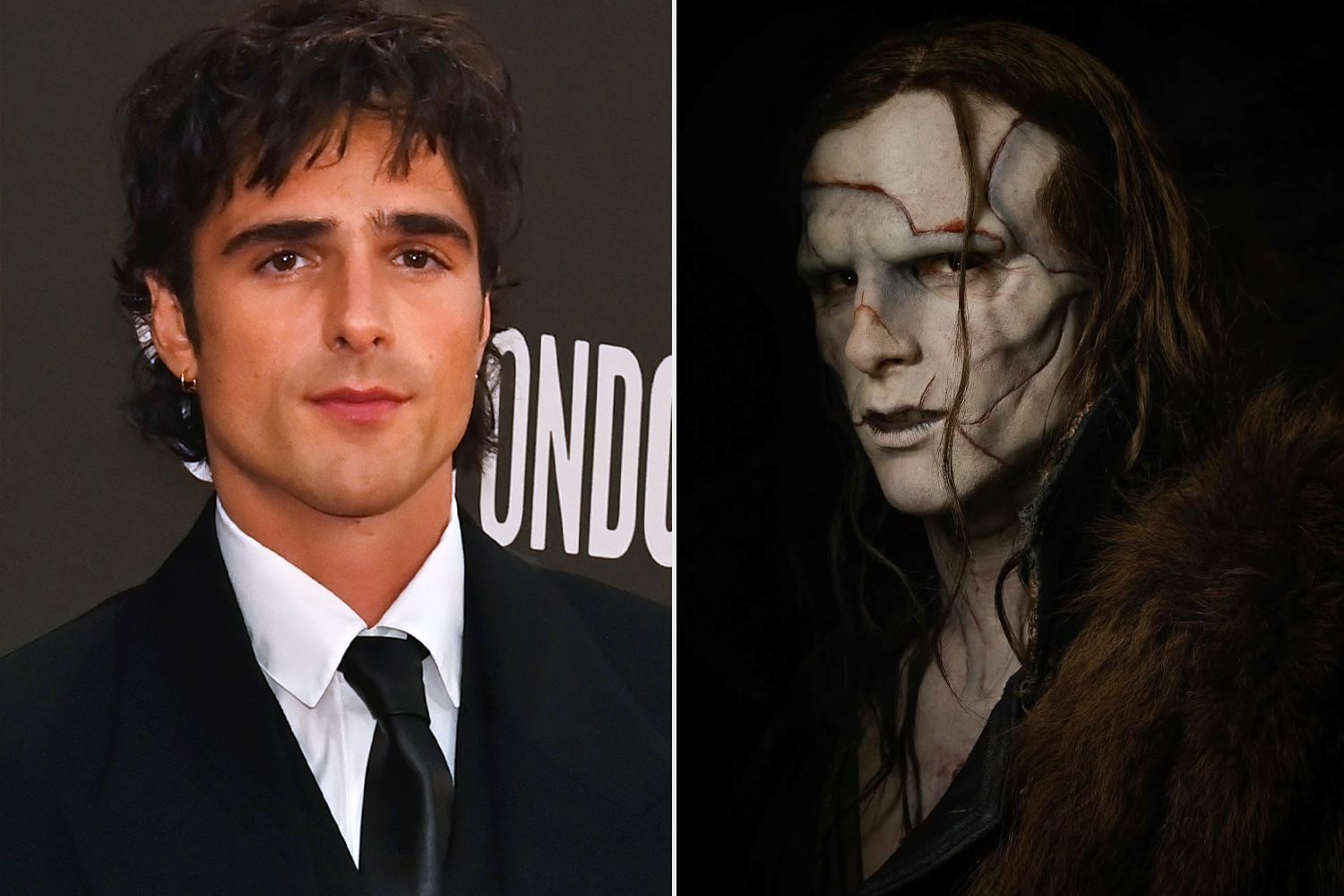
Victor’s counterbalance, of course, is the Creature, here played by very tall Romantic leading man Jacob Elordi (“Euphoria”, Saltburn, and next up as Heathcliff in the new version of Wuthering Heights). This is the best-looking Creature that’s been created so far, but Elordi moves us beyond his heartthrob looks to allow us to see him dig deep into a powerful and yet sensitive performance. What this particular Creature is being asked to do in this film is more complex, and so very different, from any other Creature in film history. He is asked to be absolutely frightening, childlike, confused, able to slowly learn, eventually able to connect deeply with other human beings, and make us believe that he can be both an overwhelming presence and a tormented, sensitive victim of his master’s half-thought-through obsessions. That’s a tall order for Elordi (pun intended), and a thespian journey that may have frightened off other actors. But he pulls it off, stealing the film from under Victor in the same way Boris Karloff did in 1931. At 6’ 5”, Elordi has a strong film presence, but he doesn’t use that power all the time and often sublimates it to more tender concerns.
There are things with Elizabeth that don’t work, IMHO. I didn’t quite understand or accept what Del Toro was doing with her character, and she doesn’t fit as easily into the story as I’m sure he hoped. Felix Hammerer (All Quiet on the Western Front, All the Light We Cannot See) is fine as William, Victor’s brother. But he is more of a story element than a character that can boldly challenge, enlighten, or bring the necessary contrast to our view of his older and more manic brother.
In spite of the heaving emotions and classically Romantic themes and operatic visual treatment, there are also some very gory and grisly elements here. Cadavers are sliced up gruesomely, and some animals receive a very bloody end. The images are presented as matter-of-factly as a character entering a room and are therefore all the more disturbing. Be warned.
Alexandre Desplat’s musical score combines light bell-like sounds with deep and rich symphonic sounds that harken back to the fullness of the richest classic Hollywood scores. It’s a gorgeous piece of work that will likely be performed on its own in future years.
I could spend a great deal of time delving into the ways del Toro shifts away from traditional readings and the book itself. That’s not what this is about. Victor’s obsessions are differently motivated, and the ultimate relationship between Victor and the Creature takes us into new spiritual territory, worth discovering on your own. In a Variety magazine article, de Toro says, “The usual discourse of Frankenstein has to do with science gone awry. But for me, it’s about the human spirit. It’s not a cautionary tale: It’s about forgiveness, understanding and the importance of listening to each other.” That’s not about trying to act like/be God and is a full step away from investigating what can be done with science. As much as invention figures in in the film, it more fully takes its place among the most vivid, Romantic (not romantic) expressions of the dangers of obsession and surprisingly, some of the deepest needs of a Creature who finally stands in for us.


 Film stuff by Mark