
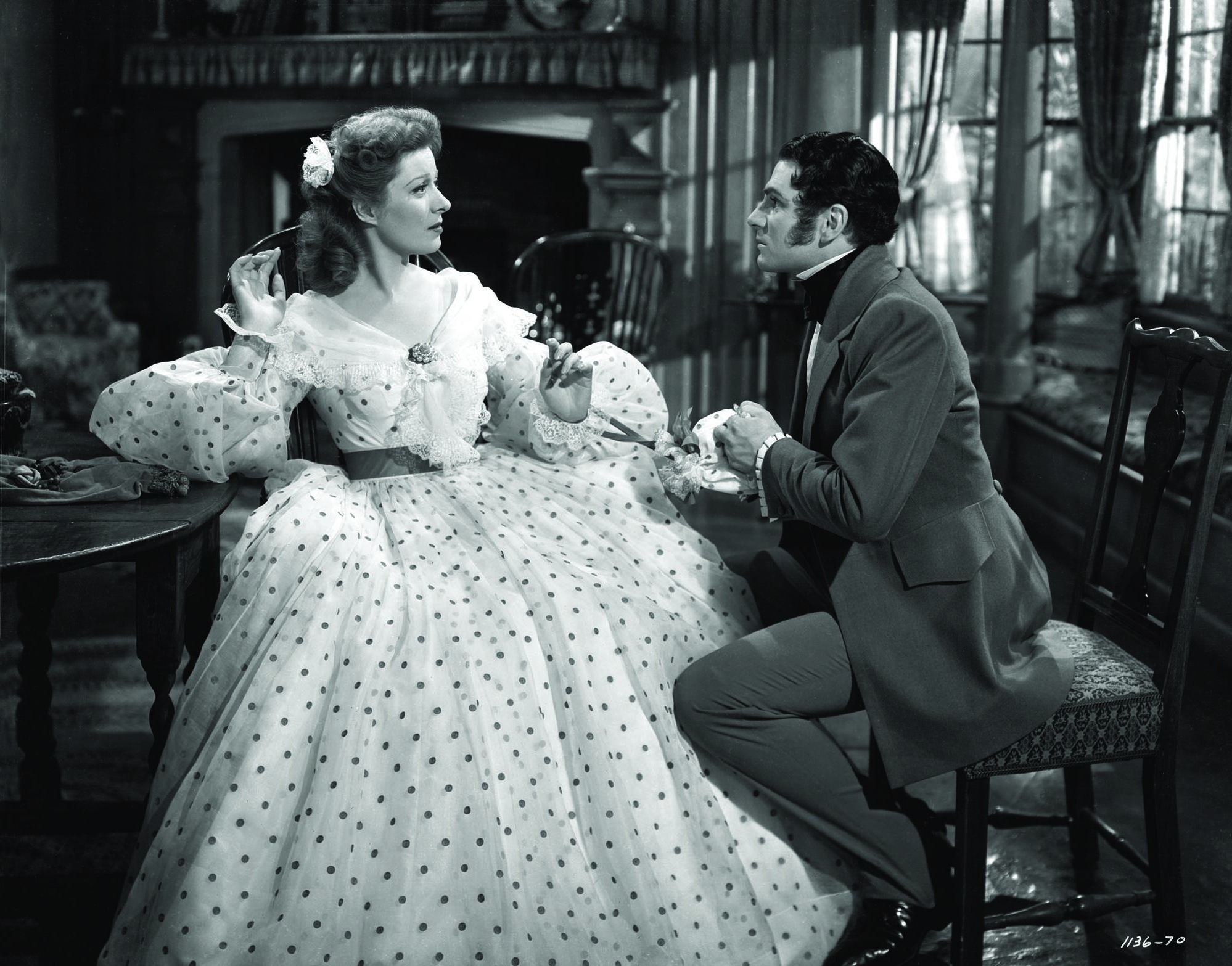
I had to dust off some my recollections of this film for this review, having seen it only once several years ago. With its MGM polish, high production values, and the star power of emerging legends Greer Garson and Laurence Olivier, it played better in my memory. Star power goes a long way in a film like this, which is wrapped in literary pedigree, unrealistically large sets, and wrong-period-but-lovely costumes. The years have been unkind to this film, and not undeservedly so.
The 1995 BBC mini-series started the modern trend of Jane Austen adaptations, of which the 2005 version starring Keira Knightley and Matthew Macfadyen and directed by Joe Wright (before he got self-conscious) is my personal favorite. That film brought the story back to its correct era, had a heroine of the right age, and possessed a grit and toughness with sets and costumes and attitude that Louis B. Mayer wouldn’t have imagined. It also balanced the various sisters’ stories with deftness and economy.
MGM apparently wanted some kind of elevated romantic drama here rather than a sharp social satire, and while they got a version of that romance, the final result was an unconnected group of witty, pithy soundbites engulfed by a not-quite-believable central relationship. The studio had a book based on class tensions that contained plenty of bite. (Some great lines that remain: “Oh, if you want to be really refined, you have to be dead. There’s no one as dignified as a mummy.” And, “How clever of you, Miss Bingley, to know something of which you are ignorant.”) Some of that bite remained, which was the highlight of the film. But far too much was softened.
They had costumes and sets left over from Gone with the Wind, and they were going to use them, even if that meant an anachronistic setting for the film. In terms of casting, there were two emerging stars that needed to be showcased, even if they weren’t completely right for their roles. We can only be grateful that the film wasn’t made earlier, and that we didn’t get Norma Shearer as Elizabeth, and somewhere between Clark Gable, Robert Taylor, Errol Flynn, and Robert Donat as Mr. Darcy—this last name being the best of those options.
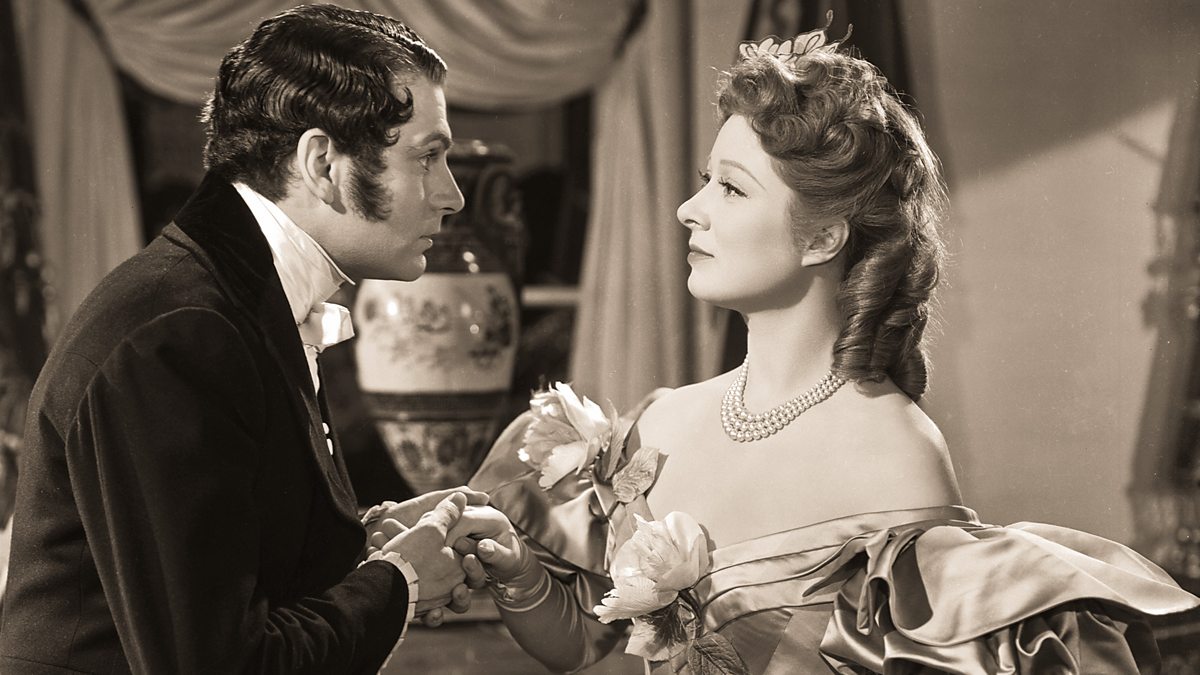
Greer Garson had burst onto the scene the previous year in Goodbye, Mr. Chips, and had won an Oscar nomination; Louis B. Mayer rightly had high hopes for her, and she was going to be Elizabeth whether she was a good fit or not. Olivier had also won a nomination the previous year for Wuthering Heights. So, two good actors, both talented and good-looking—what could go wrong? Not that much, but it doesn’t go quite right either. Garson is lovely (and boy, does the camera capture that) and pulls off her lines with a quiet wit and a fierce intelligence unfortunately buried so deep as to be nearly invisible. Plus, she is far too old for the part. She is four years older than Olivier, and a full 16 years older than the character in the book. She is maternal rather than romantic and maturely calm when she should be fiery and on the cusp of adulthood.
Olivier seems bored in the part (Oscar historians, not that his nomination that year was for his far superior work in Rebecca). He seems removed, almost seeming to wonder why he, the great stage actor, was in the picture in the first place. He wanted his then-paramour Vivien Leigh to be Elizabeth, but apparently their real-life romance was on the verge of becoming scandalous, and Louis B. Mayer didn’t want to risk that coming out. Plus, Mayer had recently hired Garson and wanted to use her in roles he knew she would quickly outgrow. (Just two years later, she was Mrs. Miniver in the film by same name playing a woman with a college-age son.) Garson, while clearly bright and possessing a full understanding of the depth of her dialogue, has a gentle and velvety outer layer around her as a performer, robbing the lines of the edge that Elizabeth has with Darcy. Perhaps Leigh would have provided the right kind of attitude and energy for that part after all. That is a film I would have liked to see.
Two hours can be constricting for a story with so many side stories, and the 2005 version addressed that well. But the Bingley/Jane story, which provides such delightful romantic contrast with Elizabeth and Darcy, is given such short shrift here as to be nonexistent at times (and again, Jane, who is supposed to be two years older that Elizabeth, is played by Maureen O’Sullivan, who was seven years younger, which is quite visible).
Other changes didn’t help. Mr. Collins was a vicar in the book, but the Hays Code didn’t want criticism aimed at a clergyman. (Clearly that ship of hesitance has long since sailed, especially in British films and television.) His transformation into a librarian robs the film of more of its bite and makes his living and connection to the rich and powerful Catherine de Bourgh simply confusing. And that marvelously fierce and dreadfully imposing de Bourgh, played so beautifully by Dame Judi Dench in the 2005 version, is turned into a comic presence that replaces our experience of hesitance and fear with near-slapstick amusement.
Mrs. Bennett is the usual over-the-top performance, but in the hands of Mary Boland, only comes across as slightly ridiculous. Fortunately, Mr. Bennett is played by Edmund Gwenn (Best Supporting Oscar a few years later for his performance as Kris Kringle in Miracle on 34th Street), and his calm presence and line-readings are a godsend. He’s the best thing in the film.
All in all, there is less here than meets the eye, the eye constantly being consistently overwhelmed by the overdone production values and anachronistic costumes. The story is upholstered by gloss and glamour, with little of the bite and passion it could have had. It’s an option for film historians, coming at the height of the studio era with two huge new stars at the center. But most curious viewers should simply opt for the 2005 film or the BBC miniseries instead.


 Film stuff by Mark