Three Quick Takes: May December, Godzilla Minus One, and The Killer

Note: This entry is dedicated to my “cousin-in-law” Ryan (R.T.).

“It’s the most wonderful time of the year…” for film folks, anyway. The films putting their hands up for awards attention reach their greatest number in the last six weeks of the calendar year, and this season is no exception. What is different this year is that, of the three films above, the one I would have wanted to see on my television I paid to see in the theater, and the other two, that I would have been happy to pay to see, I saw for free at home on Netflix. A whole new world….

This entry is dedicated to my “cousin-in-law” Ryan (R.T.)

May December

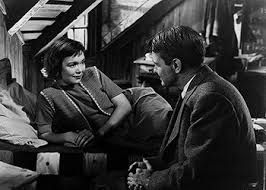
May December is Todd Haynes’ newest film, and his third featuring Oscar winner Julianne Moore, whom Haynes worked with in Safe (1995) and Far from Heaven (2002). In brief, it is a wonderfully acted, precise piece of filmmaking loosely based on the case of teacher Mary Kay Letourneau , who raped a 12-year-old student, gave birth to his two children with him, and married him between prison sentences—and later legally separated from him. This might be seen as grist for a particularly lurid mill, but Haynes and the writers have other things in mind.

The fictionalized version of the tale features a TV actress, played by Natalie Portman, who, though a somewhat untrustworthy narrator, provides some distance and objectivity from which to view this unconventional relationship. Elizabeth (Portman) arrives to spend some time with the couple and their family ostensibly to get a greater understanding and appreciation of these people and their situation before taking on a role in the film version of the story. Structurally, the story is hers, but the film’s fascination is with Moore’s character and her much younger husband, played in a star-making role by Charles Melton.

The peeling back of the onion of story and characters is deftly done, both with Elizabeth on her path of discovery, and in the lines and performances of Moore and Melton. What could have been exploitative and smarmy instead becomes revelatory and insightful.

Much could be said about the three leads’ performances, which are worth watching the entire film for. Moore, who often is dressed and coiffed to look like Letourneau, rarely lets her proverbial hair down, but conversations with those around her eventually reveal a deeply disturbed woman. Joe (Melton) eventually grows up in more ways than one, but in a heartbreaking and touching way comes to realize the reality of the situation when he was not even a teenager.

As good as all three are, my favorite performance is a high-wire act from Natalie Portman. Portman, a great actress and an extremely intelligent woman, does the near-impossible in believably playing someone less intelligent and talented than she is. Her initial Hollywood superficiality gradually gives way to a more layered personality who is nonetheless not a hero. And her last scene as the actress playing Moore’s character in the film she was doing the research for is brilliant in its lack of artistic depth. Portman never once telegraphs to the audience (us) that she is actually better than her character in terms of morality or talent, and the performance is all the richer for it.

A deep dive into a story like this is not everyone’s cup of tea. But it is keenly observed, sympathetic to truth, and soars when it could easily have come crashing down.

Godzilla Minus One

This is the film that made me say, “I give up!” There are just some films that I am not going to appreciate in the same way as others, and my lack of connection with certain films is more about me than the films themselves. After getting three recommendations about the film—from a very intelligent friend familiar with Japanese culture, a brilliant college professor friend, and a former Asian student who went out of his way to recommend it to me as his former professor, I headed into the theater ready to be blown away.

I wasn’t, and while realizing that this particular genre is not my thing, I still wondered why it didn’t work for me as much as it did for others.

I asked my former student, Stanley Chan, who made the recommendation in the first place, what he appreciated about the film. Here is what he sent to me (permission to print here granted by Stanley):

“I felt like it was not your typical (western) monster movie. It was a Japanese post-WW2 story that could’ve been an enjoyable story with or without Godzilla. The main character, Koichi, struggles with abandoning his duty and the survivor’s guilt that follows. Despite the “obligation” to his country (dying in the name of it and for honor), he continues to live, (re)discover his purpose through Noriko and the orphaned child, and even thrives. Godzilla is what brings the story and characters together as the monster that needs to be defeated.

In a way, Godzilla stands out as a way to confront a past the characters would rather shun and move on from. This is actually in line with Japanese depictions of Godzilla, which was a metaphor for post-WW2 Japan. Themes of political/governmental incompetence and negligence are also represented; in Minus One, this played out by the press literally by misleading the public about the monster and then abandoning the Japanese people to fend for themselves.

Aside from that, it was a very fun film! The focus was more on the characters than Godzilla, where you care about their struggles and quest for resolution. It’s also worth noting that the film was made with a tight budget, demonstrating that the excessive Hollywood spending for blockbusters need not be so excessive to be successful. With the limited settings and tight sets, Minus One could’ve easily been a rather fun stage play.”

Thank you, Stanley!

What I agree with is that the film is all the stronger for its portrayal of how the public can be misled, and specifically, how the Japanese government can do that in dire situations. Also, the film has a great balance of epic monster movie and personal journey, and it weaves them together well, if not particularly subtly.

Something that did drive me a little crazy, a weakness in films from many countries, is this tendency to freeze characters for a dramatic moment instead of allowing them to run for their lives, as anyone would do in real life. (My personal least favorite is when a person is called up  front of a group or class, and they knows it’s coming, and they just sit there for a few supposed dramatic seconds.) This film does that several times, and each time I was taken out of the film (and wanted to stand up and yell “Run, for heaven’s sake! Your lives are in obvious imminent danger!”)

The film had more elements than the standard Godzilla movie, and that they were woven in relatively well. Though the film seemed a bit thin at times, I have to bow to the wisdom of my friends who enjoyed it, and respect it for what it is.

The Killer

Put director David Fincher together with actor Michael Fassbender, and it was only a matter of time before I saw this. It brought together memories of Locke (with Tom Hardy), Collateral, and a bit of Body Heat. Fincher goes very narrow and focused here with a tale of an assassin who (spoiler alert) has to “clean up” the mess he made by missing a target.

The style is clean and sleek, with lots of nighttime shots. Cinematographer Erik Messerschmidt (Oscar for Fincher’s Mank) is the second star of the film after Fassbender, providing slick and glossy images that literally and figuratively obscure the violence committed by the main character. The film moves along at a pace that works for the action and the lead character’s “arc,” if he has one.

Aside from Fincher’s steady hand and talent with images, the film rests on the casting of Fassbender, one of the better actors of our time. Fassbender easily plays with his character’s intense intelligence, his drive, and his limber physicality. But this is not your mother’s action hero. A Bruce Willis could have slipped into this role years ago, and it would likely have been a more fun crowd-pleaser. One can imagine the same film with Tom Cruise, Keanu Reeves, Liam Neeson, Stallone, or Vin Diesel. But that would be a more star-driven role that would have changed the nature of the film, making it far more extroverted than it is.

Fincher seems to be more interested in the inner mental workings of a killer who majors in self-talk to keep himself on his own “straight and narrow.” Fassbender hides his star power, and plays things close to the chest, with little outward bravado. That makes this a headier action film that is less violent than it might seem. There are plenty of murders, to be sure, but this is not a gorefest by any means. The film opens a bit as it goes along, but it is always tied down by Fassbender’s concentrated characterization and performance.

Coming from a major director like Fincher (The Social Network, Gone Girl, Se7en, Mank, The Girl with the Dragon Tattoo), The Killer has the more direct focus of an indie film with a strong central performance. What’s different is that it is very competently and confidently directed. Whether or not this kind of film and/or villain is your idea of a good cinematic time, at least know you’re in the hands of a master.

Posted in Film Reviews, Newer films | Tagged , , , , , , , , , , , , , , , , , , , , , | Leave a comment

Napoleon (2023)

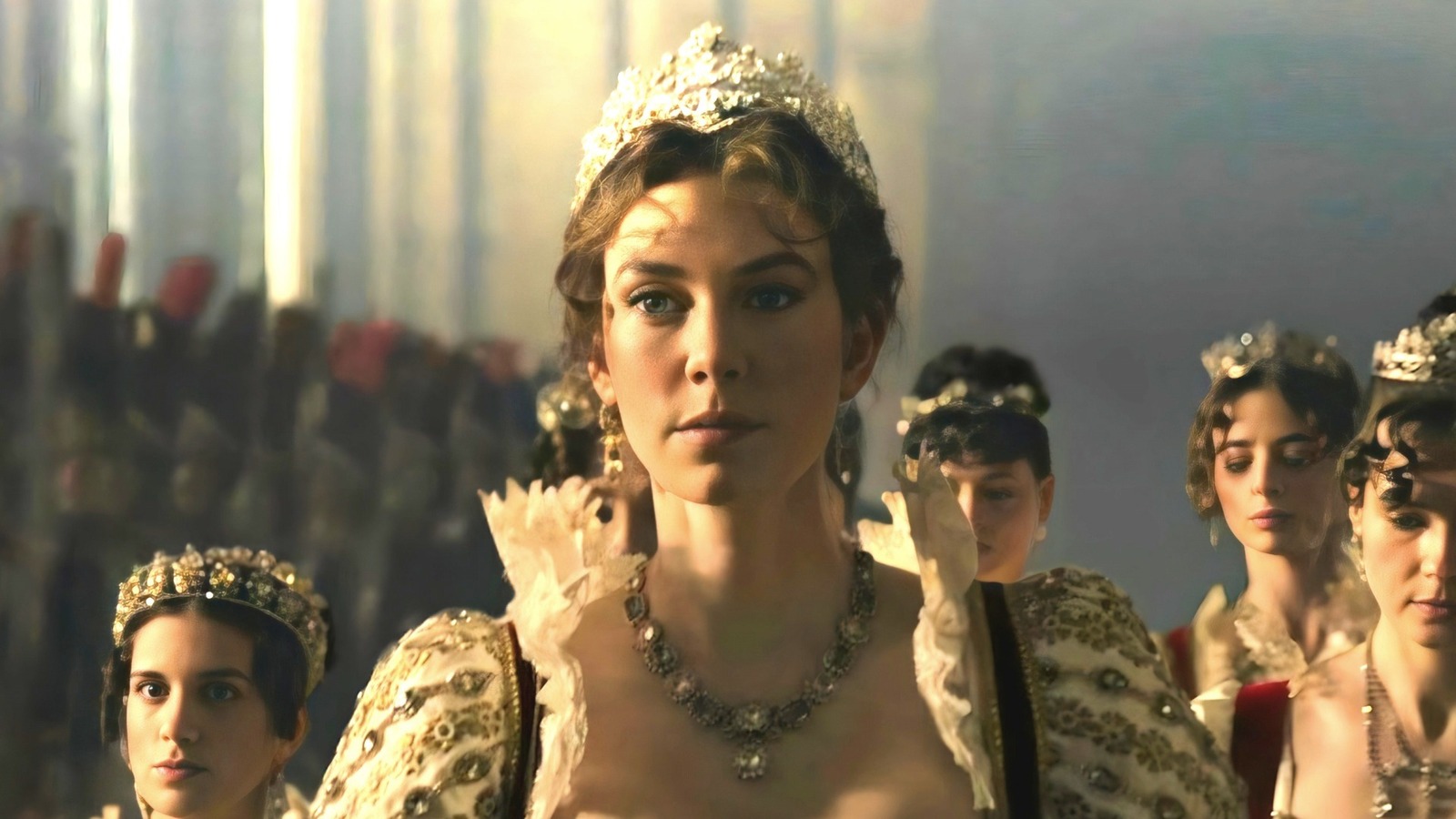
Ridley Scott’s new film Napoleon can be compared in many ways to his Gladiator (2000). Some of the comparisons are helpful, but most show the newer film to also be the lesser film. Like Gladiator, Napoleon has artfully crafted and exciting battles, in which Scott excels. Unfortunately, this is where the positives end, but the comparisons can make for some good discussions.

The script was challenged by the opposing pulls of the grand scale of the history and battles on one hand, and on the film’s narrow focus on Napoleon’s relationship with Josephine on the other. According to IMDB, “Sir Ridley Scott and screenwriter David Scarpa rejected Stanley Kubrick’s [unproduced] Napoleon script as being underwhelming, but kept 80% of the structure, scenes, and development.” Of course we will never know what a Kubrick take on the French general’s life would look like, but the script here is one of the film’s biggest weaknesses. It doesn’t seem to know what story it wants to tell, and for whom.  The current broad consensus for biopics is for them to choose a slice of a person’s life rather than trying to cover it all, and find meaning there beyond the events themselves. This film is not a cradle-to-grave biography and does stay within a tight timespan, but stumbles around issues of warfare, revolution, insecurity, love, obsession, ambition, and hubris without ever pulling these issues into a coherent whole.

The other helpful comparison with Gladiator and Napoleon is with its two leads, and it may well be a matter of casting more than direction. Of course, Russell Crowe won the Best Actor Oscar for Gladiator, and that was due in great part to the cinematic impression Crowe made, in general and in relation to the character of Maximus. And of course, there was a Best Supporting Actor nomination for Joaquin Phoenix for this role of Commodus. Both Crowe and Phoenix are excellent actors, but they can’t do everything (see https://film-prof.com/2013/01/04/les-miserables/). Crowe was terribly miscast in Les Misérables, and here Phoenix is miscast as Napoleon.

What Crowe brought to his role of a slave in Gladiator was great personal authority. Yes, we are meant to realize that Maximus has a royal heart, and is a great man stuck in a slave’s situation. But Crowe also tends to make his parts bigger and fuller than the character he plays, and that adds a level of power and grandeur to those parts. What made Phoenix so good as Commodus is that Phoenix tends to make his characters smaller than what they seem. His Commodus, while ostensibly the heir to the throne as the natural son of the Roman Emperor, is a small man, full of insecurities—petty and whiney. Unfortunately, that also describes his Napoleon.

This Napoleon is a far cry from the great leader seen in so many other films. Seeing his nervousness before his first major battle is one (good) thing. But Napoleon must have had some innate confidence to accomplish what he did, which you won’t find here. We’re left with the question of how he could have led so many and conquered so much in such a short period because the man presented here couldn’t have pulled that off. Not that the script is any help to the character here: “You think you’re so great because you have boats” has my vote as the most ridiculous and memorable line in the film, and a line likely to be quoted for a long while. And the “You are nothing without me” lines that Napoleon and Josephine say to one another are both cliché and far too quickly turned around to be anything but confusing or laughable.

We don’t see the great military mind or the great leader, and we don’t see a relationship with Josephine that makes sense. Vanessa Kirby (“The Crown,” Pieces of a Woman) is an excellent actress, but her character is so enigmatic here that we never get a sense of what makes her special (or even what makes her tick), and certainly we can’t see what she sees in Napoleon beyond the power we know he is supposed to possess. One gets the sense of an actress of talent trying very hard to add life to an underwritten character that the film offers such little help to explain.

Part of the problem may be the positioning of the camera. We get great medium and long shots of battles, and some strong close-ups of Napoleon at the more dramatic moments, but the shots of him and Josephine together are often at a mid-distance that is more observational than interpretive. We see the two of them together. but don’t know them any better. And the so-called “lovemaking” scenes are uncomfortable and only serve to make the general seem smaller still. (Why would Josephine want to be with this man?)

The cinematography and CGI are also similar to Gladiator, but especially in comparison to Oppenheimer’s overwhelmingly practical effects, the special effects here seem tired, and render a kind of dull haziness to the film.

The film is at this point a box office failure, not even recouping its original budget. It’s too long in its current version, but the rumored four-hour version may turn out to be better. The two-and-a-half-hour version now in theaters is full of holes, and has a bumpy rhythm to it. Perhaps like the various versions of Griffith’s Birth of a Nation, where the longest version one can find is probably the best, the next iteration of Scott’s Napoleon may be an improvement.

This movie has been called the Napoleon film that no one asked for. True enough. For now and likely for quite some time, Abel Gance’s Napoleon (1927) at 5.5 hours is still the definitive cinematic version.

Posted in Film Reviews, Newer films | Leave a comment

All the Light We Cannot See

Louis Hofmann in All the Light We Cannot See

Yes, I know it’s technically a mini-series and not a film per se. But as we joke in our house, it’s not a series, but it’s a movie in four parts (inside joke). But it’s a very popular Netflix show, and it’s not hard to see why. It’s also not hard to see why Rotten Tomatoes shows it having an 87% audience score, and has a 27% critics score.

The show had all the potential in the world. Based on a popular book, it features a blind young woman in France, a German soldier who was never converted to Nazism, and a strong WWII background. Between the war setting and it’s being focused on France, we (my wife and I) headed into it with high hopes.

It didn’t take long for those hopes to be, if not dashed, at least torn and stomped on. The look of the film is soft and lovely, which is a bit at odds with the subject matter. Yes, it’s a memory (as well as a period) piece, but it looks like a Hallmark movie with low lighting and a lot of browns. Then there is the mise-en-scene and the music. In the first instance of someone about to die from aerial bombing, the young man about to meet his Maker is set so far apart in the back of the frame that I was impatient for the obvious to happen so we could move on. Not only was there no sense of either surprise or discovery, I was unhappy with myself for wanting the stretched-out shot to be over and dispense with him already. The obvious compositions signal to us what’s about to happen all through the series.

There is actually a moment (repeated near the end) that is a jump scare. No, this is not a horror film by any stretch, but it was refreshing to not seeing something coming a mile away. It added some much needed, if temporary, energy to the series. It’s a scene that used music well—“Clair de Lune” is featured repeatedly in the series. Unfortunately, most of the time, the music is reminiscent of 1940s noirs or dramas that sets up the viewer very early in the scene and lets you know if there was any danger around the corner. I was wondering how much more I would have enjoyed it had there been no non-diegetic music at all.

I admit to seeing all four parts. One, I enjoyed the story, the setting, and the timeframe; two, I tend to be a completist (to my wife’s general frustration); and three, I got invested in the characters. Yes, the final outcome was as surprising as what happens when the hyper city girl runs into the laid-back country boy in a Christmas movie. But the two leads are decent enough actors, and are very sympathetic. They are the reason to stick with the story. Marion Bailey (who played the Queen Mother in The Crown) is also a strong presence in a part that could have just been either all soft and squishy or hard and Lesley Manville-y. She among the older folks is the only one completely submerged into her part, speaking every line with conviction and purpose.

And that brings us to the two greatest acting disappointments of the film. I generally love Hugh Laurie (“House”). Laurie, who has been heralded as the gold standard for accents—especially the difficult American accent—speaks in something like a soft British accent (he’s a Brit after all) coated in American. It’s a bit confusing, if not alienating. Plus, he has the most awkward lines to speak with a straight face. The series can’t make up its mind whether it wants to be a tough war film with a soft center, or a fable set during WWII. Laurie seems to do what he can with the character he’s given, but there is an unreality about both his characterization and his accent that his character both stands out in the wrong way and recedes in another wrong way.

And that brings us to the most disconcerting part of the film, and that is the casting and performance of Mark Ruffalo. Perhaps Ruffalo was the “American name” needed to greenlight this show, and I understand if I were him, I would want a softer, nicer role for a change. I guess it’s supposed to be a French accent he’s sporting, but it sounds more Mittleuropean at times, though he’s in and out of whatever accent he’s going for. His character is the kind, gentle, and helpful dad, but between the lines he’s forced to say and a character that’s halfway to the tired generic sweet old grampa, he clearly places himself on the fable side of things, which robs the film of a great source of interest and energy.  

One aspect I found fascinating, and that hinted at something more that the film was doing, even if it wasn’t trying to, had to do with the Nazi characters. Yes, they are generally as black-and-white as you can imagine, and thankfully, Lars Eidinger humanizes the most evil of the evil Germans, which is quite the feat considering both his character and what he is asked to do. But every Nazi, from the youngest and freshest to the oldest and hardest—with the exception of our male lead, of course—puts on an arrogant, power-hungry, wicked mien as soon as he opens his mouth or has an action to perform. As one who still shakes his head at what happened to the Germans that led to the rise of Nazism, I found this aspect of the film to be intriguing, and made me wish the film had done more with that.

If you don’t mind being signaled both visually and aurally before something occurs, and if the plot and setting override the question of whether realism or fable is what the filmmakers are going for, and if you can handle seeing the electric/eclectic Ruffalo awkwardly try to play soft and sweet, then go for it. Just think of it as 1917 combined with “World on Fire” combined with The Diary of Anne Frank combined with a soupçon of Titanic. It’s on Netflix, and, as we say in our house when referring to something a step up from meh, it’s “fine.”

Posted in Film Reviews, Newer films | Tagged , , , , , , , , , , , , , , | Leave a comment

Since You Went Away (1944)

I thought for years that I had been missing a “must see” film, one produced by Gone with the Wind producer David O. Selznick, nominated for nine Oscars, and featuring, as the trailer tells us, “The Most Distinguished Cast of Stars in Screen History.” Other than being a kind of time capsule of at-the-home-front World War Two films, the film is too long, comes off as poor American version of Mrs. Miniver (Best Picture Winner two years before) and is decidedly uncomfortable in a few ways.

It’s the story of a family whose husband/dad is away at war. The family misses the dad, they take in a boarder, an old family friend reappears, the young daughters grow up and face the usual challenges, etc. Selznick wanted to show his support for the war, but didn’t want to make a typical war film. This is all “keep the home fires burning” stuff—no battles, and not even a cut-away to a soldier on the front.

The film’s pedigree was indeed considered “top-shelf” for the time. Selznick had won the Best Picture Oscar in 1940 and 1941 for Gone With the Wind and Rebecca, a historic one-two punch. Other than a short, this was his next film. The lead was Claudette Colbert, who had won a Best Actress Oscar for 1934’s It Happened One Night. Essentially a co-lead to Colbert but nominated in the Supporting Actress category was Jennifer Jones, fresh off her Best Actress Oscar win for the previous year’s The Song of Bernadette. Director John Cromwell was hardly a legend but then again, anyone directing this film would have constantly been in the crosshairs with micromanager Selznick. Cromwell had a been a solid A- director for years, and would continue to be so for years to come. (His current claim to historical distinction is being the father of James Cromwell of Babe and L.A. Confidential fame).

Other big names included Joseph Cotton, a relatively wasted Agnes Moorehead, an underused Hattie McDaniel (Oscar for Gone with the Wind), and last, and least, the legendary Shirley Temple, who unfortunately came out of retirement for this film at Selznick’s request. Oscar winner Lionel Barrymore (for 1931’s A Free Soul but best known as Mr. Potter in It’s a Wonderful Life) is dropped into the film unexpectedly and is pulled out just as quickly.

What’s good about the film is the very solid performance by Colbert, who uses her deep and throaty voice as an acting style of its own. She apparently had a hard time accepting a role that made her a mother of teenagers, as she was only 16 years older than Jones and 25 years older than Temple. But while she garnered an Oscar nomination, she is solid if not great, but definitely holds the film together. Cotton plays his usual charming 1940s self, and isn’t asked to do much more. The cinematography is extraordinary, especially for its time. The cinematographers were (primarily) Stanley Cortez, who also shot and was nominated for Orson Welles’ The Magnificent Ambersons two years before, and Lee Garmes (Oscar for 1932’s Shanghai Express, but also DP for Scarface (1932), Duel in the Son (1946), Hitchcock’s The Paradine Case (1947) and Portrait of Jennie (1948), as well as many others before and after). The deep-focus photography is beautiful, and the long takes offer a welcome respite from the usual establishing shot followed by back-and-forth close-ups.

Jones, in spite of her start as the mistress of Selznick and therefore the target of a lot of criticism, is actually quite good, though she is clearly not a teen. McDaniel’s role seems shoe-horned into the film, and her place in it is always welcome but often confusing. Agnes Moorehead skates through a thankless role with ease, and Monty Woolley’s usual one-note performance is given a bit of stretch here—though not too much of a stretch, as Woolley is pretty much always Woolley.

The discomfort with the film has to do with Temple and with Jennifer Jones’ relationship, both in the film and just outside of the frame. Temple was an extraordinary talent in the 1930s, and was a true phenomenon. She could do long takes with grace and style, could dance surprisingly well, and could at least put over a song, even if she wasn’t a real singer. But she was never an actress, and this film is a cinematic document to that fact. Watching her scenes with Colbert and even Jones is sometimes hard to watch, as she clearly couldn’t rise to their level, and was just a more grown-up version of her younger self, with no growth in acting ability. Like many an athlete, she should have stayed out of retirement.

Unnoticeable to the regular viewer but painful to the film historian is watching the relationship between Jones’ character and her love interest in the film, the very talented but gone-too-soon Robert Walker (the villain in Hitchcock’s Strangers on a Train). They play the budding romance well, and one would never guess the reality of their situation. They were married in real life, and already had two sons. But Jones had been having an affair with Selznick, and Walker and Jones were going through a painful divorce because of that fact. Uncomfortable doesn’t begin to describe what the scenes were for the actors, and for anyone watching for the film now who is aware of the situation.

The film is meandering and far too long at just under three hours. In spite of its nine Oscar nominations, it is just a lengthy prestige picture with a variety of stars used in a variety of ways. If you didn’t know about Jones and Walker before seeing the picture, the strained “acting” of Temple is the most awkward part of the film. If you know the Jones/Walker/Selznick story, then that aspect of the film provides the most discomfort. For completists in the Jones/Walker/Selznick/Temple/Cotton camps, the film provides a showcase for their varying talents. At the least, though, Since You Went Away provides a glimpse into what Hollywood wanted America to turn to for comfort and entertainment during the way—and that is perhaps its ultimate value to American film history.

Posted in Film Reviews, Older Films | Tagged , , , , , , , , , , , , , , , , , , , , , , , , , , | Leave a comment

Oppenheimer

Yes, I haven’t written anything in a long time. It’s not for lack of time to write, but more a lack of time to see movies in the theater. With two musicals I’m helping with, plus five deaths of folks I loved (including my mother-in-law), seeing films got bumped to the bottom of the pile. But due to my wife’s accommodations, even while sick, I was able to catch the last showing of the film in a decent theater the day before it went away.

My recommendation: Don’t see this on your TV at home. Wait until the Oscar nominations come out and seek out whatever theater in your area is showing it. It’s a spectacular film, in several definitions of the word. As with many other Christopher Nolan films, it is a roaring combination of images and sound and music and editing—not just a viewing but an experience. I wish I’d seen it in our local IMAX theater, but hey, reread paragraph one.

It’s exciting to see Nolan working like this—for two reasons. One, he is a mainstream director still experimenting with what film can do. In an age of superhero movies, loud action flicks (I can’t quite call them films), and loads of kids’ entertainments that are just fine for their audience, having an artist still engaging with film form like this is encouraging. Oppenheimer’s story can be seen as “all over the place” for those that prefer a chronological approach to a biopic. But this is not a biopic. Like many these days, it may address past and future, but the focus is on one particular episode in a person’s life—in this case, J. Robert Oppenheimer’s work on the Manhattan project and all thoughts and emotions pertaining thereto. It’s a huge artistic reach that works; I thought of The Tree of Life as I watched it, a film that also reaches for the stars. The Tree of Life is a flawed masterpiece that just missed greatness. Oppenheimer reaches nearly as high, but succeeds because it’s more focused and cohesive.

Two, finally, finally, Nolan has kept his control of film and his wildly conceptual brain under control, and in service to the story he is telling. I can view his earlier films as experiments that put sight, sound and film design above the narrative (Memento, Tenet, and certainly Inception). In spite of the head-banging time device he used in Dunkirk, I felt with that film that he was moving toward actual human emotion at times, and that his respect for the tale he was telling was growing. Some folks who strongly appreciate the experimenter in Nolan may bemoan the new balance between narrative and spectacle. But Oppenheimer shows how a film can be experimental and accessible (and enjoyable) at the same time. It’s a wild ride at times, but never goes off the rails.

Lead actor Cillian Murphy has been a strong presence in earlier Nolan films (Batman Begins, The Dark Knight, The Dark Knight Rises, Inception, and Dunkirk), and here he is given an ostensibly star-making role that probably won’t make him a star. He is a well-respected actor and will continue to be, but this is a movie about what happens TO someone rather than what a person is able to accomplish. Murphy is a rather recessive screen presence, which works well here with all the people and action flying around him. His role is similar to that of Good Night, and Good Luck’s central character of Edward R. Murrow, played by respected actor/non-star David Strathairn in what in all likelihood will be the defining role of his career. Murphy does everything he is asked to do, and does it well, but it is Nolan that holds the film together, not any one actor—not even the lead. It may even garner Murphy an Oscar nomination, but there is no way he would win.

One way Nolan keep things moving beyond his lead is his casting of most of the other main characters. As in Sam Mendes’ 1917, important characters are played by important stars. The two biggest are Iron Man/Tony Stark and Good Will Hunting/Jason Bourne—oops, I mean Robert Downey Jr. and Matt Damon. Their entrances are somewhere  between a surprising bump in the film and a shock. Such major stars in such different roles actually works for this film, however, as they both bite into their characters with gusto, and their star power brings us right into their worlds. (Slight spoiler alert—one character starts as a baddie and ends up a goodie, and the other follows the opposite arc.) They do what stars are supposed to—they draw us in and give us a strong initial impression. In Damon’s case, for example, a character that we might have resisted is played by…Matt Damon, for heaven’s sake. As much as we might be put off by first impressions, can we really hate a character played by one of our most lovable actors?

Current “It” girl Florence Pugh (Don’t Worry Darling, Black Widow, Midsommar) has such a strong cinematic presence that it threatens to overwhelm both the gratuitousness of her sex scenes and the ambiguity (a nicer word than indistinctness) of her character. The future Oscar winner owns the scenes she is in, but threatens to imbalance the film at times with her cinematic authority.

Another star surprise that I first thought was more of a stunt than anything else is Emily Blunt as Oppenheimer’s wife. Blunt is an accomplished actress, yet I was wondering how she would deliver as an actress and disappear into her character. Though the film goes a big overboard in visually signaling her character’s problem with alcohol, Blunt has a beautifully realized arc to her character, and changes perhaps more than any other character in the film. Damon and Downey Jr., and even Murphy don’t change or develop as much as they age and are slowly unveiled in terms of personality and agenda as the film progresses. (Note: The British Blunt and the Irish Murphy do a great job with their American accents.)

But these stars are only the beginning. Alden Ehrenreich (Hail, Caesar! and Solo: A Star Wars Story) may well have been cast years ago based on his possible future star power. But he’s not there yet, so his impact is minimal as a star, while his performance is just acceptable. Add in Jason Clarke, Tony Goldwyn, Scott Grimes, Tim DeKay, Tom Conti (as Einstein!), David Krumholtz, Matthew Modine, and personal favorite James D’Arcy, and the viewer has a few too many bumpy “I know that face moments,” while the casting of Kenneth Branagh and yes, Rami Malek, simply border on the distracting. Of course they are good actors, but they are bigger stars than their parts allow.

The music by Ludwig Göransson (“The Mandalorian,” an Oscar for Black Panther) isn’t quite in the same musical category as Jonny Greenwood’s in There Will Be Blood. But like the music in that earlier film, the music here eschews the classical studio approach with a vengeance, and works with and against the image, and often as simply an equal partner with the visuals, neither undermining nor overwhelming, but strongly claiming its own place.

Much has been written about the special effects, with perhaps too much attention paid to the more classical, less CGI approach than to their actual place in the film. But the cinematography by Hoyte Van Hoytema (Tenet, Nope, Ad Astra, Dunkirk), along with the effects, are of one piece (albeit a mosaic), and are stunning. As a Rochesterian, I could nerd out on the use of actual film, and specifically the special Kodak film used for the beautiful black-and-white sequences. Again, Nolan is one of the few working in film, and we can only applaud a great director who continues to use film, yet pushes its limits.

There are several stories here, yet they all come together. We have the story of a brilliant scientist and womanizer, the people in his personal life, and how he is both honored and unfairly maligned. Then we have the story of the atomic (and yes, the hydrogen) bomb, and specifically the Manhattan project, from theorizing to Hiroshima and Nagasaki. We also have a story of fascism and especially communism, and the latter’s impact on the fears of America. Then of course there are the overarching moral and political quandaries with the Pandora’s Box that is opened with the development of the bomb.

Nolan manages to keep all these strands working without any one aspect falling to the side or becoming lopsided. I don’t know of another director other than Terrence Malick who could have pulled this off. Nolan operates on a level that might not be to everyone’s taste (see the success of Barbie, etc.), but the fact that a three-hour movie about a scientist has made nearly a billion dollars is encouraging.

Posted in Film Reviews, Newer films | Leave a comment

Sound of Freedom

Jim Caviezel as Tim Ballard in Sound of Freedom

I am way behind on seeing currently running films, and have decided to jump back in now that I have the time. Sound of Freedom comes first, partly because I didn’t want to miss it in the theaters, and partly because the brouhaha over it has been going on for a while now.

But first…parents, please keep your children QUIET in the movie theater. As another viewer expressed loudly but to no avail, we come to experience the movie, not hear your incessant chatter throughout the ENTIRE FILM. Thanks—I feel better now.

Sound of Freedom, directed by Alejandro Monteverde (Bella, Little Boy), has been the surprise hit of the summer movie season, at this writing having made more than $165 million on a budget of $14.5 million. It’s also been a Rorschach test for some hysterical interpretations of the film and its messages from those who may have sat through a screening (or not), but clearly have not seen the film itself apart from the frenzy of reaction.

It’s not a bad film by any stretch; in fact, it has a lot of strengths. It’s been derisively compared to a movie of the week, perhaps because of its strong and single focus on a hot topic. But it’s better than that—more like a streaming service offering like Jack Ryan. It looks good, and has a number of stylistic flourishes that set it apart from the straightforward styles of most mysteries, thrillers, or action/adventure films. Check out the beauty of many of its images, and the use of light, shadow, and silhouette.

For those who haven’t been able to discern the plot-line through the noise, the film is specifically about the rescue of two children from kidnapping and sex slavery, and more generally about the scourge of sex trafficking. It’s very loosely based on the story of Tim Ballard, who left his position at Homeland Security to devote his life to rescuing sex-trafficked victims, many of whom were minors. The film follows one highly fictionalized story to present an example of the broad problem, the personal pain associated with each person lost, and the work it takes to bring these victims home again.

The film approaches the red-hot topic in a few ways that keep things from going off the rails emotionally or ideologically. First is the structure of the storytelling, which is at once personal (with the father of the kidnapped children and Tim Ballard himself) and coolly distancing in its approach. There are emotional moments, but the camera is often kept at a medium distance, reducing the emotional intensity and keeping viewers as more observers than participators in the trauma, which would have been easy to do. The editing is surprisingly deft, and helps to keep the individual stories of kidnapping, sexual exploitation, family pressures, and multiple aspects of the rescues in the greater context of the problem. That’s a tough balancing act, and the film pulls it off well.

The casting and directing of Jim Caviezel is a key factor here. Caviezel is a recessive presence on screen, which worked well for his casting as Jesus in The Passion of the Christ, which was about what was done to Jesus rather than on what he did. Caviezel’s Ballard is the driving force of the plot, but the emotional center is located in José Zúñiga’s (“Chicago PD”) Roberto, the father of the brother and sister taken into slavery in the beginning of the film. His story provides the structural and emotional framework of the story, and his limited role overall and his subtle but deeply expressive role takes the weight of pain in the story, allowing us as viewers to keep a wider perspective on the issue of trafficking, and by contrast, allows Caviezel to effectively underplay his performance.

Caviezel, known as much for his TV work in “Person of Interest” as for The Passion of the Christ, can seem to come off as a little stiff and expressionless. But that works here. He has a perfect face for film, with the camera and lighting working every angle in his nose, jawline, and cheekbones. With this character, we are called to observe, not to identify with, and that keeps us at a necessary slight distance from the horrors of the subject matter. There is a stoicism necessary to do this work, which the film doesn’t shy away from, and Caviezel’s underplaying works well with the distancing camerawork and editing. In spite of what may have been written about this film, it is anything but hysterical, and in fact works on several levels to balance all elements of its story with a cool aplomb.

The film gets a little on the nose in some of the dialogue sequences, which could have given us the information we need without being so direct. But the fact that this is obvious in a few places sets in contrast the fact that its general tendency is to show, not to tell.

Clearly, a great challenge for film attacking a subject so fraught with angst and fear is how one deals with the kidnapping and the abuse itself. Spoiler alert: The black-and-white images of kidnapping toward the beginning of the film may or may not be real, but they represent a harsh truth that is easy to dismiss because it happens quickly and we don’t tend to see it happen. The abuse sequences are shown again and again in a cinematic series of images that let us know what happens with just enough information—think Eisenstein’s work and the Psycho shower sequence without their ideology or intensity. Yes, it’s uncomfortable to view and is not meant for children, but it’s never exploitative. It’s a tightrope to walk, and the film does it well. And the film stays focused on one aspect of sexual exploitation, and shouldn’t be seen as a comprehensive study of the issue.

Side note: Kudos to Oscar-winning actress Miro Sorvino for playing Ballard’s wife Katherine, a relatively miniscule and unshowy role for such an actress; she obviously believes in the message.

A paragraph I wish I didn’t need to write: This is not a QAnon phantasm or recruitment tool, and such interpretations only distract from the reality of the sex trafficking problem around the world, and in particular, the U.S. None of this is new to film. Have we already forgotten 2008’s Taken?

It has also been characterized falsely, IMHO, as a faith-based film. My experience with that category consists of films financed and acted by those with an evangelical Christian perspective, working to share the Christian gospel directly or indirectly. This film does neither, and it’s a sad state of affairs (as my parents used to say) that a film that has 1) one quote from the Bible, 2) a recurring line that “God’s children are not for sale”—not a line from the Bible and one that nearly everyone can attest to—and 3) a reference to a spiritual experience that generically mentions God and leads to a change of perspective on good and evil, could ever be dismissed as a “faith-based” film. The fact that this categorization has been read both as a negative criticism and a subtle warning to the film review reader is something I will leave to the analysts. Have we reached the point that a character (based on real life, no less) motivated by a belief in God and the Bible can’t be received by the audience as anyone but “other”? There is no proselytizing, no Scripture quoted that doesn’t fit narratively and effectively in the film (Luke 17:2), and no focus on Jesus and the Christian gospel. Is the prejudice of many simply based on the lead character having played Jesus, or being motivated by faith, or both?

The film is often hard to watch, in spite of efforts to keep a distance from the worst atrocities and the most dramatically expressive elements of the personal trauma experience by many of its character. It’s not for young children, and it may need some adult explanations and context for younger teens. My guess is that this film will ultimately be remembered for two things: raising awareness of sex trafficking, and hitting fascinating chords within some individuals who see things in this film that simply aren’t there. (Some serious sociological study is needed here, plus some serious therapy for some).

Posted in Film Reviews, Newer films | Tagged , , , , , , , , , , , , , , , | Leave a comment

Johnny Belinda (1948)

This film nearly dropped from my “I really should see this movie sometime” list, as it has seemed to drop from the film-goer’s consciousness over time. I remembered that lead actress Jane Wyman (Mrs. Ronald Reagan at the time) won the Oscar for her performance, but that’s pretty much all I recalled except for the basic plot outline. Digging a little deeper, it turns out that the film was nominated for 12 Oscars, including Best Picture, Best Director, and it two leading and two supporting performances. How could a film so well regarded at the time be so gone from the collective cinematic memory?

It’s not because of the performances. I thought Wyman won because she played a deaf mute, playing the kind of role that attracts nominations and wins, such as

  • Patty Duke in The Miracle Worker (win)
  • Elizabeth Hartman in A Patch of Blue (nomination)
  • Audrey Hepburn in Wait Until Dark (nomination)
  • Cliff Robertson in Charly (win)
  • Sir John Mills for Ryan’s Daughter (win)
  • Jon Voight in Coming Home (win)
  • Tom Cruise in Born on the Fourth of July (nomination)
  • Daniel-Day Lewis for My Left Foot (win)
  • Al Pacino in Scent of a Woman (win)
  • Leonardo DiCaprio in What’s Eating Gilbert Grape? (nomination)
  • Holly Hunter in The Piano (win)
  • Gary Sinise in Forrest Gump (nomination)
  • Jamie Foxx in Ray (win)
  • Eddie Redmayne in The Theory of Everything (win)

…and that’s not including John Malkovich, Alan Arkin, Marlee Matlin, Rinko Kikuchi, Samantha Morton, Woody Harrelson, Emmanuelle Riva, Joanne Woodward, Jessica Lange, Robin Williams, Jodie Foster, Brad Pitt, Billy Bob Thornton, Edward Norton, Sean Penn, Matthew McConaughy, Jared Leto, et al.

So yeah, that’s definitely a thing.

I mistakenly thought that Wyman’s win was simply in that category, and that this one strong performance had stood out in just an OK movie. I was very wrong. She’s certainly excellent in the film, with a soft performance that is beautifully calibrated. Part of a great performance, IMHO, is locking down on a specific character and staying in that character the whole time (see Sandra Bullock’s surprising work in The Blind Side). It’s not necessarily about big dramatic or emotional scenes, but about staying in character and being believable the whole time. I’d seen Wyman in other films (e.g., The Lost Weekend, Stage Fright) and hadn’t seen anything that prepared me for her work here. She also hides her keen intelligence, something most actors are loath to do. There was only one quick moment where I thought that her intellectual acuity shone through, and it made narrative sense if it was accidental.

The film is worth seeing for her alone, but then there are the other 11 nominations. The other three main actors—Lew Ayres, Charles Bickford, Agnes Moorehead—are all strong. Ayres in particular is surprising in a role that should be ripe for satire—the kind, perfect doctor—but who still manages to make his character believable in every scene, even by today’s cynical standards. (Factoid: He and Wyman had an affair during this time, which helped bring about the end to her marriage with Reagan.)

The other Oscar-nominated categories—Picture, Director, Best Writing/Screenplay, Art Direction/Set Decoration for Black and White, Editing, Music (by the legendary Max Steiner) and Sound—indicate what an all-around strong piece of filmmaking this is. But the other nominated category—Cinematography/Black and White—is something that stood out right away and continued to do so throughout the film. Cinematographer Ted McCord isn’t well remembered today, even though his films are: The Sound of Music, East of Eden, The Treasure of the Sierra Madre. His career went all the way back to 1921, but I noticed a strong similarity to the work of Gregg Toland (Citizen Kane, The Long Voyage Home, Wuthering Heights), with their rich blacks and whites and their many stunning low angle shots and arrangements in the frame. Johnny Belinda is an all-but-forgotten master class in black-and-white photography. (McCord pointed to the influences of the paintings of Rembrandt and the cinematography of Toland in his work.)

The film was controversial in its time for (spoiler alert) its depiction of a rape and the resulting pregnancy for an unmarried woman. (The Motion Picture Production Code had prohibited such a subject from being filmed until this particular film.) Even today, the key sequence is still tension-filled and unnervingly gripping. There is also a murder that somehow sneaks past the Code’s rules for murderers—sort of.

For its time, it was considered a bit of rough going to view Johnny Belinda. While nothing is handled crudely, the subject matter can even today make it a strong experience for some viewers. Not every narrative turn is completely believable, but the film’s technical strengths and solid performances make it a surprisingly enjoyable and satisfying watch.

Posted in Film Reviews, Older Films | Tagged , , , , , , , , , , , , , , , , , , , , , , , , , , , , , , , , , , , , , , , , , , , , , , , , , , , , , , , , , | Leave a comment

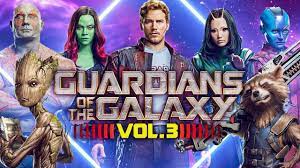
Guardians of the Galaxy Vol. 3

Guardians of the Galaxy Vol. 3

GG3 is not near the bottom of the Marvel barrel, as some have attested. Neither is it a “great send-off,” as others have called it. It’s a generally funny, overlong, and overstuffed film, but is still successful at wrapping up a unique trilogy. Certainly the first film is the best, but GG3 is still enjoyable for those that connect with these characters (as I do).

All of the usual suspects hew close to their previously developed characters, with little actual growth. Pratt, unfortunately, is saddled with a seriousness that he pulls off, but doesn’t align best with his screen personality or Quill’s character. Pratt has a great comic presence in nearly everything he does, and while he can be a decent action/adventure hero outside of the Galaxy, he’s not the strongest serious action hero. Added to that is the screenwriter’s insistence that he occasionally remind the viewer of the ultimate reason for all the discussions, fights, schemes, and killings: to save their friend. It stops the film cold every time, and is possibly one of the weakest “let’s remember why we’re doing what we’re doing” series of lines in recent memory.

“Their friend” is Rocket, the (spoiler alert) raccoon voiced by Bradley Cooper. This is Rocket’s origin story, a strange choice for the culmination of a series, but which is explained, if rather clumsily, at the end of the film. Putting a great background character into a leading role (at least narratively) is risky (e.g., Ted Lasso’s second season, episode eight). But the film ultimately pulls it off by making the origin story a series of flashbacks that add a new energy each time the film cuts back to Rocket’s early years and experiences. It’s a rather thin throughline for a Marvel film, but we accept it because Rocket isn’t featured in every scene, and we get to enjoy our familiar favorites.

We get adequate visits with Mantis (Pom Klementieff), Drax (Dave Bautista), Nebula (Karen Gillan), and Groot (Vin Diesel), who continue being their unusual selves and who break little new ground in their interactions with others. We also get more than we want from Zoe Saldaña, who plays Gamora with more of an uncomfortable, harder edge than ever. Her final relationship with Quill is as ill-defined as Drax’s is with Mantis.

Sean Gunn’s Kraglin was once an integrated part of the Guardians, but seems to be a bit sidelined here, which cuts into a likeability factor that had been built up in the previous two films. As strangely used is Sylvester Stallone, who provides a casting jolt when first seen, but ultimately is a distraction. Chukwudi Iwuji is given star credit and an important role as The High Evolutionary, but the character doesn’t come off as the great bad guy he is supposed to be, making the villain someone who mysteriously tends to fade into the background.

And then there is Will Poulter. Is there going to be a new franchise built around his Adam Warlock character? That seems the only reason for introducing his character. His arc from evil killer to one of the guys is only one mystery with his character. The other is the presence of Elizabeth Debicki (The Crown‘s second Princess Diana) as Warlock’s mother, who is all of two years older than Poulter. They both have a strong screen presence, and Poulter’s general amiability wins out at the end. But such new and strong characters seem there for future franchise reasons than for logical new additions to the end of a trilogy, and they only add to the already excessive side storylines.

What is extraordinary about GG3 is what a technical triumph it is. The created creatures are as real as the humans and the natural landscapes, especially Rocket. Yes, there are stunning action sequences involving a great many effects. But the greatest effect here is of a believable world comprised of real and computer imagery. It’s up there with the  Avatar films.

Perhaps the greatest weakness of the film is its attempts at importance and transcendence, with doesn’t really jive with the lighthearted insouciance of the best Guardian moments. The does thankfully break some too-serious moments with a strong and welcome tonal shift when things threaten to get too heavy. But those moments are unfortunately undercut by painful s-l-o-w-m-o-t-i-o-n scenes that turn small moments into attempted BIG MOMENTS FILLED WITH FEAR, DREAD, OR SIGNIFICANCE. I won’t spoil them except to say that one of the first of these is right at the beginning when a hand very slowly approaches the young Rocket character. If the film had simply allowed the hand to grab him quickly and steal him away, and the film had followed that rule throughout, it would have been blessedly shorter and more fun.

And why is a Marvel film taking a cue from the worst of the D&C movies, with dragged out fight after dragged out fight? The film is The Searchers combined with Saving Private Ryan in space to some degree, but the rescue gets lost in the set-up and execution of each new noisy, lengthy skirmish. And the violence and language! I was wondering if the increased crudeness and definitely stepped-up violence was an attempt to keep pace with the franchise’s original audience, moving from young impressionable kids to young adult territory. The one strong f-bomb, unfortunately handled by Quill, is approached a few times in a few sequences before we hear it loud and clear, which is the one-bomb-only rule that keeps things PG-13. But there is a good deal of crude language for those wondering if they should take the kids, and at what age the film would be appropriate. The language and violence are simply not appropriate for young children. The A Clockwork Orange-like scenes with Rocket and his eyes, too, will likely be uncomfortable for most viewers and might be traumatizing for little ones.

Being a space opera version of Saving Private Ryan and The Searchers et al., the film focuses on saving one person at the expense of many, many other lives, most of whom have nothing to do with the main rescue narrative. Apparently, Rocket’s life is presented as worth the violent deaths of dozens of side characters.

The songs of the first GG film, and most of the songs of the second, were delightful and at least to this writer, perfectly nostalgic. GG3 doesn’t have the same effect with its music until the end credits—again, at least to this guy. And finally, there is the Kevin Bacon thing, with is delightful.

GG3 is too long, too violent, too crude, and too full of plot and new characters. It’s also a technical marvel, and a visit with old friends that we are sorry to see go. I saw it twice.

Posted in Film Reviews, Newer films | Tagged , , , , , , , , , , , , , , , , , , , , , , | Leave a comment

2023 Oscar Predictions

Until recently, there has been no film that has captured critical, awards, and audience consensus and has thus seemed bound for Oscar glory. That’s changed in the past month or so, as Everything Everywhere All at Once has landed on top of the pile, collecting a number of acting, directing, and Best Picture awards. 1922 wasn’t the strongest year for narrative film, and this crazy/wonderful/bonkers/original film has been, certainly, among the most interesting films of the year. Tár and The Banshees of Inisherin are probably stronger films formally, but the former is too cool and the latter, too hot. Elvis was fun (excepting Mr. Hanks), but a bit all over the place. Top Gun: Maverick makes the list because it was both solid and wildly popular, and brought audiences back to the movie theater (for which the Academy is most grateful). Spielberg’s The Fabelmans is the big movie that couldn’t, (and apparently won’t), All Quiet on the Western Front already has a lock on Best International Feature, and isn’t Parasite enough to capture the big prize. Avatar: The Way of Water is there for technical reasons, and both Triangle of Sadness and Women Talking are respectable films (that practically no one saw) that serve to round out the full list of ten.

If I were writing this a month ago, I would have written with more certitude about my guesses—hence the inclusion of dark horses and possible spoilers. So here goes….

BEST PICTURE

Everything Everywhere All at Once I can’t imagine anything else taking this this year.

BEST DIRECTOR/S

Daniel Kwan and Daniel Scheinert for Everything Everywhere All at Once (only the third directing pair to win this).

BEST ACTRESS

Michele Yeoh for Everything Everywhere All at Once. I feel quite vindicated by this, as she was my pick for Best Actress back in April of last year ( https://film-prof.com/2022/04/21/everything-everywhere-all-at-once/ ). There was a moment in time that the towering performance of Cate Blanchett in Tár might have (and possibly deservedly) won her third Oscar. But Yeoh’s long career, great performance, and being the PC pick of the year will give her the Oscar. (Remember, most applause for her that night will be Hollywood congratulating itself for its inclusion, and only incidentally, but not completely insincerely, for the legendary Chinese actress.)

BEST ACTOR

I’ve gone back and forth on this for months. It will either be Austin Butler for Elvis or Brendan Fraser for The Whale. Both are literally standout performances in their films, with Elvis certainly being the stronger film of the two. But being great in a so-so film often highlights the performance, and Fraser wins on that score. Add to that the great Hollywood comeback story that is his this year, and I think the scales will tip in his direction. But since there is generally at least one shocker per night (can you say “Anthony Hopkins for The Father”?), it may be that Butler and Fraser split the vote, and an also deserving Colin Farrell might snag the Oscar, à la Born Yesterday‘s Judy Holliday winning the Best Actress Oscar over both Bette Davis (All About Eve) and Gloria Swanson (Sunset Boulevard). Fraser has been giving great acceptance speeches this awards seasons, and I think the Academy wants to see another.

BEST SUPPORTING ACTRESS

Again, I had a different thought a month ago. I assumed that Angela Bassett was a lock for her ferocious performance in Black Panther: Wakanda Forever. And since Everything Everywhere All at Once has TWO female supporting nods, it seemed that this might have canceled out those two nominations—Jamie Lee Curtis and Stephanie Hsu—thus leaving the prize to Bassett. But the Academy loves Curtis, and Hsu’s even better performance only promises a possible great career and not an award this early. Curtis won the Screen Actors Guild award in this category, which muddies the prediction waters, but I still lean toward Bassett. It will be one or the other.

BEST SUPPORTING ACTOR

No question that it will be Ke Huy Quan for Everything Everywhere All at Once. First, the performance is good enough to win. But Quan is also the Asian comeback story of the year—the winning combination this year, and is a lovable and engaging presence giving great acceptance speeches. No one else has a chance. Earlier this year, I thought it might be the great actor Brendan Gleeson for Banshees, but he gave everyone the finger, so no.

BEST ADAPTED SCREENPLAY

Women Talking has great dialogue, as one might have guessed by the title. Plus it’s an original work by a woman, directed by that woman (Sarah Polley). I honestly can’t say either way whether this is the best adapted screenplay, but it gives the Academy the chance to reward someone they admire.

BEST ORIGINAL SCREENPLAY

The screenplay for Everything… is a modern, all-over-the-place explosion of ideas and perspectives, most of which work. But…the script by Martin McDonagh for The Banshees of Inisherin, while problematic on several levels, is tight and beautifully classical in nature. Everything… might win here as part of a sweep, but I think the Academy realizes that a work of art like Banshees should have some attention and will go the Best Original Screenplay award route for the film and for McDonagh.

BEST CINEMATOGRAPHY

This might easily have gone to Top Gun: Maverick if it had been nominated. But it wasn’t. The top contenders are Germany’s All Quiet on the Western Front and Elvis, two films that couldn’t be farther apart in look and feel. I’m guessing All Quiet… will win, but wouldn’t be surprised by an Elvis come-from-behind win here.

BEST COSTUME

This one is tough to guess. I would have guessed Babylon a month ago, but Elvis may make a surprise win here as well. I think that Everywhere… and Black Panther… will cancel each other out.

BEST EDITING

Again, a month ago I would have assumed that Everything… had a lock on this, as a good half of the film’s energy and meaning comes from its editing. But this might be the category that folks decide Top Gun: Maverick needs this win.

BEST MAKE-UP AND HAIRSTYLING

A month ago, The Whale. Now, probably Elvis.

BEST PRODUCTION DESIGN

A month ago, Babylon. Today, still Babylon.

BEST SCORE

See BEST PRODUCTION DESIGN, above. (Babylon)

BEST SONG

No question, it’s going to be “Naatu Naatu” from RRR. And since this is Diane Warren’s 14th nomination (for “Applause” from Tell It Like a Woman) and will be her 14th loss, we can all relax because Warren received an honorary Oscar late last year for her body of work.

BEST SOUND

This is probably Top Gun: Maverick’s closest thing to a lock. The film shines technically, and this is a category win that few will have a hard time with.

BEST VISUAL EFFECTS

Could it really be anything other than Avatar: The Way of Water? All Quiet on the Western Front used its effects invisibly, while Avatar… puts it effects front and center. No contest here.

BEST ANIMATED FEATURE

No award for Disney or Pixar this year. It goes to Guillermo del Toro’s Pinocchio. This has received the most critical acclaim of any animated film this year, and the others are the very definition of “also ran” films.

BEST DOCUMENTARY FEATURE

Navalny. A great story that is political (and on which all can agree as to the bad guys!), as opposed to Fire of Love, which is personal and may well have won any other year it wasn’t up against a Holocaust film.

BEST INTERNATIONAL FILM

All Quiet on the Western Front is nominated for nine Oscars. That seems to make it a sure winner in this category.

BEST ANIMATED SHORT/BEST LIVE ACTION SHORT/BEST DOCUMENTARY SHORT

I don’t care.

Posted in Film-Related Articles | Tagged , , , , , , , , , , , , , , , , , , , , , , , , , , , , , , , , , , , , , , , , | Leave a comment

Jesus Revolution

It’s impossible to be whatever “objective” is with this film, much like the struggle I had writing about Isn’t It Romantic, which was directed by my friend and former film student Todd Strauss-Schulson. In that instance, this was a major film directed by someone I cared about, and therefore difficult to address without the “I’m so proud” card showing. In the case of Jesus Revolution, in many ways it’s the story—or at least the context of the story—of my spiritual life and the spiritual life of many of my closest friends. The film covers the Christian revival (primarily) among the young and disaffected—yes, and the hippies—of Southern California. The revival made its way to the East Coast, where in 1973 it caught up to me, my family, my future wife, and many folks that become life-long friends. To use a phrase I’ve been avoiding for years, I finally felt “seen” on the screen.

As a former film professor, I’ve struggled with the quality of Christian films over the last 20 years. Some of the screenplays are paint-by numbers, and the acting is, shall we say, not necessarily Oscar-worthy. Jesus Revolution won’t win any acting Academy Awards next year either, but every lead and most secondary characters are real actors (including Father of the Bride bride Kimberly Williams-Paisley) who give believable performances. Of course, the lead is Kelsey Grammer, who wears the character of Pastor Chuck Smith like a glove. If I recall correctly, I only caught him acting once. The rest of the time, he was the character.

To make things a little strange for many Christians, Jonathan Roumie, who plays Jesus on “The Chosen” series, has a major role here as a hippie-turned-believer. He’s a good actor and nails the part, but for those that know him from “The Chosen,” it takes a few moments to wrap one’s head around this new and flawed character.

The film has been described as being about Chuck Smith, the conservative pastor who opened the door to hippies and rode a revival like a surfer rides a wave, eventually becoming the head of the Calvary Chapel group of churches. That’s not really true. It’s really about something the film declares (and that I believe) is a move of God that involved imperfect people and still had a monumental impact on a generation. To help make that point clear, the film encompasses several stories at once, and covers a great deal of ground. Yes, it covers Chuck, his wife and daughter, and their struggles with what was happening around them. But it also includes the beginning of Lonnie Frisbee’s story, a story which became quite complex and convoluted, a future for which the film lays the groundwork, but doesn’t get lost in. It also covers a romantic love story, but a real one with a person that many of us from that time are familiar with. And lastly, the famous (spoiler alert) Time magazine cover article on the movement is featured as well. So it “hits home” with this writer and many other people who became Christians about that time because, in some ways, the film is our story as well.

Ironically, one of the problems I have with many Christian films of the past is the obviousness and “on-the-nose-ness” of some of the dialogue; it comes across as too far removed from what real folks say. Here the only part of the film that even comes close to that is the world of late-60’s California pre-Christian hippies, with “cool” and “dig it” making their appearance along with many similar expressions of the time. (And oh, the clothes!) But once I thought about it, that is exactly what a lot of people looked and sounded like back then. It was another world, and just because it might seem embarrassing now to those of us who lived through it doesn’t mean that an awkward-sounding reproduction of those times wasn’t “right on” (sorry/not sorry—I had to). What comes across as real and true, instead, are the conversations between Christians and the presentations from the pulpits. Yes, world, that is pretty close to the language we really used, and still do. It may seem corny and occasionally come off as preaching to the non-choir, but it’s quite real, and deeply meaningful.

Jon Erwin, this film’s co-director (with Brent McCorkle) was also the director of I Can Only Imagine, American Underdog, and Moms’ Night Out, among others, with his brother Andrew. Erwin and his colleagues have been steadily improving the “inspirational film” genre steadily throughout the years. Tackling this event and this many story lines would be a great challenge to any director, but this film solves those admirably.

Many film writers have rightly talked about how important it at least feels to be seen and represented on the screen. For me, seeing folks come to Christ and getting baptized pretty much ruins me (in the best way) whenever I see it, even as it does in my real life in my real church. So for me, there were too many moments that hit close to home for me to feel I can be artistically objective about the film. But as many writers have expressed, “if you want to understand [this group of people], seeing {such-and-such a film} would help you understand them and would broaden your mental and emotional horizons.

My wife and I walked out of the theater and said we had to tell our children that if they wanted to understand the context of our spiritual lives, they would have to see this film. Jesus Revolution tells of a move of God with intelligence and more honesty than I was expecting, weaving several stories together in a surprisingly coherent way. In its focus, it leaves out a number of elements that could have been covered, but which I believe the film is wise to not address. But for anyone wanting to understand this time and place, or even evangelical Christians in general, this film is a must-see.

Posted in Film Reviews, Newer films | Tagged , , , , , , , , , , , , , | Leave a comment