
Did you know that July Garland, in spite of her tragic loss of the Oscar in 1955, did win an Academy Award? Other winners in this special Juvenile category include Mickey Rooney (nominated later for four other films as an adult), singer Deanna Durbin, Margaret O’Brien, and my first celebrity crush, Hayley Mills.
These were the Juvenile Academy Awards. They were given starting in the 1930s and ending in 1961 as a way of recognizing outstanding juvenile performances without forcing child actors to compete against adults in the competitive acting categories. Apparently 9-year-old Jackie Cooper’s loss in 1931 to Lionel Barrymore prompted the Academy to establish this special award for children under 18. Of course, there have been several young Oscar winners in the main acting categories since then—Patty Duke in The Miracle Worker, Tatum O’Neill in Paper Moon, Anna Paquin in The Pianist—but for a while, there seems to have been a mental divide among Academy members between younger and older actors.
Here’s a brief overview of the winners:
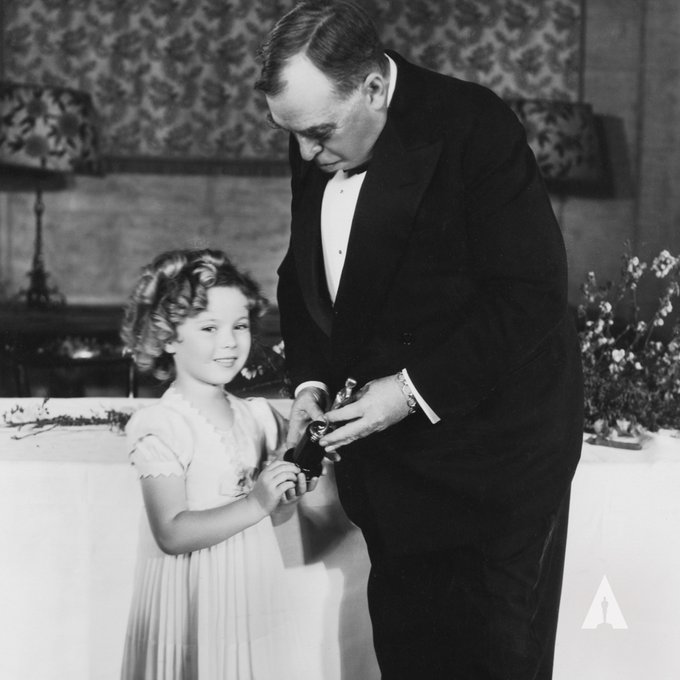
1934—Shirley Temple. Temple was a phenomenon in the 1930’s bringing joy in the middle of the Depression and studio-saving dollars to the Fox Film Corporation. There was no one like her in the film world or in society at the time, and Temple unequalled as America’s young sweetheart. It turned out that while she could mimic and perform with style and panache as a youngster, she really couldn’t act. But when she made her early-to-mid-1930’s film, she stood alone at the top.


1938—two winners, Deanna Durbin and Mickey Rooney. Durbin was 17 and Rooney was 18 by the time they received these awards. Durbin was a soprano singer often compared and contrasted with alto Judy Garland, and she stepped away as a young adult. Rooney was the biggest box office draw in 1939, and went on to 8 wives and a successful career.
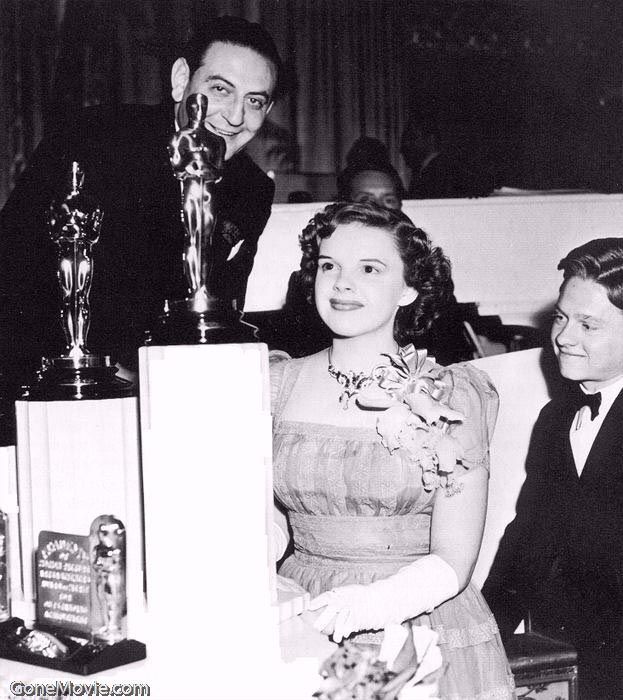
1939—Judy Garland. Her performance in The Wizard of Oz couldn’t be ignored, and my guess is that even if she were allowed to compete with adults that year, she would have lost to Vivien Leigh for Gone with the Wind anyway. Sadly, this was her only Oscar, and it tends to be ignored by writers who don’t know that she received this.
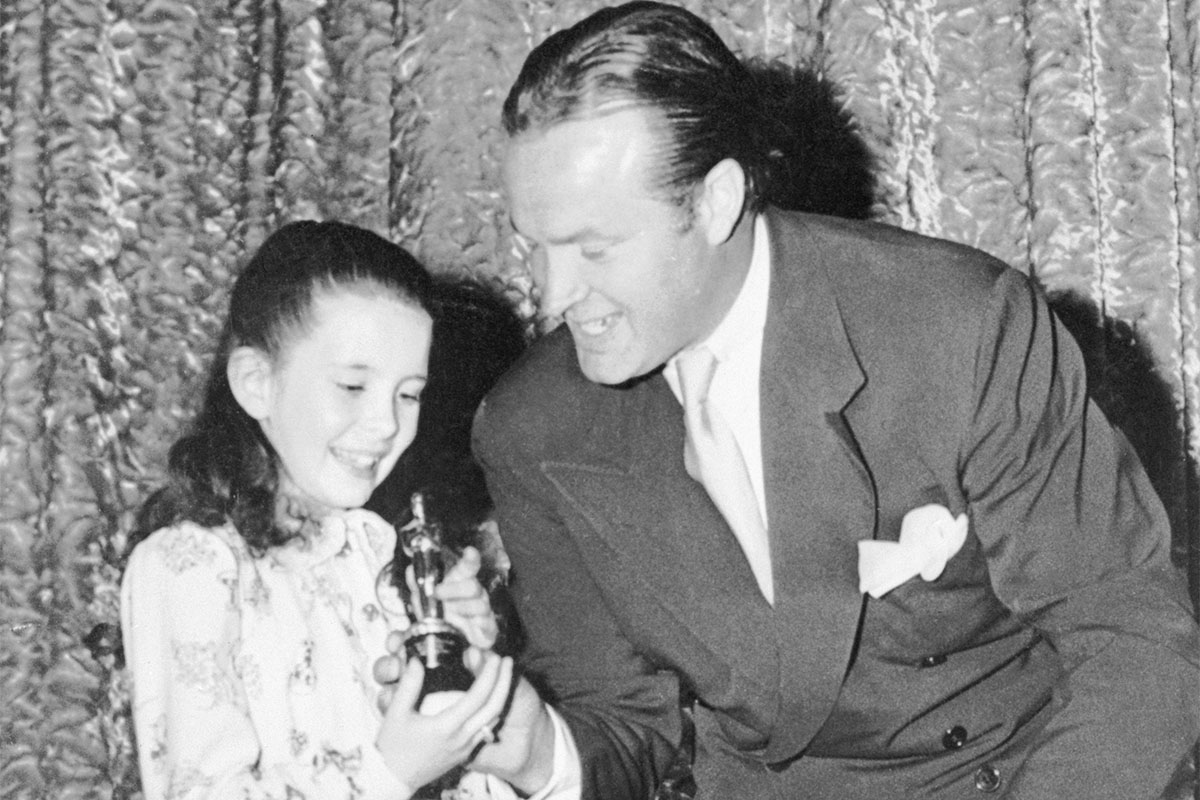
1944—Margaret O’Brien for Meet Me in St. Louis. O’Brien is both respected and sometimes dismissed as a great crier. Few could touch her for her ability to cry on cue, but she was an excellent actress who was unable to make the transition to adult roles. She later found a career on television.
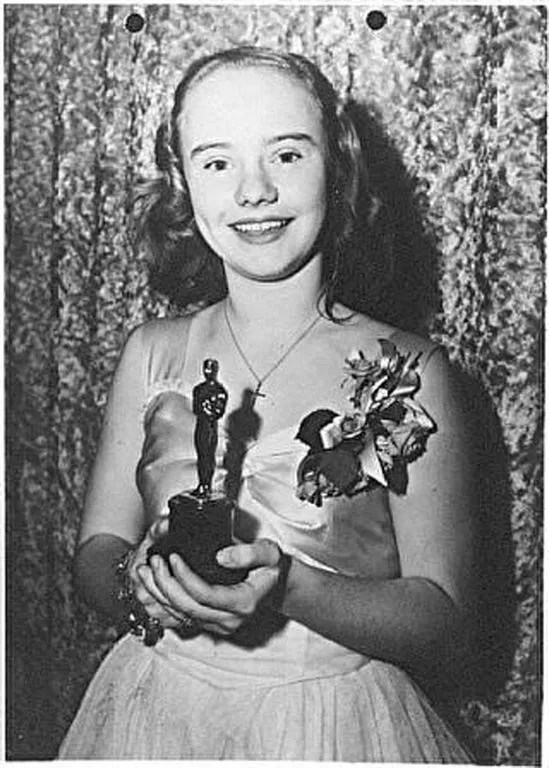
1945—Peggy Ann Garner for A Tree Grows in Brooklyn and Junior Miss. Her work on the former is especially real and touching, and stands in stark contrast to many of the precocious and snarky child performances we often see today. Like O’Brien, she didn’t move into adult film roles but found success and the stage and in television. She died at the young age of 52.

1946—Claude Jarman, Jr. At 10, he landed his first film role as the star of The Yearling, a classic well-made tearjerker that was the first of his 11 films. While he made a few other films as a youngster, he never succeeded as an adult actor. He found business success behind the scenes, however, including running the San Francisco Film Festival for 15 years and producing documentaries.
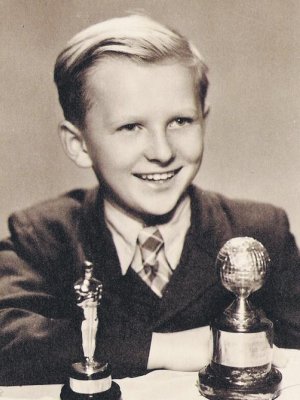
1948—Ivan Jandl. This long-forgotten actor won this award for his performance as a 9-year-old Czechoslovakian Auschwitz survivor in The Search. While this film is often remembered for Montgomery Clift’s first Oscar nomination, and the quote that was asked of the film’s director Fred Zinneman—“Where did you find a soldier who can act so well”? –Jandl is a heartbreaking revelation. He spoke no English and learned his lines phonetically, but his eyes and naturalistic acting do the heavy lifting. He wasn’t allowed by the then-Communist government to come to the US to accept his award. He appeared in some Czech films after this but gave up films and found success in radio before his death at 50.

1949—Bobby Driscoll for So Dear to My Heart and The Window. He also served as the animation model and voice for the 1953’s Peter Pan, and was set to become a major star. But he was too often pigeonholed as a child actor, found it difficult to make the transition to adult role, and while he had some radio success, his drug addiction finally took him at the age of 31.

1954—Jon Whitely and Vincent Winter for The Little Kidnappers. These actors and this British film are largely forgotten today. Whitely continued acting in films for a few years and later became an art historian and author. Winter too acted for a few years and then worked behind the scenes as a production manager for films such as Superman III, Indiana Jones and the Temple of Doom, and 1985’s The Color Purple.

1960—Hayley Mills, the only winner still living as of this writing. Oscar-winning actor John Mill’s younger daughter won this award for Walt Disney’s Pollyanna, but should have won it the year before for Tiger Bay. She was great in 1961’s The Parent Trap (yes, the original), and in Whistle Down the Wind (a British production), and had success in In Search of the Castaways (1962) and The Chalk Garden and The Moon-Spinners (both 1964). She later made some less-successful films and some questionable life choices, and never achieved the success that her early films promised. She did television and stage work later in life and was recently seen in a small role in M. Night Shyamalan’s 2024 Trap as an FBI profiler. Her life is one of the classic “What we sadly missed because of life choices” stories in the world of film.


 Film stuff by Mark