A Real Pain

A Real Pain is the second film written and directed by Jesse Eisenberg (below right), best known in one demographic group as Lex Luthor in Batman vs. Superman: Dawn of Justice, and in another as Mark Zuckerberg in The Social Network. His characters are generally smart, fast-talking, and at least one step ahead of whatever character he’s interacting with. A Real Pain announces the arrival of a major director, one who is young and sharp without being condescending. Eisenberg seems to be this generation’s Woody Allen. He writes, directs, and acts in his own films. He is Jewish and isn’t hesitant to bring that into the forefront. Like Allen’s films, there is a refreshing indie feel to this film, with notes of great humor and the occasional deep dive into seriousness that fortunately lacks the older director’s fixation with death.

Considering the plot of the film, which has two cousins traveling to Poland to see where their grandmother, a survivor of the Holocaust lived, this film could easily have tipped in directions of unearned profundity, jarring frivolity, or a mashup of ingredients that don’t cohere. Miraculously, the ingredients do match in a fresh way. This film is a buddy movie, a comedy, a drama, a Holocaust movie, a family dynamic movie, an odd-couple film, a look at identity issues (especially Jewish identity in the light of WWII and the aftermath), as well as a travelogue through some glorious countryside. Yes, all those elements are here, and due to Eisenberg’s steady hand, nothing spins out of control. This film is stuffed with different people, differing issues, and more issues than most big-budget extravaganzas ever choose to address, yet the film is light and airy and (generally) easy to watch.

What is occasionally difficult to watch is Kieran Culkin’s performance, which is a work of art and will likely win him the Best Supporting Actor Oscar. Benji, his character, can be charming and flirty and engaging, but he can also be crude, rude, and cutting, often within seconds of those varying expressions. That’s the hard-to-watch part. You know that friend or relative that you love dearly, but often have to hold your breath around and occasionally apologize for their behavior? He’s that guy. In the hands of someone else, it could easily have been an uncontrolled parade of emotions and actions. But despite the incredible range of humor, embarrassing outbursts, and displays of selfishness that oftentimes greatly inconvenience others, Culkin roots everything deep into a humanity that never moves into thespian showmanship. Culkin and director Eisenberg give us one character here—complicated and often impossible to understand, but real.

Eisenberg takes on the quieter, more stable role that Culkin’s character is playing against, and he is excellent in the less showy role. As director, writer, end actor, Eisenberg holds down this mélange of personalities, actions, issues, and tone shifts with grace and a steady but not visibly controlling hand.

The Eisenberg/Culkin relationship is just the central personal one in a film nearly overflowing with comparing/contrasting issues. We have the horror of the Holocaust pitted against a group of tourists enjoying great food and comfortable accommodations while working to properly “remember” all that happened. The personality contrasts of the two central characters also bring up issues of “settling,” especially as it pertains to whatever one thinks the American Dream is. The question of what it means to be Jewish, too, is always playing underneath the action. Coincidentally, one of the travelers is Jennifer Grey, who famously had a nose job to look “less Jewish” after her triumph in Dirty Dancing, and hence lost her unique beauty. She has come to see that decision as the thing she most regrets doing, and she reclaims her Jewish identity in some respects with this performance. Note: I may have missed it, but I was looking to see when the film’s events take place. It seems like the present, but Grey doesn’t look old enough to have had a grandmother in the Holocaust. Just a thought…

Articles on films often spend an inordinate amount of time describing the plot. Not happening here. Knowing that we have two different cousins coming together to visit their ancestral home that happens to be the site of a concentration camp is enough to get one started. The unexpected ups and downs of the film are what makes it so enjoyable; a great group exercise among people who have seen the film would be to ask, “What is this film about?”

There might be as many answers to that questions as there are people in on the discussion. That’s what makes the film so interesting. What makes it great, however, is the writer/director’s ability to juggle plot points, performances, and deep historical issues into one enjoyable expression. Kudos to Culkin for establishing his reputation aside from famous brother Macauley (though his Emmy-winning work on HBO’s “Succession” strongly began that process), and to Eisenberg for resisting the showier role and for bringing order and delight to elements that might easily have spun out of all control in another director’s hands.

This film isn’t like anything else now, which may make it difficult for some to describe to others. It’s not reducible to anything simple. That’s its charm, and its triumph.
Posted in Film Reviews, Newer films | Tagged , , , , , , , , , , , , , | Leave a comment

Two and a Half Flicks: The Narrow Margin, Manhattan Melodrama, and Return to Glennascaul

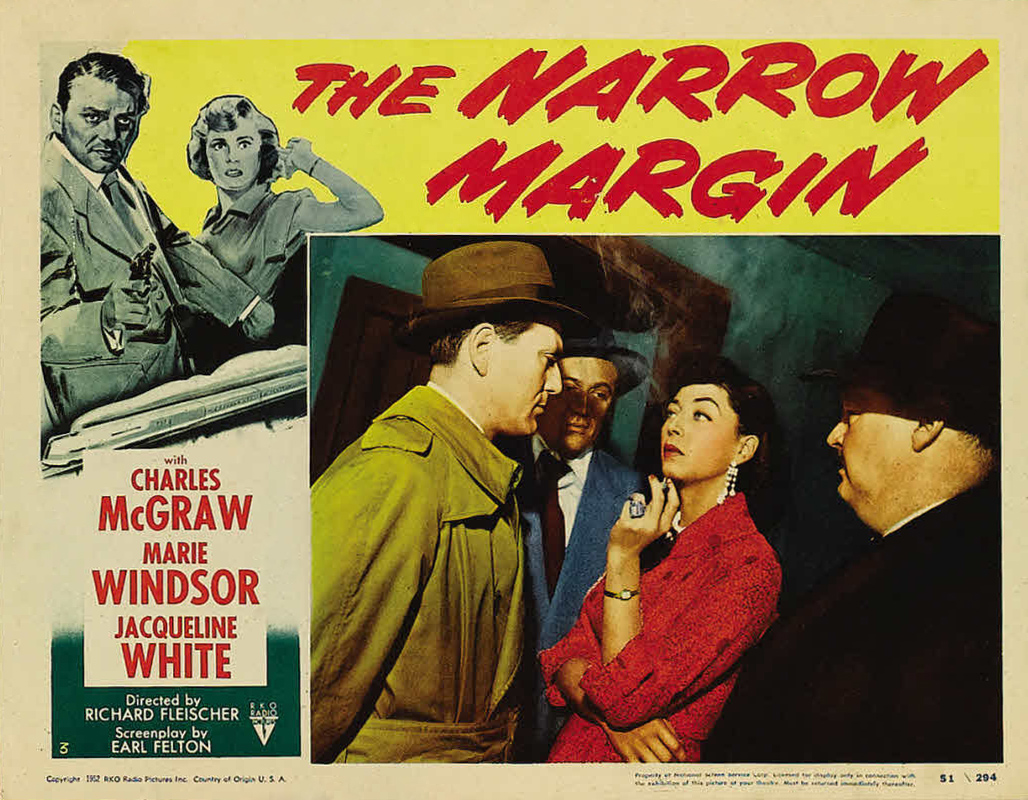
Narrow Margin, 1952

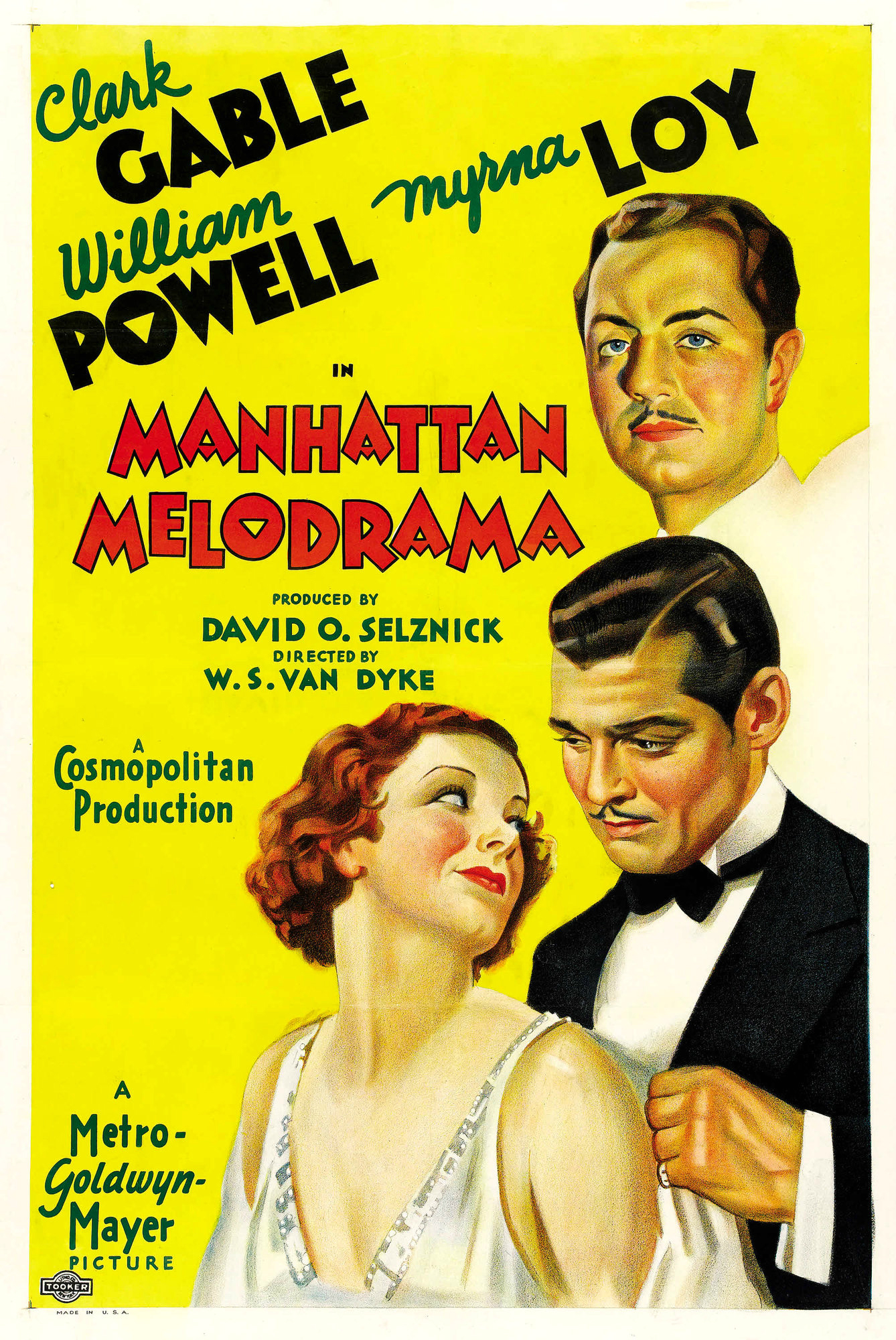
Manhattan Melodrama (1934)

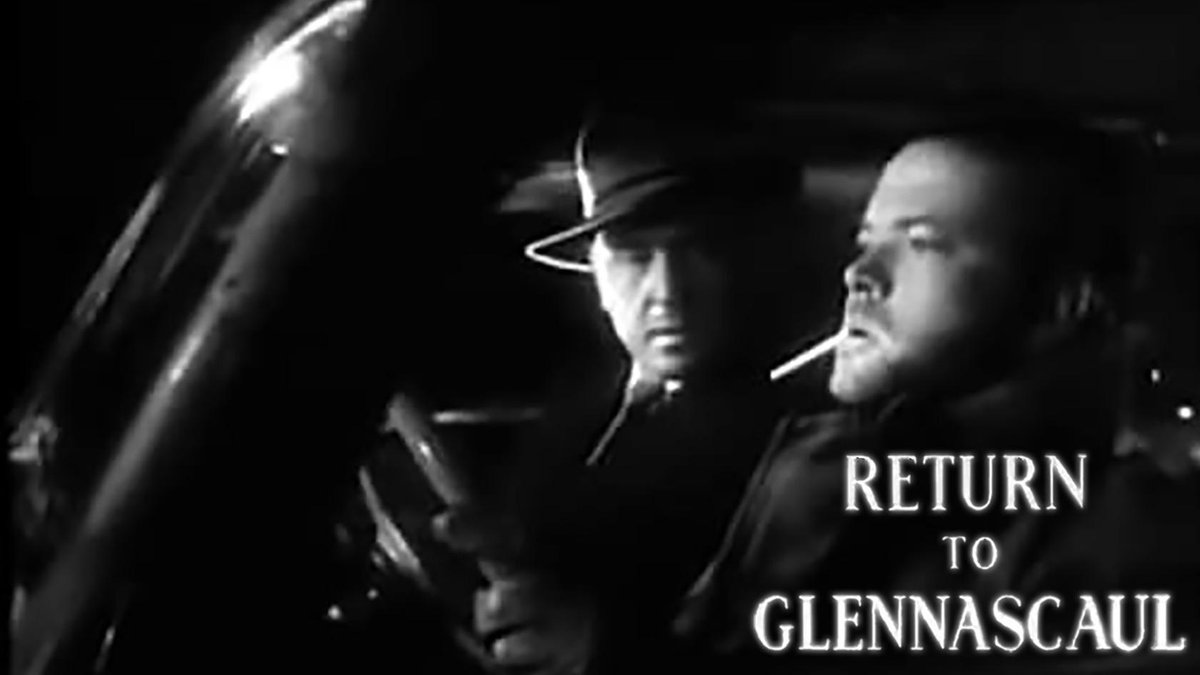
Return to Glennascaaul (1952, a short with Orson Welles)

Having spent the long weekend with best friend Clint Morgan and his wife, I knew that I would be treated to a series of classic film options, especially of the film noir variety. After reviewing a huge list of films I had hardly heard of, we decided to see The Narrow Margin, a film that redefines taut, snarky, lean-and-mean film noir.

Directed by Richard Fleischer (20,000 Leagues Under the Sea, Soylent Green, Fantastic Voyage, Conan the Barbarian, Barabbas, etc., plus an Oscar for 1948’s documentary Design for Death), The Narrow Margin stars bit-or-supporting-part actor Charles McGraw in a rare lead role as a tough detective with a challenging assignment. The lead female is tough-as-nails Marie Windsor in one of her strongest performances and best parts. The dialogue between them is almost surreal in its energy, intelligence, and hard-boiled attitude. It was nominated for Best Writing, Motion Picture Story, unusual for a B-bordering-on-A picture.

In short, the story is fast and takes some fascinating turns, and the pace by Fleisher is an economical wonder. It’s well worth watching for the story, the completely unsentimental and cynical dialogue, and the ups, downs, and surprises along the way.

Manhattan Melodrama is perhaps best known now as the film that gangster John Dillinger had just seen before he was gunned down in Chicago. It’s also known as the first pairing of Thin Man stars William Powell and Myrna Loy. But it also stars Clark Gable, which clearly means that this is a different film, considering what was to come from the other two leads.

The credited director is W.S. Van Dyke, who went on to direct many of the Thin Man movies. But apparently Jack Conway and George Cukor had a hand in directing it as well. Film nerds, be alerted: Joseph L. Mankiewicz was one of the writers, and Donald Ogden Stewart was an uncredited one. Also, the film was produced by David O. Selznick, and the cinematography was by James Wong Howe. The name Slavko Vorkapich also jumped out at me, as he was a famous editor/special effects/montage expert who was clearly influenced with the great Soviet directors. The quickly edited montage sequences in the 1930s and ‘40s were often called “a Vorkapich.” Great names, all.

The story is one of the earlier sound films to incorporate the (eventually) tired trope of the two youngsters who are best friends, with one following a bad path and the other a good one.  (Note: the young Gable is played by a very young Mickey Rooney, who went in his own unique direction). Gambler/murderer vs. clean cut and honest politician. The girl (Loy) is first tied rather unbelievably to the bad guy (Gable, of course) but leaves him for the more stable Powell, a move that is almost equally unbelievable. Rather as incredible is that the film won the Oscar for Best Writing, Original Story in what must have been a weak year (Adapted Story Oscar of course went to the classic It Happened One Night), which also featured Gable in his only Oscar-winning performance.)

I’m a big Loy fan, so it was fun to see her in anything at this time, as she is usually the smartest person in whatever film she was in. As an actress (rather than the character she’s playing), she pairs well with Powell, though the emphasis here is on drama and ethics, and lacks the dynamism she enjoyed with Powell in the Thin Man films. No spoiler alerts here, but the film seems to head in a predictable but satisfying direction when it suddenly takes a strange and confusing term that ends up with more strangeness and confusion by the end. Both Loy’s and Powell’s characters make moves we didn’t see coming and which seem out of character and out of sense. The movie ends up being a head-scratcher by the time all is said and done.

If you’re a Powell/Loy completist, you may want to see it. If you’re a Gable completist, the same thing applies. If you’re looking to see all historically important films connected to the demise of real-life gangsters, you might want to see it. But if you want a see a promising film that looks great, is edited well, and acted by three stars about to explode, but has turnabouts that only confuse, this one’s for you.

Lastly, I was introduced to the 23-minute short Return to Glennascaul, featuring Orson Welles. It’s a quaint but fun ghost story with just the right amount of action and shivers. The set-up involves the real Orson Welles picking up a person with car trouble, who tells him the spooky tale. Directed by Hilton Edwards, who was an actor first and director last, it had to have been influenced by the great Welles. No spoilers here but keep your ears open for a hysterical throwaway line by Welles early on.

Posted in Film Reviews, Older Films | Tagged , , , , , , , , , , , , , , , , , , , , , , , | 1 Comment

Quick Takes on Two Netflix Movies: Back in Action and The Six Triple Eight

Netflix has two movies out right now (I can’t really justify calling them films) that are both second-rate. That works well for one, but not for the other.

The one it works for is Back in Action, a title that succeeds in describing the whole plot as well as the presence of the stars themselves. Jamie Foxx is back from the brink of death, and Cameron Diaz is back after more than a decade off the screen. Their chemistry is strong, and that is what keeps one’s interest. The plot has a small twist or two, but it’s pretty generic, which doesn’t mean that there aren’t a few moments of excitement.

Foxx and Diaz are aging as slowly as possible, and they are believable as parents of teens. They clicked well in 1999’s Any Given Sunday, and then worked together again in 2014’s Annie. They carry the film completely on their connection and charisma.

The many fight scenes are clearly designed for aging stars, and aren’t anywhere near the level of say, the Bourne films. They’re slow and pretty unbelievable. Plot-wise, there is almost nothing that can’t be anticipated by a viewer that’s paying even the minimum of attention.

But…there are surprise character/actors that show up that give the film a jolt of much-needed energy. They include a TV star, a well-respected English actor, and then a massively Oscar-nominated legend. Since their appearances are half the fun of watching the movie, you’ll have to see the movie to find out who they are.

The artistic mediocrity of the film works in that Back in Action doesn’t pretend to be anything beyond a fun ride.  I turned my brain off before watching it, and it was just what my wife and I needed that evening. There is absolutely nothing new here, but if your expectations are low, this is a wonderfully mindless and amusing two hours.

While Back in Action’s quality almost enhances its enjoyability, the other Netflix film’s failures are a disappointment with a long and sad history. It’s The Six Triple Eight, the story of the Women’s Army Corps’ all-Black battalion in World War Two, their struggles with racism and misogyny, and finally, their conquering of an almost impossible task that boosted soldiers’ and their families’ morale around the globe. Great story, very moving, and unfortunately done in the most pedestrian and clichéd manner.

The film follows a long line of powerful stories about Blacks in the military that present great stories that will always be tied, for a long time, in packages that don’t do justice to the stories that they’re trying to tell. Here, only lead Kerry Washington is the reason to see the film other than its story. Her fierce portrayal of Major Adams, like the two stars of Back in Action, is what holds the film together. The glue instead should be the story itself, full of feistiness, anger, passion, prejudice, commitment, and a meaningful victory.

Instead, we get a barely believable love story that peters out as soon as it takes hold, and the white equivalents of DW Griffith’s Black villains of more than 100 years ago; the white superiors (many of whom in real life came around to respecting Adams, the rest of the battalion, and the work they did) are almost uniformly big, fat, and ugly. They signal their racism and misogyny almost before they appear. So tired, so lazy, and so lacking in any kind of nuance or individuation. Such a lost opportunity. Even the title is lazy. Washington is quoted as (apparently) complimenting Perry’s approach as expeditious, but that can be interpreted as admitting that he is simply grinding out his films as quickly as possible. It shows.  

There are great films with similar story lines, such as Glory and A Soldier’s Story. But then there are Memphis Belle, Men of Honor, and the low point of Red Tails, all of which fail to present their stories in ways that match the power of the stories they’re presenting. The Six Triple Eight feels thrown together, and even its emotional climax was made up.

History will always be fascinating and if it doesn’t seem that way to filmmakers, they just need to keep looking to find the drama. The Six Triple Eight is engaging for its (somewhat fictionalized) central story and for a couple of performances, Washington’s being the best by far. But just go looking for the main story buried inside, not for anything else.

Posted in Film Reviews, Newer films | Tagged , , , , , , , , , , , | Leave a comment

A Complete Unknown

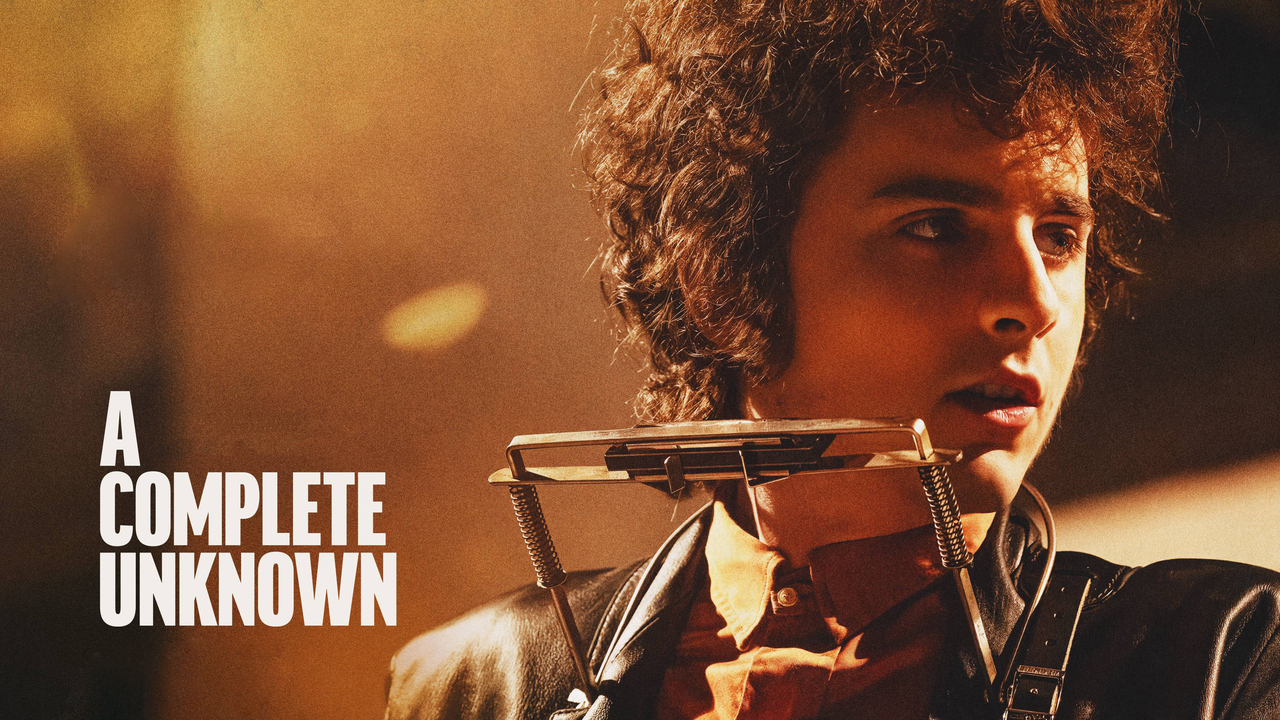
A Complete Unknown, which covers the very young Bob Dylan from his arrival in New York at 19 to his ground-breaking electronic performance at the 1968 Newport Folk Festival, does a few things very well, and its central performance is extraordinary.

Director James Mangold (Indiana Jones and the Dial of Destiny, Ford v Ferrari, Logan, The Wolverine) seems to be picking up and running with his approach in Walk the Line, the much better-than-average film about Johnny Cash that included two great performances and a lot of singing and playing by the lead actors.

A Complete Unknown is a perfect title for the film, as it is the name of one of Dylan’s biggest hits and at the same time reflects the film’s approach to the central character. This film’s Dylan is an cenigma, which in other hands could be a negative, but which here is a glorious positive, and one of the film’s great strengths.

This Dylan is never pinned down, never clearly defined, and almost never explained—again, a weakness or complete failure in other hands. Yet, yet, we are pulled in at the beginning and are never allowed to disconnect. This is due to the film’s approach (screenplay, direction), which has as its goal presentation without interpretation: we see and hear Dylan as he moves through space and time, yet we are as confused about who he is and what he wants as the characters around him. But like those characters, we are fascinated.

And here is where we must speak of Timothée Chalamet, who in his twenties has become a national treasure and already a kind of institution. This is an extraordinary performance on several levels. One is simply technical: Chalamet plays the guitar and sings. We knew he could sing from Wonka, but getting Dylan down vocally and then performing his singing scenes live, while also playing the guitar live, is astonishing.

Aside from the technical prowess demonstrated, Chalamet’s calibration of the various phases of Dylan’s growth physically and psychologically is a master class in growing older in a film. Just the shift from being 20 to 21 was evident in his face, his energy, and his body language. Then he did it again and again over the relative few years the film covers. One would expect that someone as young as Chalamet might just kick back and do what the script and director dictate in terms of speech and action. But it was exciting to watch a young man we’re not really allowed to understand still grow and change—not always for the better—slowly and almost imperceptibly before our eyes in a series of subtle and precise acting choices. It’s probably not Chalamet’s year for the Oscar, but I wouldn’t have a problem with his winning this year. The film is worth seeing just for him.

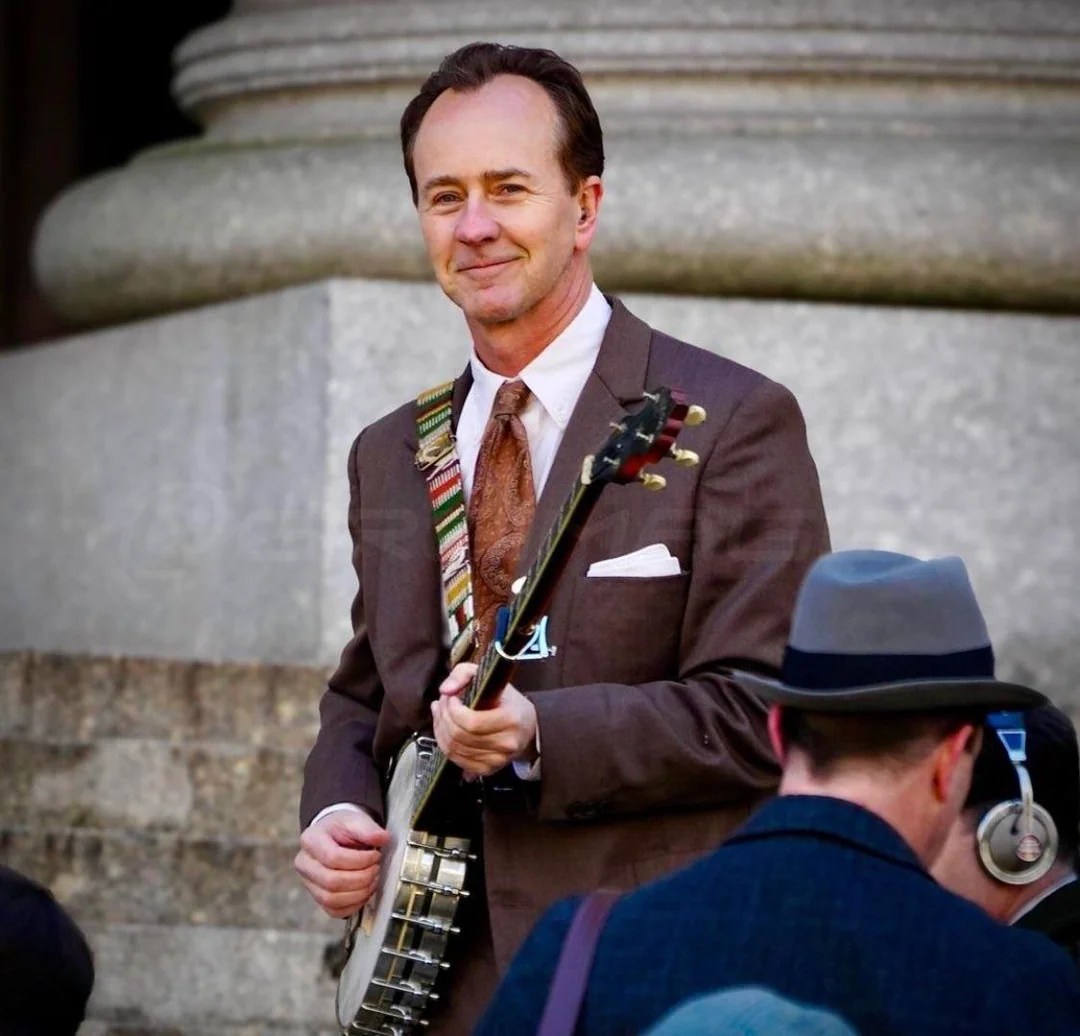
But there is another unexpected and award-worthy performance, and that is from Edward Norton [Fight Club, American History X, Birdman or (The Unexpected Virtue of Ignorance), who completely transforms himself into Pete Seeger. Norton has a reputation for not being the easiest actor to work with, and sometimes his intensity can be a bit much for the character. But here he is the strong but also laid-back folk singer and writer (“Where Have All the Flowers Gone?”, “If I Had a Hammer,” “Turn, Turn, Turn,” etc.) that the film claims connected him with Woody Guthrie on one hand to Dylan on the other. Norton proves again that he is a great actor, yes, in doing all his own singing and playing, but also in completely losing his own persona in that of a completely different character. Again, not going to be his year for the Oscar, but I wouldn’t be unhappy with a win here as well.

Following a character through years of revolution—in music, taste in just about everything, politics—is tough here. The early to mid-sixties was a wild time, and the film almost veers into Forrest Gump territory at times with all that is happening around Dylan, but ultimately succeeds in placing him in the middle of it without losing either him or the times around him that were a-changing. The film loses its focus on the middle a bit, as his behavior becomes a bit more inscrutable. Yet at the same time, we get to see the battle for creative expression as it begins to accelerate inside as much of the world around him wants to keep him in a box.

Capturing the creative process visually is a challenge for any film about an artist. A Complete Unknown presents glimpses of the creative process here and there without making bashing the viewers over their heads with overemphasis. We never get a “Look, watch the genius begin to create that Great Work!” Would that there were more films that could approach demonstrating creativity so well.

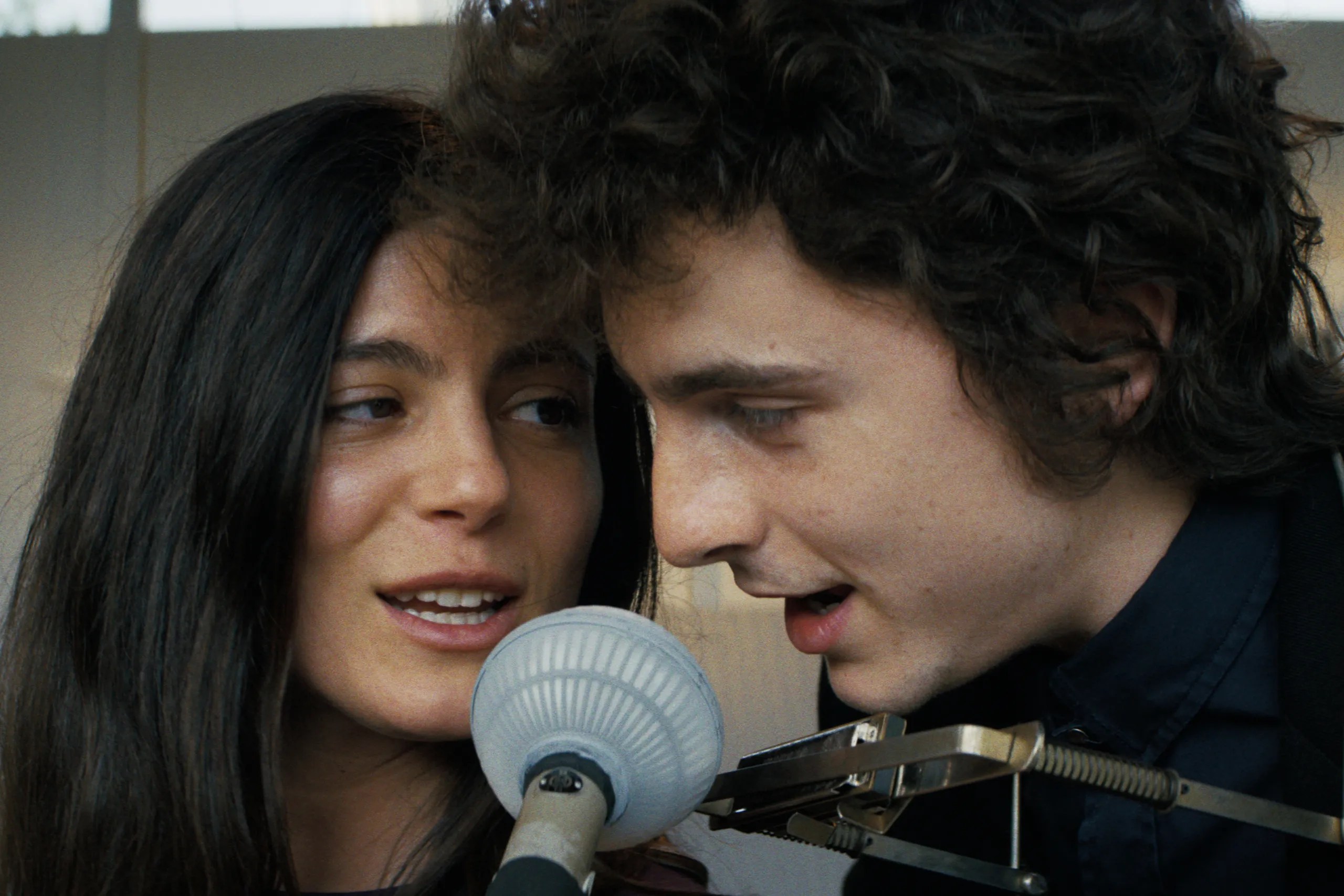
The film doesn’t completely know what to do with Joan Baez, who had such a profound influence on Dylan, relationally and professionally. Monica Barbato plays her here, and her crystalline voice works beautifully on its own, and especially, singing with Chalamet in their songs together—all high points of the film. We’re left with the impression of the importance of her in Dylan’s life, but it isn’t the clearest impression. Elle Fanning plays the other woman in Dylan’s life, here called Sylvie Russo, ostensibly a composite character but who is mostly based on the real-life Suze Rotolo. Fanning is a talented actress with a significant list of films behind here, and will continue to have a big career. But could have used a lot less of her looking forlorn and trying not to cry.

Continuing the comparison to Walk the Line, A Complete Unknown doesn’t have the celebratory moments of sheer joy that helped lift up the Johnny Cash biopic. That isn’t its goal. It is cooler in tone and attitude. It’s also one of the best of the year, with a breakout performance by Barbato, and two great performances by Norton and Chalamet. Lastly, keeping the central character at a distance from us while keeping our interest the whole time is a feat. For those interested in seeing how a film can present an enigmatic character you never want to turn away from, and in experiencing great acting within a very good film, try A Complete Unknown.

Posted in Film Reviews, Newer films | Tagged , , , , , , , , , , , , , , , | Leave a comment

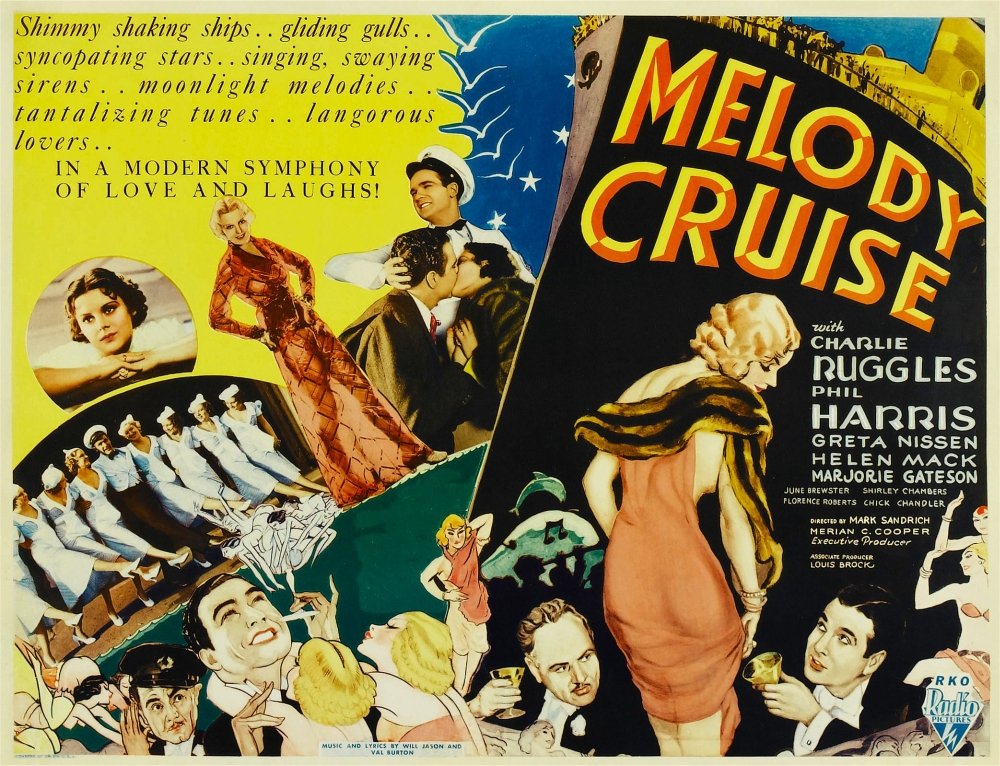
Melody Cruise (1933)

Melody Cruise is a delightful, one-of-a-kind film that’s not quite a musical (but is), not quite a romantic comedy (but is, sort of), a very Pre-Code film (which is definitely is), and a crazy blend of cinematic experimentation and sheer lunacy. For those with any interest in early ‘30s musicals, the work of director Mark Sandrich (who went on to do many of the Astaire/Rogers musicals), or who wonder what a Pre-Code comedic film looks like, this is your chance. It’s nuts, but a great deal of fun.

What most critics have pointed out over the years are the visually arresting ways Sandrich moves from one scene to another. Simple cuts or fades don’t work here. Yes, it can all can seem a bit much, but it is not only fascinating to see an American, working for a major studio (RKO), who dared to do such experimenting in a mainstream film; it is like René Clair on steroids at times. But those who stop at calling it simply experimenting or using cinematic tricks for their own sake, they are overlooking the fact that how one scene moves into another helps keep this film moving so briskly and entertainingly along.

And it often needs that kind of help moving things along. The plot is borderline ridiculous, especially by today’s standards. We have a man who is determined to never get married (you know the end already), an older man/mentor who is determined that he not get married (for his own selfish reasons), and a couple of scantily clad young ladies that somehow (!) end up in the stateroom of the older man. Then, we have sitcom like misunderstandings, etc. It’s all silly and literally incredible. But again, the film has an ace up its sleeve: while never mocking itself, it never comes close to taking itself too seriously.

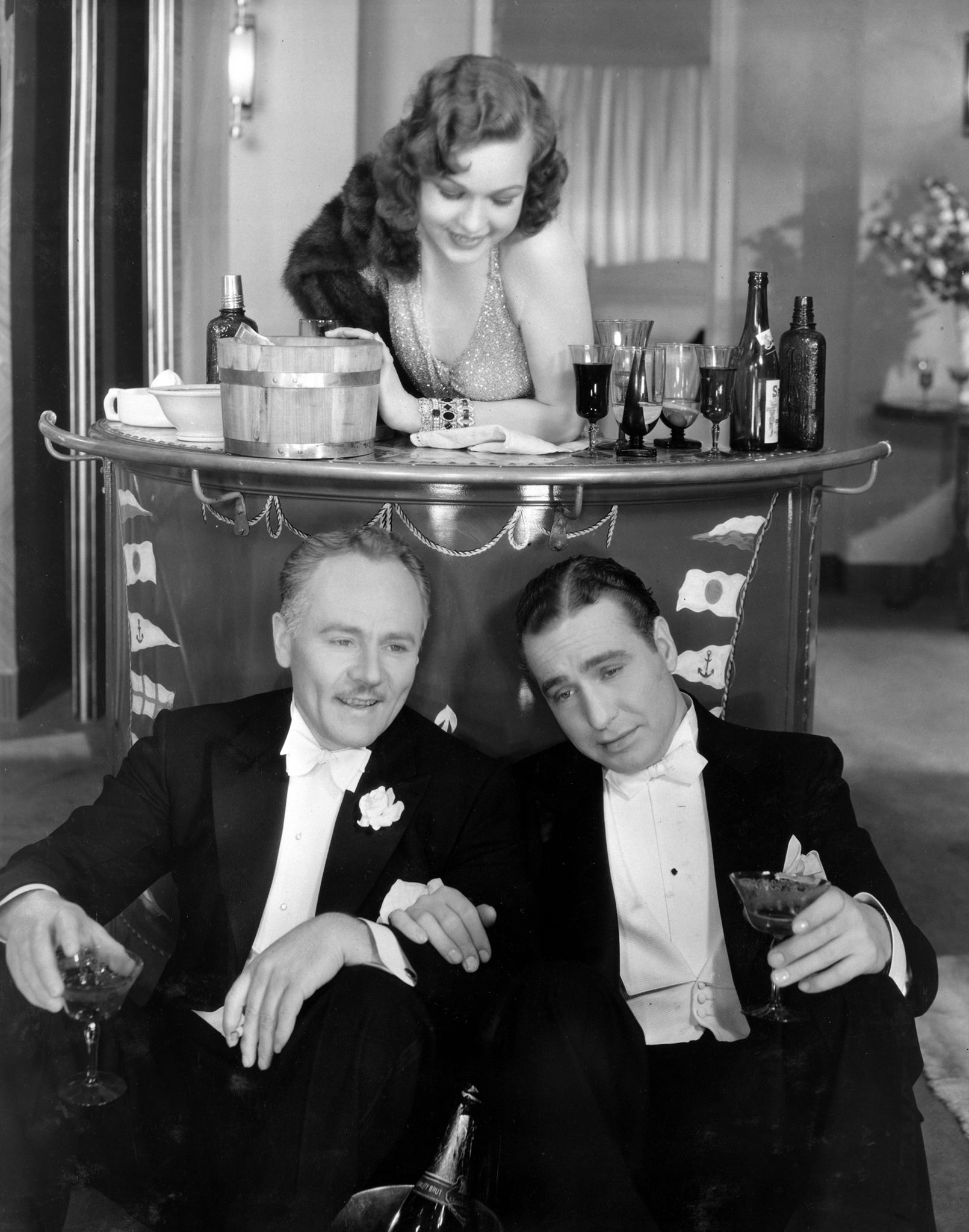
The older man is played by Charles Ruggles (above left, with Phil Harris, right), who didn’t meet a double-take and slow burn he didn’t want to adopt. He was the star of the film and was quite well known then. His facial antics don’t age well, and he comes across as silly and fussy at times, but it works. The other lead is first-time film actor Phil Harris, now pretty much forgotten except for his marriage to and long professional association with the inestimable Alice Faye. You have to swallow a bit to accept him as a leading man as he doesn’t have the look nor really the singing voice, even though he was a band singer and radio singing star for much of the rest of his life. But knowing what a big star he became later helps. The ladies are generally window dressing, except for Florence Roberts and Marjorie Gateson, who play the fussy old aunt and fussy wife with ease.

A secondary player almost stills the film, however. Chick Chandler, above, (later a star of television’s “Soldiers of Fortune” as well as a part of It’s a Mad Mad Mad Mad World (1963) liven every scene he’s in. He’s all of 5’ 9” and looks like 100 pounds dripping wet. But his introductory vaudevillian dance routine is a hoot. The introduction of a specialist actor and act in early ‘30s films is not unusual, and they often don’t work. But it does here, one, because it’s so well done, and two, because this is a crazy film where anything goes. He’s not really an actor at this point, and his overdone reactions are a bit much, but his character is great. And he sneaks in an almost unheard line directly taken from Mae West’s She Done Him Wrong, released that same year. Listen closely or you’ll miss it in the scene where he is serving dinner to the two scantily clad young ladies. Yes, it’s “Come up and see me sometime.” In the rest of the film, he is quite over the top but is a delightful character you’re glad to see when he appears.

Then there are the musical numbers, which sometimes are boringly straightforward, but which occasionally borrow from the previous year’s Love Me Tonight in their sharing of a song over time, space, and different people. That’s a tricky thing to do anywhere, but the lightness of Melody Cruise’s tone allows it to work here. There isn’t a great voice to be found, nor a great song, although “He Isn’t the Marrying Kind” is fun and actually moves the plot forward. And then there is the Busby Berkeley-type ice show, thrown in for no good reason, but again, which somehow works amidst the rest of the cinematic insanity.

The one regretful thought associated with Melody Cruise is that Mark Sandrich, while successful with his Astaire/Rogers pictures, never seemed to recover the creativity he expressed here. After all, those plots were standard and the dance numbers eschewed any kind of inventiveness beyond displaying the terpsichorean virtuosity on display. Sandrich died a very early death in 1945, and after the Astaire/Rogers film, may be best remembered today for Holiday Inn, which introduced “White Christmas” to the world. We’ll never know what kind of inventive films he might have presented us.

If you’re looking for intellectual consistency, logic, great acting, or a film that feels modern, don’t see Melody Cruise. If you’re looking for what some interesting directors were doing with music and film language at an earlier time, this is for you. Plus, it’s bonkers fun.

Posted in Film Reviews, Older Films | Tagged , , , , , , , , , , , , , , | Leave a comment

Wicked

Seeing Wicked (a.k.a. Wicked Part 1) brings up old-fashioned terms, such as “movie-movie,” “beautifully mounted,” and “lovingly produced”. All are true, and all are doubled-edged swords, meaning simply that many of the film’s great strengths are also some of its weaknesses.

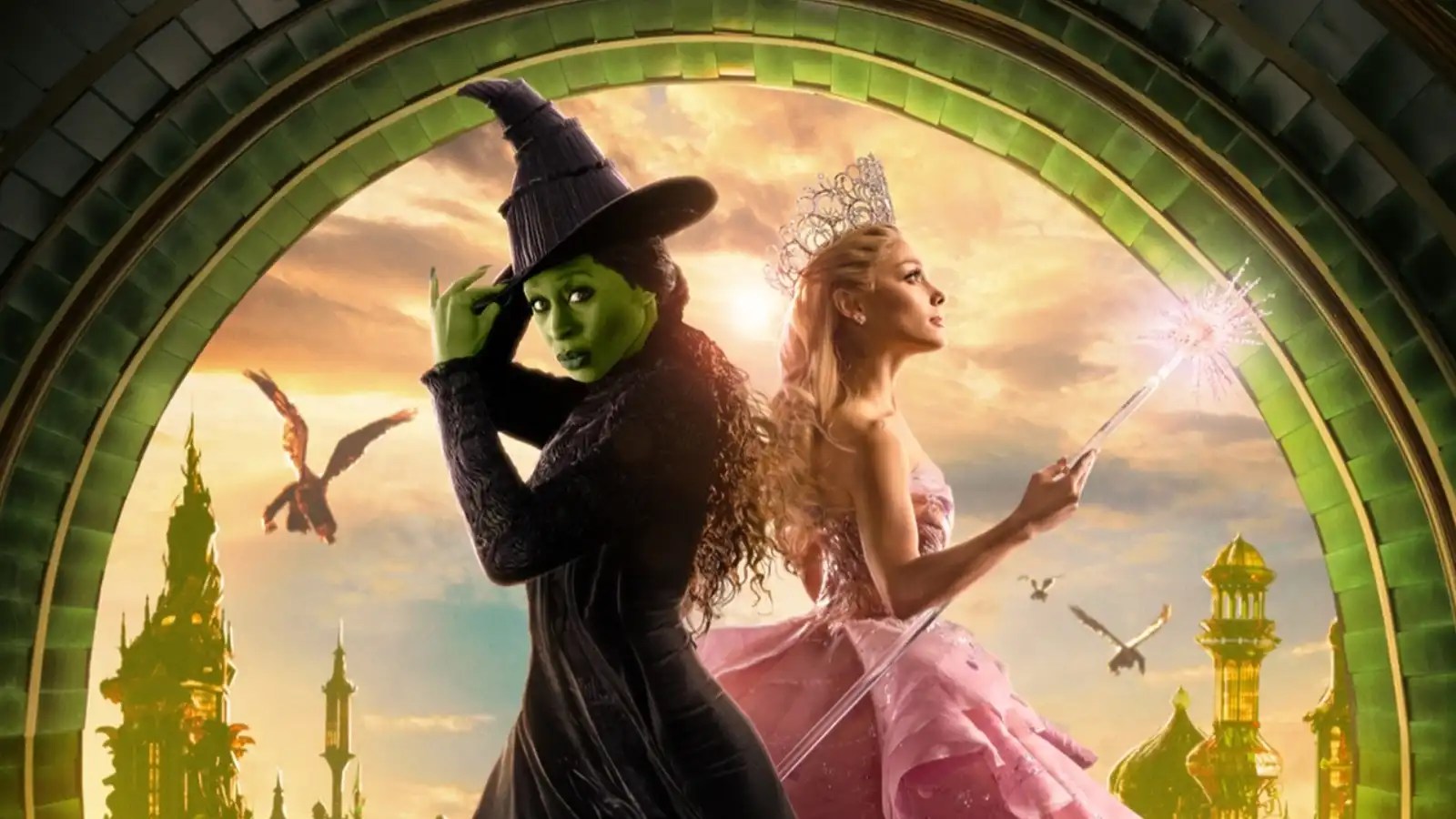
But first, its many strong points. The performances are uniformly excellent, especially from the three leads. The film starts off concentrating on Ariana Grande’s Galinda/Glinda, but eventually shifts to Cynthia Erivo’s Elphaba, and this first part climaxes with a full demonstration of cinematic artistry and one great set of pipes. Oriva will probably win a Best Actress nod, and I expect she’ll win the Golden Globe for Best Actress in a musical. This is a performance that grows in expression and power—emotionally as well as vocally—throughout the film, and she is probably one of the few actresses who could conquer this role as well as she does.

That, however, is no surprise. Her turn in 2019’s Harriet alone is enough to place her in a special category. What was the surprise to this author was Ariana Grande, whom I’d only known as a singer, and a singer with a voice I wasn’t familiar with Not only does she have an easy coloratura soprano. She might be accused of channeling Kristen Chenowith, the original Glinda), but her acting is every bit the equal of Erivo’s. (The two singers have incredible vocal placement throughout.) Could there be a double nomination? Both Erivo and Grande nail every scene, and I didn’t detect a wrong note anywhere.

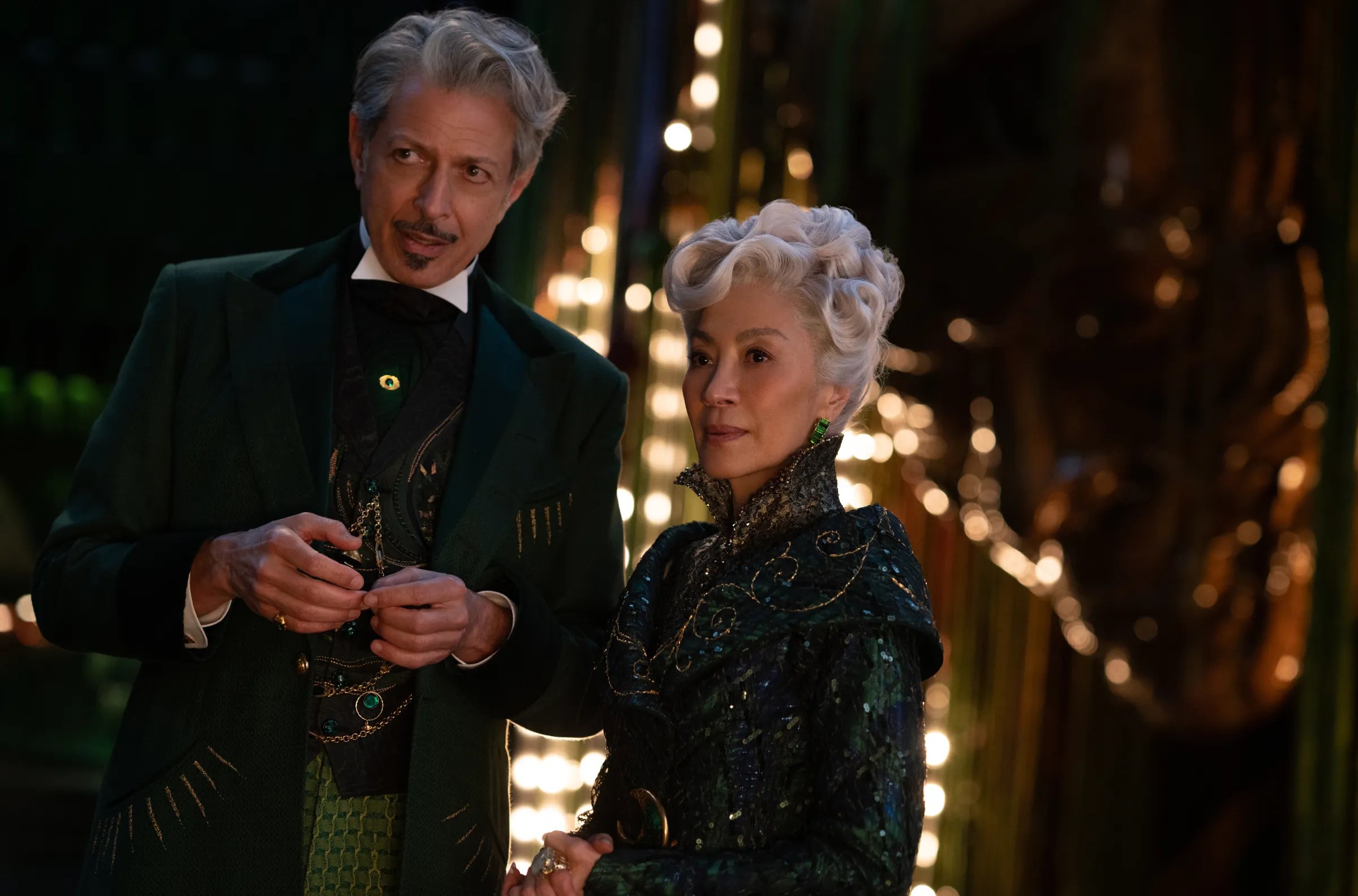
The fact that the two big leads are great would be enough. But the supporting roles are as solid as the leads. Michelle Yeoh (a deserved Best Actress Award for Everything Everywhere All at Once) is perfect as the strong leader that oozes matronly authority. Jonathan Bailey as Fiyero doesn’t have a voice of the two leads, but his is pleasant enough and more than does the job. He’s not a dancer, but you’d never know it. Ethan Slater plays a Munchkin with as much heart as possible, and Marissa Bode as Elphaba’s sister Messarose, while not rising to Slater’s heights as his love interest, is nevertheless very solid.

What I was slightly dreading but didn’t need to was the arrival on screen of Jeff Goldblum as the Wizard. All of that manic and undirected energy of some of his earlier performance (pick one—any one) has been internalized as charm and joy (spoiler alert: until there’s a shift). It’s a wonderful (pardon the pun) performance that also demonstrates a serviceable singing voice.

Other strong points include the dazzling world created for the film. It’s a visual wonder that dazzles without distracting, and wows while remaining of a piece with the central characters and plot. Director John M. Chu (In the Heights, Crazy Rich Asians) has balanced a nearly innumerable set of elements (performance, editing, sound, cinematography, production design) into a cinematic whole that blended into a near-perfect whole.

However…the film suffers slightly from the problem faced by Phantom of the Opera, Les Misérables, and other famous musicals with memorable scores. The problem is that instead of becoming a cinematic entity, these films become a visualization of the stage play, with full respect, even obeisance, being given to the numbers. The numbers, probably due to contractual agreements, are presented in their entirety. That works on the stage, but can be detrimental to a film. Phantom suffered greatly from it, and to a lesser extent, Les Miz. Wicked suffers less so, but the film is too long and loses some dramatic power occasionally because of it.

For example…check out this paragraph from Wikipedia about the cast album recording:

Popular” was the first musical number shot for the film.[11] Schwartz, Wells, and Oremus proposed modifying its rhythm from the stage musical version and “hip-hop[ping] it up a little bit”, but Grande insisted that the song stay true to the original.[12][13] The song features an extended ending with additional key changes.[14][15]

It’s that respect for the original that is the issue. Chu fortunately has the talent to make each elongated moment sound good and look beautiful. But the bottom line is that the film is too long by a good half-hour, and could easily have been punched up cinematically and dramatically if the director had been allowed judicious cuts. More examples: “Dancing Through Life” takes too much time to get going and goes on too long,  and even the iconic “Defying Gravity” didn’t need to be stretched out as much as it did; the ending of that song, though, almost makes it worth the wait.

According to research, the film was originally conceived for a 2016 release, and then this new version was supposed to be a 2019 release. I say that because certain elements that parents might not be wanting their children to see are present, but seem almost woke-retro and a bit stale today. Fiyero is presented as an object of admiration and even lust by both men and women, which comes across as tired and not cute in 2024. Also, and perhaps more seriously for those watching out for impressionable young ones, there is a strong blending of the genders in Oz. Women are dressed as men, men as women, and everything in between. Again, for someone like this author that believes that (dare I say it!) there are only two genders, while also acknowledging a full spectrum of expressions within those two genders, it seems like old-school progressivism in the most tired Disney style (and yes, I know it’s a Universal film).

For some, that will be the poison pill that keeps you and your young ones away. For everyone else, this is an incredibly beautiful and beautifully produced film, and only suffers from the slightest case of Famous Song Over-Respect Syndrome.

Posted in Film Reviews, Newer films | Tagged , , , , , , , , , , , , , , , , , , , | 1 Comment

La Bohème

La Bohème is a silent film from 1926 starring the luminous Lillian Gish and the overactive John Gilbert, and is directed by King Vidor (Oscar nominations for directing The Crowd, Hallelujah, The Champ, The Citadel, and War and Peace). Note: Vidor is listed in Guinness World Records as having “The Longest Career as a Film Director,” beginning with 1913’s Hurricane in Galveston and ending with 1980’s The Metaphor. He may be best known to modern audiences as the uncredited director of the sepia-colored Kansas scenes from 1939’s The Wizard of Oz. Coincidentally, Gish has the career record as an actress, beginning in 1912 and ending in 1987. Gilbert, unfortunately, was not so lucky.

Just watching the three of these legends converge is fascinating enough. Gish was working to free herself from the constricting roles she had under her mentor D.W. Griffith, and was here stretching out her acting wings making her first MGM film. Gilbert was peaking as a star and actor, having hit his height with 1925’s The Big Parade (https://wordpress.com/post/film-prof.com/747), a great silent film and the one Gilbert will likely be best remembered for. Of course, what Gilbert will be most remembered for is not one film in particular, but the ones he made with Greta Garbo, with whom he had a tempestuous and (for him) frustrating affair.

Watching early Vidor is fun, as he was clearly experimenting with the medium. There was an unexpected forward tracking shot in the picnic scene, and his use of superimposition is both striking and emotionally resonant. There is a lot of the usual silent film framing, with a static camera capturing whatever is happening in front of it. But what happens in front of those static cameras can be lovely. There is a “declaring our love” dance between Gish and Gilbert that is exhilarating and romantic as “Shall We Dance” in The King and I. But there are also close-ups as effective as those of Griffith, though there is a distinction between Gi’s soft focus and the sharp focus given to Gilbert.

The story is based on Henry Murger’s novel Scenes de la vie Bohème, which was also the basis of Puccini’s opera of the 1890s. And for more modern audiences, it is also the basis of Jonathan Larson’s Rent, which debuted on Broadway in 1996. In this film, it is wildly of the Romantic era and romantic at the same time. The story is either full of wild love and great passion, or just overly melodramatic. So is the acting, which isn’t all a bad thing.

Gish, as a silent actress, was greatly skilled in the art of silent acting, which consisted of a combination of internal emotional connection and learned gestures inherited from the theater. Gish was much more naturalistic than many of her more histrionic peers, and her acting here includes those gestures, but also includes many, many scenes of subtle, lovely work. If you look for those moments in the midst of the older fashioned acting styles, you will be well rewarded. She also has a scene where she is acting out the remainder of a play being written by Gilbert’s character that could have easily won her a Best Actress Oscar if the film had been released a year later. And if that weren’t enough, she eschewed liquids for three days before her death scene, rivaling the sacrifices that Bette Davis would make years later in Of Human Bondage.

Gilbert is more problematic, in a number of ways. He is over the top here, which may be due in part to the difference in speed from the 16 frames per second to the 24 frames per second of modern films, which has the effect of speeding things up, which doesn’t help Gilbert’s hyperactive performance. His use of gesture can be read as exhausting today, as is the habit of jumping around when he and his homies have something to celebrate. (Note: One of those homies is Edward Everett Horton, well before his career as a fey supporting player in the 1930s). But when he is still, and captured in close-up, his eyes can burn through the film. There is an intensity here that obviously helped make him the romantic follow-up to Rudolph Valentino.

Which bring us to the other reason that Gilbert is remembered. He is emblematic of those that, for one reason or another, couldn’t make the transition from silent to sound films. Unless we can exhume Louis B. Mayer’s brain and find out his thoughts, we will never quite know. The two big reasons given are that his voice didn’t sound right, or at least wasn’t consistent with his image as a romantic leading man. The second is that his melodramatic gesturing, which Gene Kelly satirized so effectively in Singin’ in the Rain, couldn’t tapped down in sound films. Rumors that Mayer had Gilbert’s voice tampered with so he could get rid of him are both understandable (from L.B’s perspective, as Gilbert was a huge expense with little to show for it) and just not true. Gilbert had a fine voice, if one not quite equal to his romantic leading man persona. https://www.youtube.com/watch?v=bbxBwDhAbEI

But Gilbert had other issues than trying to make it in talkies. His on-again, off-again romance with Garbo and his alcoholism and mental struggles conspired to lead him to an early death in 1936. Aside from the tragedy of a young person’s demise, cinema may well have lost an excellent sound era actor. Even in his silent films, Gilbert had a modern energy that rivaled that of James Cagney. He could clearly act, and act well. If that energy had been properly directed, and Gilbert had been more thoughtfully guided into a career in sound film, he might have turned into one of the great studio actors.

As the date of the film reveals, we are at the end of the silent era, and these are two of the great silent actors at the top of their game, even if that game is overly-gesticulated at times. But we are also at the relative beginning of a great directorial career with a person continuing to discover, after the successes of The Big Parade and The Crowd, what he could do with the medium. As a time capsule, it’s well worth the visit.

Posted in Film Reviews, Older Films | Tagged , , , , | Leave a comment

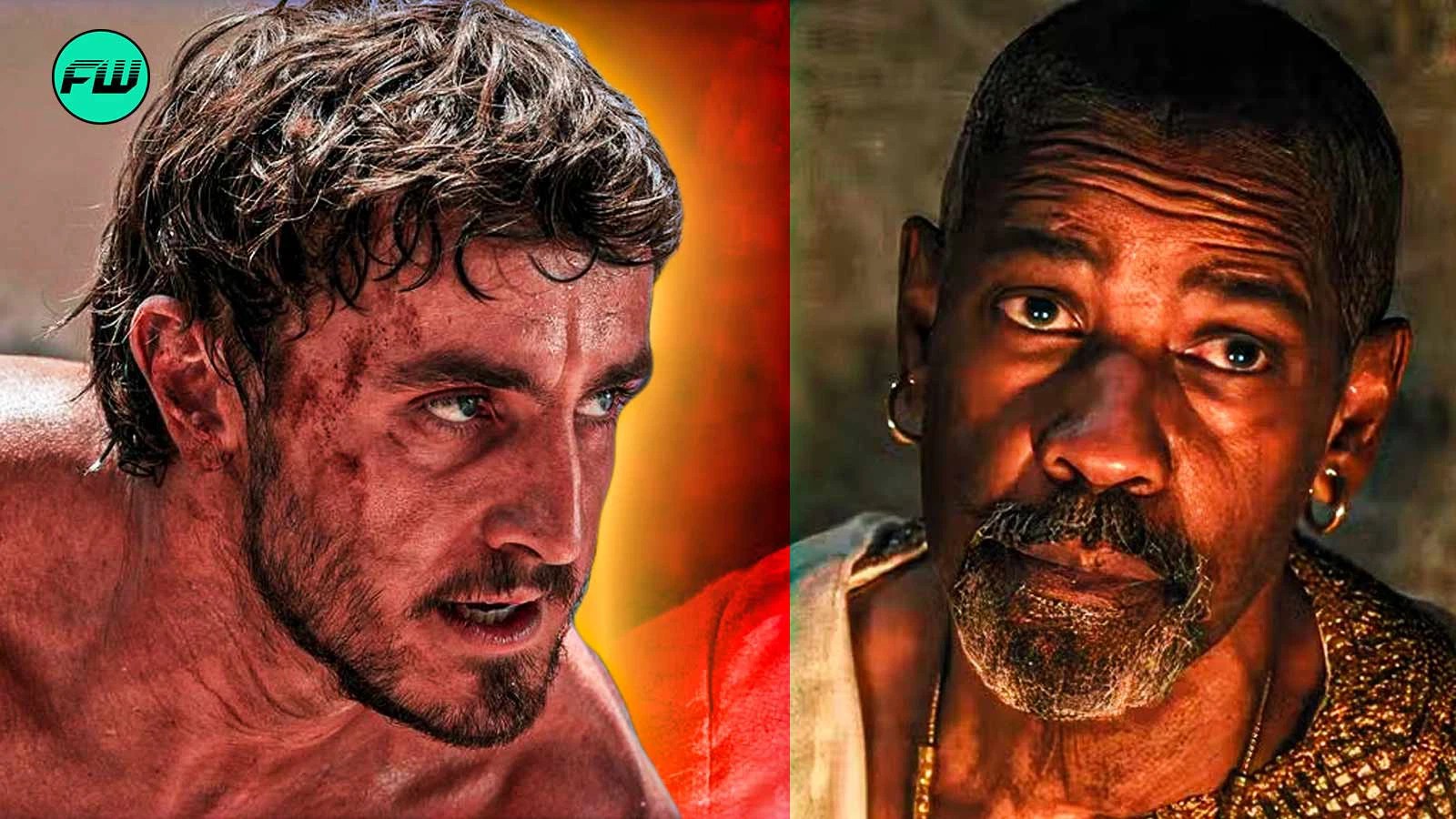
Gladiator II

So the big question of course is, “Are you entertained?”, which was the famous quote from the original Gladiator. For the sequel, the answer is basically yes. But being an entertaining movie is not the same as being a great one. Briefly, the film is brighter, louder, more violent (yes, really) and for all its lauded efforts to combine the film with its predecessor, shallower than the original. It’s fun, and it might end up with some technical awards at the Oscars, but I wouldn’t be in favor of a nod in any other category.

Director Ridley Scott, also director of the first Gladiator, knows how to film a battle scene and a more personal one-on-one. But this time around, the violence is both more intense and gory, as well as more ridiculous as the film progresses, sending the film at times into eye-rolling category. Deadly arrows, for instance, seem to find their way directly into the center of the victim’s chest, which is as artful visually as it is preposterous. The other problems with the violence will be addressed later.

Cinematographer John Mattieson, who shot the original, is back for this film. But the dark and moody look that worked well in the first Gladiator is replaced by alternately rich and sometime garish colors. There are moments of quieter and subtle beauty, but too many scenes have colors that pop and end up cheapening the film.

The story is a direct follow-up that simply puts us about 20 years into the future, where (serious spoiler alert ahead—be warned) the son of Maximus (Russell Crowe) and Lucilla (Connie Nielsen) faces the same gladiatorial challenges faced by his father. He is played by well-respected young actor Paul Mescal (Oscar nomination for Aftersun), who simply can’t match the power of Crowe’s presence or performance.

Sometimes it’s instructive (and yea, even entertaining) to see the differences between a film and its very similar sequel. Some may protest that a too-close comparison is beside the point and irrelevant. But the deliberate similarities between the two films here raises the issue of how well the changes work. Unfortunately, most of them don’t help the film. For instance, part of the power of the original was Maximus’s love for his wife, which was ratcheted up later when he found out about her fate. Here, young Lucius loses his wife (again, with a perfectly placed deadly arrow) right at the start. But other than the passionate kisses between the two in the first shots, we don’t really have a sense of the depth of their relationship. Plus, there are no children to mourn. Hence, the pain isn’t as deep, and his so-called “rage” isn’t as powerful.

The story itself is also not as powerful and seems to go into too many side trails. The simple and straightforward enemy in the first film was Commodus, played so wonderfully by Joaquin Phoenix, whose character was continually developed and deepened in the original film. This helped to hold the story together and built emotional momentum. Here the first enemy of Julius later becomes his friend, (another spoiler alert ahead) and even his stepdad, General Acacius, played by “The Mandalorian”s Pedro Pascal (in a serviceable performance). Between Julius’s discovery of who he was, the machinations of the Roman Senate, the switch from friend to foe for Julius, the two emperors and their plans, and the whirling dervish named D. Washington, there is a lot going on here.

Then there is the final scene, a cinematic cliché if there ever was one. Apparently, the fate of the entire empire is coming down to the showdown between Julius (having survived untold near-death experiences in the Colosseum), and Macrinus (Washington), who has succeeded in his plans to take over the leadership of all Rome, except for this pesky gladiator who happens to be Emperor Marcus Aurelius’ next-in-line. But without going into detail, it’s not just a contest between two people that happens to be hold the future of an empire in its outcome. It’s also that most tired chestnut that could have been intoned in the trailer over the fight: ‘THIS TIME IT’S PERSONAL!” The fact that the empire is at stake, and that this also a payback kind of deadly brawl, doesn’t make this a more powerful clash as much as a tired dramatic scuffle that while powerfully presented is rather silly and worn out.

To say that the film “jumps the shark” is just too easy. But really, it does. Between the CGI baboons (fiercer than anything in real life), the rhinoceros, and yes, the sharks, the creatures fought by the gladiators are so unrealistic and over-the-top that it’s hard to take these scenes seriously.

Comparing lead actor Mescal to Crowe may seem unfair as well. But since Lucius is supposed to be kind of a second coming of Maximus, comparisons are worth noting. A great deal of the power of the original film was the presence of Crowe, well known in Hollywood (L.A. Confidential, Oscar nomination for The Insider) but not yet to the public before Gladiator. He exploded on the scene with his acting talent in the film, but to me, his greatest contribution to the film was his great authority, and specifically his (non-toxic) masculinity that stood in sharp contrast to the softer masculinity of the 1990s. While Mescal is only an inch shorter than Crowe, he is slighter and projects much less personal power than Crowe, which puts the onus on others in the cast to help carry the film.

One person who not really carry the film as much as bobs and sways it around is the inestimable Denzel Washington, who simultaneously elevates and throws the film into disarray—in two ways. One is tied to his character and the gradual revealing of his character’s  dark motives and actions. The other is tied to Washington’s acting style, which is 1) his own, and 2) is more naturalistic than this grand sword-and-sandal film is able to completely assimilate. Washington is always outside of the film whenever his character is in it, which can be delightful but can also be distracting.

Mescal is a softer creature than either Crowe or Denzel, and his strong statements in conversation and his calls to action to the troops aren’t quite believable. He gives a consistent performance, but he has a sweetness and sensitivity that don’t quite match what he is asked to do or be here.

The two emperors are out of another film entirely. They are supposed to be brothers. One is ghostly and seems perverse and perverted; the other is smaller, just as ghostly, and is signaled as weak and gay (think 1932’s The Sign of the Cross and the way Charles Laughton’s Nero’s sexuality was presented, young boy included). This representation and the way the older brother describes him seem to be enough for an LBGTQ+ protest, but I haven’t heard of any at this point in time.

Thankfully, there is an actor here who seems to fit perfectly into the film, acting reasonably and with feeling, and that is Connie Nielsen as Lucila. Neilson is given a larger role than in the first film, and finds just the right note in her performance here. Her scenes, with Pascal, Mescal, or any and all guards, help ground the film when all around her go too far or just don’t quite fit into the film.

The film ultimately doesn’t quite work, but the various pieces and characters are fun to watch, even if they don’t all quite come together. If disbelief and critical thinking are suspended to a good degree, Gladiator II may well offer most viewers a wild and violent ride that will definitely take them away from the real world for a few hours. Perhaps, now, that might be enough to recommend it.

Posted in Film Reviews, Newer films | Tagged , , , , , , , , , , , , , | Leave a comment

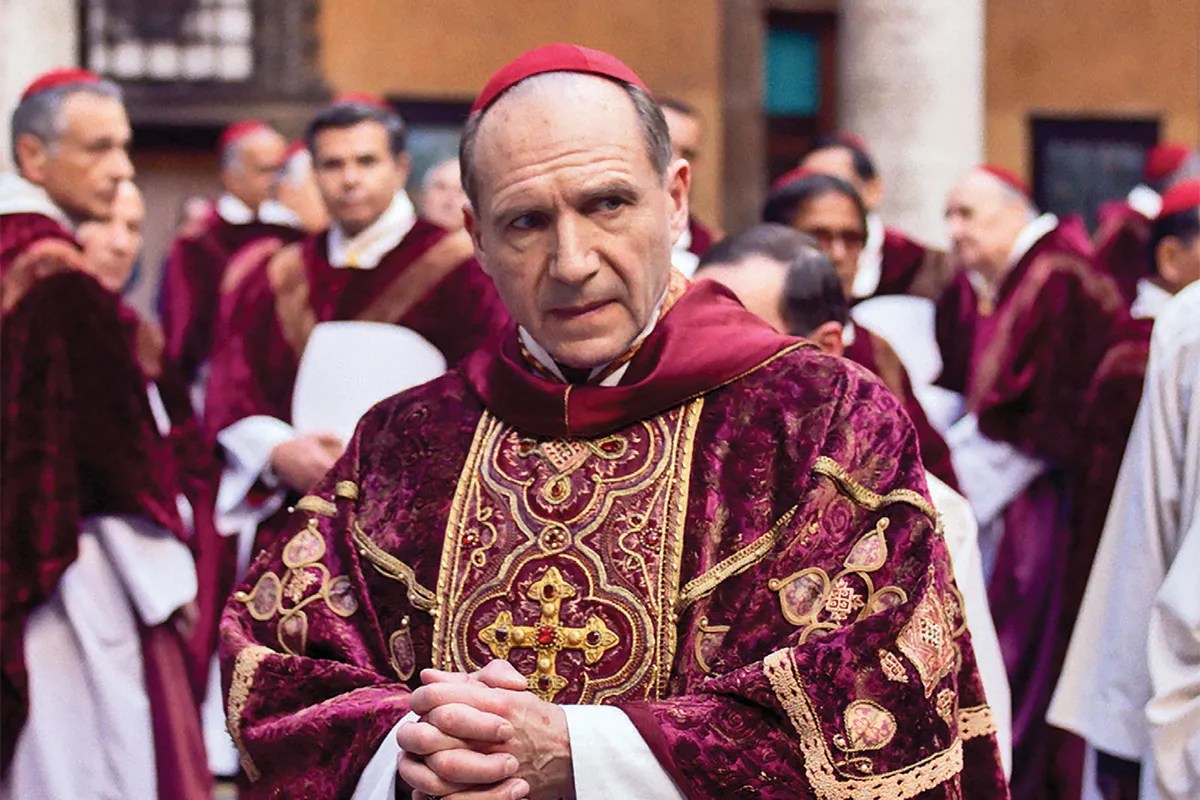
Conclave

Quirky papal conclave facts - The Boston Globe

Conclave is a beautifully directed, stunningly gorgeous, carefully sound-designed, very well acted production, and is also an ultimate disappointment. For those that were curious but haven’t yet decided to see the film, it’s the story of the death of a pope and the machinations behind the process to elect the new one. Simple plot, and the film leads us to be more invested in the process than in the final result. The joy of the story is the push and pull of the politics of the Catholic Church leaders, and watching the actors doing the pushing and pulling.

Directed by Edward Berger, director of the highly regarded (and well-rewarded) 2022 version of All Quiet on the Western Front, Berger brings the same combination of cool detachment and occasional intensity to the proceedings here. The sound in the theater that I saw the film in had the sound level set at 11, which sometimes painfully allowed the viewer to hear every door closing loudly, every lock reminding us of the closing of a prison door (not subtle but legitimate for the film), and every step taken on the floors as the characters move from one clandestine meeting to the others.

I was raised Catholic, but I can’t account for the accuracy of procedure and costume. Other more in the know, however, say these things are generally on the nose. Sloppiness in these areas can detract, of not completely undermine, the credibility of what we are watching. But this isn’t a documentary, and the slow pace associated with Berger’s style occasionally puts the emphasis on procedural and sartorial accuracy to the expense of the drama. I’m all for a slow build, but the focus on ecclesiastical and historical specific sometimes drains the film of its accumulating power.

The film has gotten attention for its actors and its acting. It’s a stellar cast generally operating at the top of their game. Starting from the bottom of the four leads, my beloved Stanley Tucci is simply, well, Stanley Tucci. Tucci is an actor I have extolled as always lifting and improving every film he is in. Here, he brings nothing new or shaded, and it seems as if the director told him to be himself. It’s a disappointing and regrettable performance.

Isabella Rossellini, the daughter of director Roberto Rossellini and the great Ingrid Bergman, looks breathtakingly like her mother at this age, and this viewer felt as if Bergman had risen from the dead to take on this role. Fortunately, Rossellini is as excellent here as her mother would have been, and her role and her performance shake things up, even if it is ever so slightly within such a monumental and unyielding context.

Then there is John Lithgow, perfectly cast. He tends to play himself here as well, but it works. No one can express questionable sincerity as well as Lithgow, and he is just what the film needs in that role. Does he mean what he is saying? Is he plotting every moment? Does he go back and forth in intention? What, ultimately, does his character want? Part of the heart of the film is our changing view of people and their objectives, which applies more and more to all the church leaders—except Lithgow’s. We question him from the very beginning simply because of his performance, not because of anything he says or does, and that opens the door to the slow reveal of the hidden desires and covert machinations of the rest of the key players.

Lastly, and wonderfully, is the great Ralph Fiennes, who carries this film from the beginning through the labyrinthian pathways and side roads, to holding together a so-called “twist ending.” Fiennes may well win his overdue Oscar for this, and right now, I hope he does. There is a lot riding on his wide thespian shoulders, and this is easily among his best performances. We have a strong initial impression of this character, and he essentially doesn’t change. But Fiennes allows us to see cracks in his beliefs and his outward sense of calm authority. The film is ”almost” worth seeing for his work here.

The theme of certainty and uncertainty is woven throughout the film, and it works to add tension and thematic depth to the film. But the film isn’t close to Rashomon or Doubt in this area; it’s just a slightly-under-the-surface topic that breaks through every so often.

Finally, and whatever-ly, we have the so-called twist ending, which many involved in the film are now downplaying. The film has been marketed as a kind of thriller, which the slow pace and focus on (the occasionally too measured) process and ever-changing vestments tends to undercut. So when we get to the end, it doesn’t come off as powerfully as it could have. It’s presented cinematically as a “wow” moment, but we haven’t had the lead-up for that kind of wow—it’s more of an “oh…”

If you want to see the film, please don’t read the following paragraph. After all the plotting, back-stabbing, and legitimate soul-searching, we end of up a new pope that is…wait for it…intersex. Not gay, not trans, but intersex, which is as confusing at times as it is unexpected. The film presents this as a wondrous moment that brings on a new era of light and freedom, especially for women. But in 2024, it all comes off as somewhat tired and, to use a word even more tired, sadly and unworkably woke for a film released right now. Perhaps with the different director and a date before the 2020’s, the film might have had a serious punch. Now it comes off as more of a good-looking, stately, well-acted film that leads to an unexciting, surprising, but ultimately humdrum (and ho-hum) conclusion.

Posted in Film Reviews, Newer films | Leave a comment

Saturday Night

OK, what movie has dazzling cinematography, contains at least two supporting performances that could easily be nominated for Oscars and came and went so fast that almost no one saw it? Yes, if you read the title here, it’s a movie called Saturday Night.

(To those who wondered where I’ve been, I’ve been busy helping direct a stage version of Beauty and the Beast, plus traveling, plus helping with a The Sound of Music stage presentation, plus working with a dear friend on a serious musical theater production we’re creating based on an Old Testament book. Plus, you know, life.)

My dear brother, Chris who had already seen Saturday Night, convinced me it was worth the look, and he has always been right. The film is very enjoyable, if unnecessarily crude, and it fell out of my head 24 hours after seeing it.

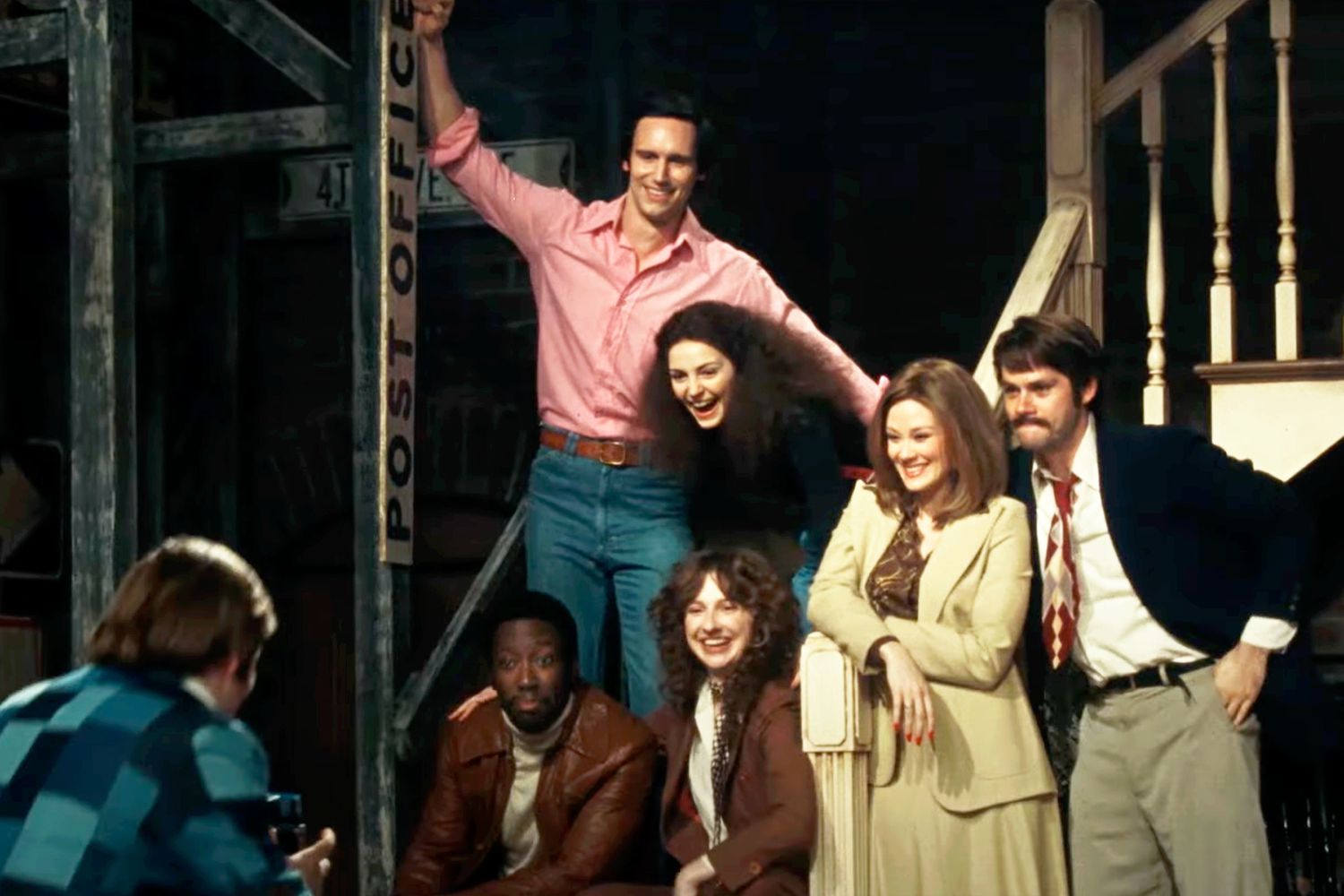
Basically, it’s a story that condenses the first year of “Saturday Night Live” into a 90-minute series of calamities, missing persons, narcissistic fits, and producer trouble. If you’ve seen Birdman, or (The Unexpected Virtue of Ignorance), you’ll recognize the similarity in the camerawork, which features a roving camera that helped catch the energy and the attempted confluence of ideas and personalities that eventually made up the TV show. Unlike Birdman, however, there are cuts similar to most films, so it’s not quite the experiment that works. Instead, it’s a legitimate approach as part of a film to capturing the chaos of last-minute rehearsals for a show with wildly divergent personalities—and that might be replaced at the last minute by Johnny. Carson reruns.

Director Jason Reitman (Up in the Air, Juno, Ghostbusters: Afterlife, and a slew of lesser and less successful films) keeps things moving at an almost exhausting (with the exception of a not-true section that allows us to take a breath.) The language is typically rude, vulgar, suggestive, earthy, indecent, and lewd, and including a “wish I could unsee that” joke about the infamous Milton Berle that didn’t need to be addressed except in a casual verbal reference.

But…depending on one’s history with the show, it was a delight to see the various new personalities/actors playing the comic legends. Producer/writer Lorne Michaels comes off as “calm in the storm,” yet internalizing the conflicts around him. Chevy Chase comes off as a jerk, and Nicolas Braun is hysterically funny in his few moments as Andy Kaufman. Lamorne Morris (no relation to his character) comes off a whiny and borderline obnoxious Garrett Morris. Standouts are LaBelle as Michaels, and stealing the show, Matt Wood as John Belushi. If this film were successful financially, Oscar nominations would be possible for several performers. But…it’s not been, so, no.

The film is occasionally dazzling in its energy, its camerawork, and its parade of one bonkers happening one after another. But as noted, I’d pretty much forgotten it 24 hours later. Plus, it’s hard tp recommend based on its language and sexual crudeness. Definitely not for young ones, or teenagers, even.

I hope I’m wrong come Oscar time….

Posted in Film Reviews, Newer films | Tagged , , , , , , , , , , , , , , , , , , , , | Leave a comment