
There are two fallacies attached to this (pardon the pun) pioneering film. One is that it is simply forgotten as an early widescreen film; if you study film history, you’ll likely run into the old chestnut that This is Cinerama and The Robe were the first two widescreen films. Just a little digging, however, turns up The Corbett-Fitzsimmons Fight (1897—yes, you read that right), Abel Gance’s Napoleon (1927), and the various late-twenties Grandeur and Magnafilm movies. The Big Trail, directed by Raoul Walsh, was filmed in 70mm Grandeur and even in its “they did the best they could” restoration, is stunning to behold.
The other inaccuracy/exaggeration is that its box office failure was due to the fact that John Wayne in his first lead role was terrible. He wasn’t good, true, but neither was anyone else, with the exception of Tully Marshall. This was right on the cusp of the arrival of sound films, and acting styles were having to change from the inherited stage style to the more naturalistic style demanded by sound.
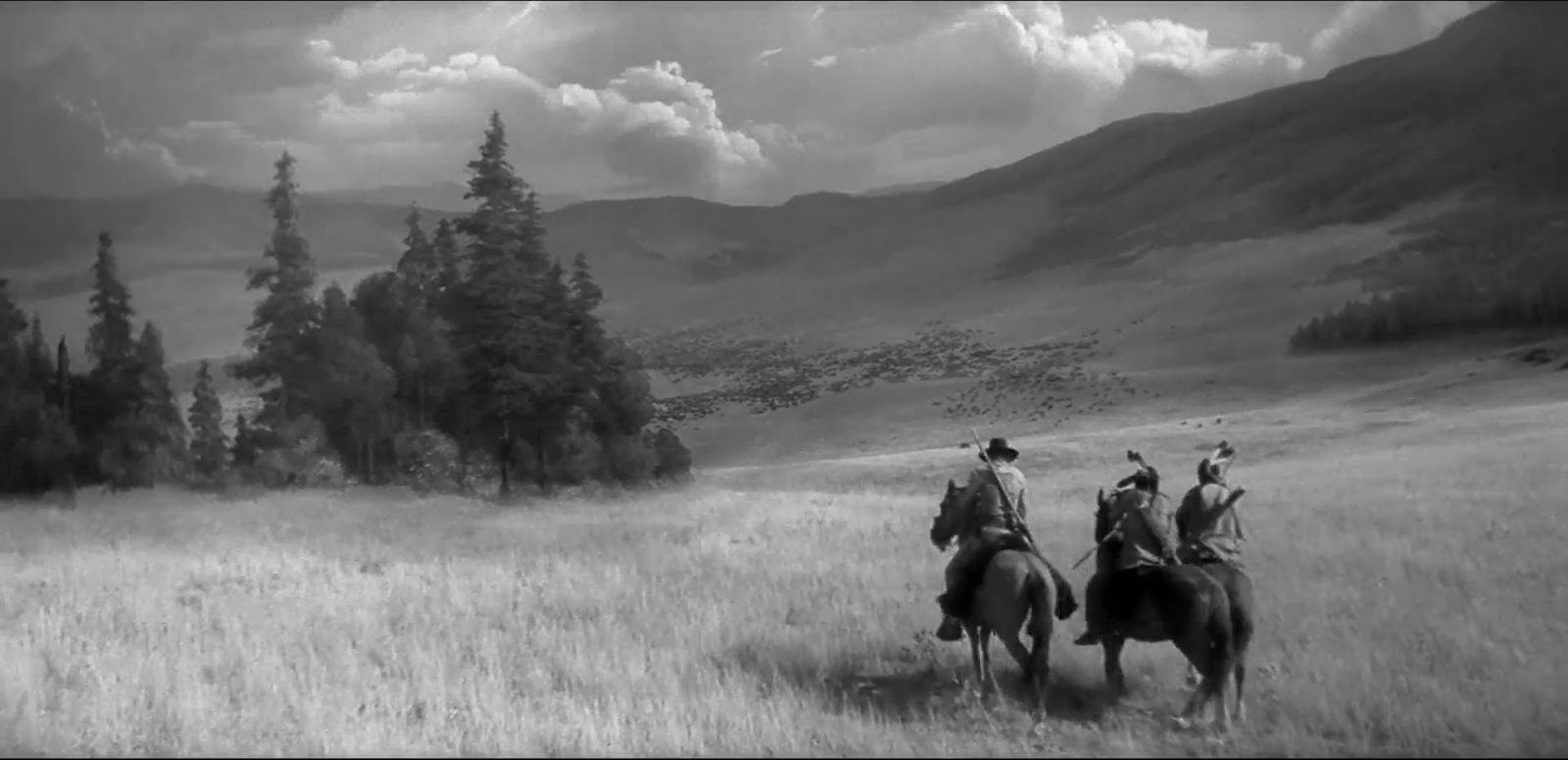
The film is thin in terms of plot, as well as tired. Boy meets girl, girl rejects boy and is wooed by the wrong guy, revenge is sought for an earlier crime, revenge is attempted to be stopped, man has comic relationship with overbearing mother-in-law, etc. Nothing new or fresh…except the central action, that of cutting through the Oregon Trail on the way to California. This is where the film is awe-inspiring. Just the use of 70mm is enough to be visually intriguing, but the whole use of the camera—the angles, the camera placement, the occasional camera movement, and what that camera is recording—is breathtaking. The long shots of endless wagons; the fights with Native American tribes; the movement of people, animals, and wagons down sheer cliffs—we’re not used to seeing such scenes and dangerous activities apart from CGI and Christopher Nolan. There is almost a cognitive dissonance watching this. The film is of course in black-and-white, we know in our minds that computer effects were decades off, and for film history folks, the usual smaller aspect ratio we’d been used to don’t prepare us for what we’re seeing. In spite of the plot and acting, this is a film that should be seen on the big screen.
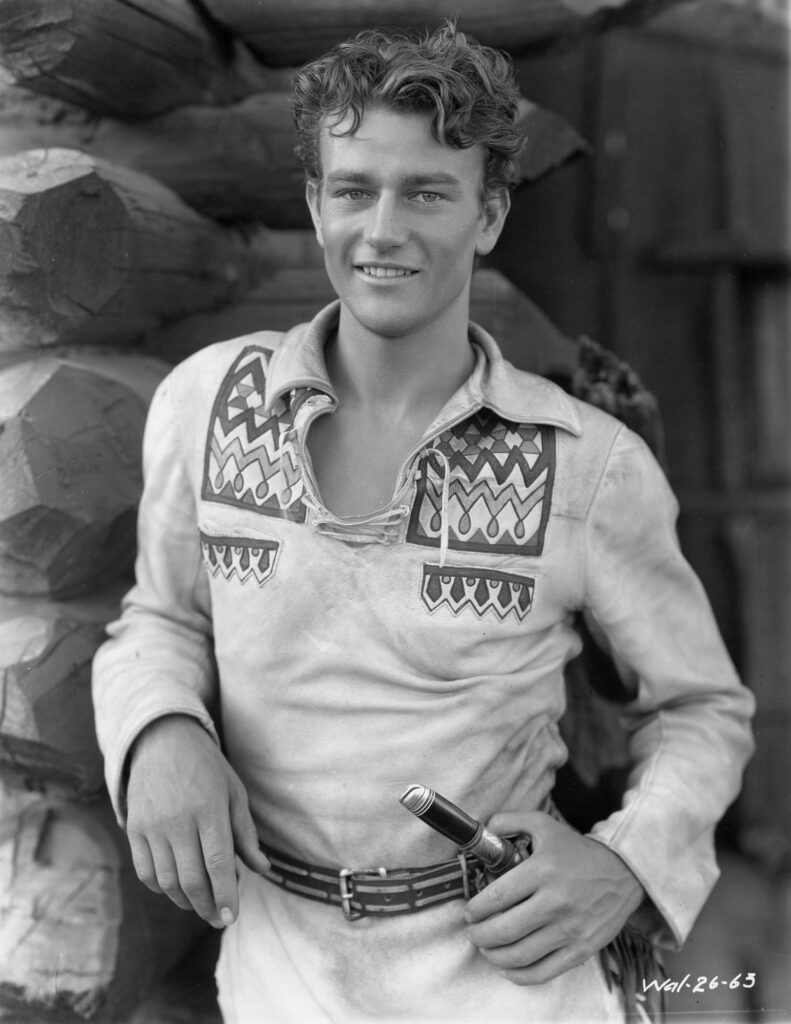
Wayne was just 23 when he got this role after several mostly uncredited short parts. He hasn’t learned to handle dialogue, but to be fair, much of the dialogue he’d been given doesn’t lie easily in anyone’s mouth. Yet that authority and presence are already there, and he carries the film better than he’s given credit for. The rumor about this career has been that he was the reason for the film’s failure, but that after nine years of second-rate horse operas, he became a star with John Ford’s 1939 Stagecoach. It’s true that the Ford film changed everything for him, but he wasn’t solely to blame for the failure of The Big Trail.
For one, the film was very expensive for the time—and the money is actually on the screen. But it was long, and the gorgeous panoramas kept the film locked down visually when it also needed more vitality and action. And—the biggest factor, perhaps—theatres were just finishing up the expensive shift to sound, which was a massive investment. Very few could handle sound and the new widescreen format, and the viewer is left with a slow but visually arresting film that can’t be shown. That’s not Wayne’s fault. If the film had been successful financially, it’s possible that Wayne would have been called “a new great find”.
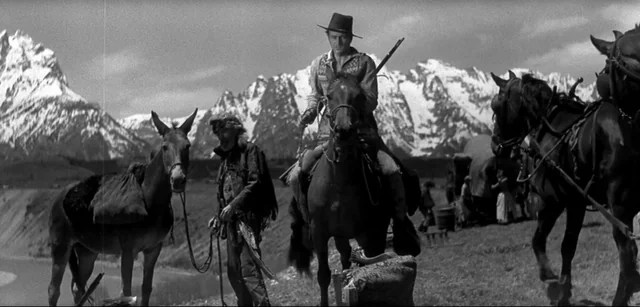
Interesting factoids:
- Tyrone Power, Sr., the father of the more famous actor, gives his final film performance here. He plays the bad guy with all the silent screen bluster he can muster. It might have been interesting to see if his talent could have adjusted to sound.
- The film was also shot in 35mm, which allowed for more close-ups and in some ways was significantly different from the 70mm version. It was shorter and yet contained some scenes not in the in larger-format version.
- In addition to the two versions in English, a total of four foreign-language versions were created at the same time, in French, Spanish, German, and Italian.
For John Wayne completists, this is worth the view, as it is his first lead, and even with his inexperience, he still manages to hold the film together. For everyone else, this is a stunning looking film that is astonishing in its beauty, power, and spectacular vistas.


