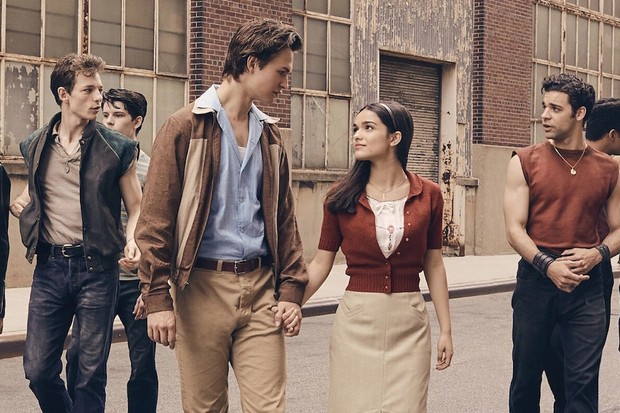
West Side Story (2021)

In a word, it’s fantastic. Don’t wait for it to come to a streaming channel, and don’t wait to rent it. Just go to a big theater and watch it. You can thank me later.

I think I had the same thoughts and reactions as many did when I heard that Stephen Spielberg was going to do a new version of West Side Story. Why mess with a classic that was ground-breaking and innovative? It seemed unnecessary and … wrong. But this version is fresh, inventive, very cinematic, and (dare I say it?) even better than the original in many ways.

My wife and I just saw the original last week in preparation, and we were surprised by two things: how much we’d forgotten and how good it was. So yes, the original was firmly and lovingly placed in my mind when I saw the new one.

Where to begin? Director Robert Wise was a very good director (he edited Citizen Kane, and won his second director’s Oscar for The Sound of Music). The first film is now 60 years old, and still seems relevant and full of life. The music of course is first-rate and legendary, the cinematography still vibrant, and the two supporting stars Rita Moreno and George Chakiris (both Oscar winners for this film) still amazing to watch. Jerome Robbins’ choreography is still breath-taking, and the editing is top-notch.

Rita Moreno and George Chakiris with their newly-won Oscars.

Yet, in so many ways, the new version is stronger, more authentic, just as cinematically inventive if not more so, and has better performances all around. The original Maria and Tony (Natalie Wood and Richard Beymer) are not really as bad as history has recorded. Wood is a good actress, and her scene at the end is actually stronger than Rachel Zegler’s new version. Of course Wood is White with a Russian background, and is as Latin as Taylor Swift. And of course she is dubbed by trouper Marnie Nixon (also the main singing voice for Deborah Kerr in The King and I and for Audrey Hepburn in My Fair Lady). But Wood’s acting is stronger than she’s often given credit for. Beymer on the other hand is rather bland, but as has been pointed out, he brings more joy to the role than Ansel Elgort does in the new one (to me a rather meaningless observation, if still true). And Beymer was dubbed as well.

Zegler (left) and Wood

All of this brings me to perhaps the strongest aspect of the new one: the two leads are really good, and are a significant improvement over the 1961 version. Zegler’s real-life background story is the stuff of Hollywood legend (Google it if interested), and her acting is astounding, especially for a newcomer to film. When I first heard a recording she’d done a while back on a non-WSS song, I was afraid she’d bring a Disney princess approach to the singing with all the lightness and sweetness and pop sounds that entails. But Zegler’s voice is lovely and strong, if not quite (yet) glorious. But she is a real high soprano, and sings effortlessly and meaningfully. She’s also the right age for the part.

Elgort actually has the most problematic role as Tony. The character of Tony is the driver of most of the story’s action, but it is often what happens to him and around him that drives the plot. Tony himself is often more of a straw man than a character, and Beymer rounded it out his character with smiles, rather generic acting, and height. Elgort is actually an inch taller, seems more dangerous and is a better actor. He also does his own singing, which is a surprise to those who only know him from Baby Driver or The Fault in Our Stars. He has a lovely smooth voice, and his falsetto is pure and tender, which adds a sweetness to his character without his having to do anything to prove that Tony has that side to him.

The 2021 leads (left) and the 1961 leads

Traditionally, lead voices in Hollywood musicals tended toward the professional and semi-operatic, a trend apparently started by Louis B. Mayer, who replaced many a strong but “Broadway-sounding” voice with something more classic and standard. Bernstein took this to the extreme with his 1985 re-recording of the music with opera stars José Carreras and Kiri Te Kanawa in the leads. This was apparently how he wanted it to sound “originally,” yet anyone who grew up with Carol Lawrence and Larry Kert singing the original Broadway version would likely disagree that the later effort is an improvement. All told, the two leads in the new West Side Story provide a pop-oriented sound backed by classical training. IMHO, this and the original Broadway version provide the definitive performances of these songs.

Lawrence and Kert, the original Maria and Tony on Broadway

The new West Side Story is respectful of the songs, their earlier performances, and the choreography, but updates things successfully. Sometimes the songs are in a different place (“I Feel Pretty”), and many of the solos or near-solos now share lines with other characters. The singing is less operatic, and slightly more casually enunciated, which works well. The one change I didn’t love (spoiler alert) was giving “Somewhere” to a character other than the leads. (Yes, I know that the leads didn’t sing it originally.) Zegler and Elgort sound so good together that I was disappointed not to hear them sing this song. The new placement and singer work thematically and historically, but I missed the duet, and a heartbreakingly lovely song only gets a musically mediocre treatment. (I can receive hate mail at markwdupre@gmail.com)

The choreography is clearly founded on Robbins’ work, but it has been updated by Justin Peck with a greater toughness but with just as much energy. Both versions are spectacular, and the dancing throughout this new film is stunning.

The first WWS had two of the greatest supporting performances of any film musical. The new one comes close, with Ariana DeBose (Hamilton and TV’s Schmigadoon!) standing side by side with Rita Moreno’s dazzling work. DeBose’s acting is full-blooded, her singing is strong, and her dancing is expectational—just try to take your eyes off her even in a large group number. She could never erase what Moreno did, but she stands on her own. Of course, if you know anything about the new film, you know that Rita Moreno appears again, this time as Doc’s widow and the owner of the drugstore. It’s not a cameo, and the casting isn’t a stunt. But the change only adds a historic rush to a small section of the viewing audience (like me); she’s fine and does her job admirably.

DeBose and Alvarez as Anita and Bernardo

David Alvarez is a tougher and more dangerous Bernardo than Chakiris, and he is just as good a dancer. (He won a Tony as one of Broadway’s Billy Elliots). But he doesn’t pop from the screen like Chakiris did, which isn’t his fault—the camera can be tricky. The one who does pop from the screen is Mike Faist as Riff, who rips the role from the softer and more likable Russ Tamblyn and completely remakes it in his own image. If anyone is going to get an Oscar nomination in the supporting category here, I would vote for Faist over Alvarez. A star is born.

Mike Faist redefining Riff

The screenplay provides more motivational context for the action, and allows the film to take its time explaining different character and plot dynamics. Screenwriter (and playwright) Tony Kushner (Lincoln, Munich, both with Spielberg directing) tends to overwrite and he does here as well, but most of the changes are working to make the film more realistic and grounded.

To say that Spielberg does it again sounds like a cliché. He’s given us so many great films in so many different genres. I thought he might be stretching his talents too much by doing a musical—his first musical—and a remake of a revered classic, no less. This new West Side Story is an incredible piece of filmmaking. I was moved again and again, and as a sometimes-harsh critic when it comes to voices, I went back and forth between being impressed and being blown away.

The female half of the couple we saw the film with made what works as a final statement. This film was supposed to be released a full year ago, but it makes its appearance now. The tension and messages of West Side Story were relevant in 1957 and 1961, and in some similar and some different ways, are as powerful and pertinent today as at any time in our country’s history. Come for the music and dancing, and stay for the powerful messages (or vice versa).

Posted in Film Reviews, Newer films | Tagged , , , , , , , , , , , , , , , , , , , , , , , , | Leave a comment

Quick Takes on Some Streaming Films

Red Notice

Tick, Tick…BOOM!

Encounter

Certainly the best new film streaming at the moment is The Power of the Dog (https://film-prof.com/2021/12/07/the-power-of-the-dog/). But of course there are several others that are relatively new, and they’re of varying quality.

Note: I’m writing about them in the order I viewed them, not in ascending or descending order of quality.

Red Notice (Netflix)

Red Notice is a pretty bad film. But if you’re in the right mood and need to turn off your brain, it can be a diverting couple of hours. The cast sounds promising: Dwayne Johnson, Ryan Reynolds, and Wonder Woman herself, Gal Gadot. Johnson is Johnson, Reynolds is perhaps as snarky as he has ever been (with of course a soft center that keeps moving, and yes, I’m including Deadpool), and unfortunately, Gadot is only OK. There are some interesting turns that might be unexpected as well. But really, it’s just a high-gloss international spy/action/heist film with three glamorous and famous stars. When I saw it, that was enough.

Tick, Tick…BOOM! (Netflix)

Tick, Tick…BOOM! is easily the best of these three, and contains what I believe and hope will be an Oscar-nominated performance for lead actor Andrew Garfield (The Social Network, The Amazing Spider-Man), who has already won some awards for this performance, and has garnered many more nominations for it. It’s also the first film by director (and actor/singer/songwriter/playwright/Pulitzer Prize winner) Lin-Manuel Miranda, still most known for Hamilton. If you’re waiting to see what limits this creative genius has, you won’t find it demonstrated here. It’s a great first film, and since it is about Jonathan Larson, the writer of Rent who died before that play became big, it features the issue of creativity by a director who knows something about the process. (Note: It’s not specifically about the creation of Rent, but about the play that shares the film’s title.) Miranda’s deep understanding of  the creative process and Garfield’s performance are the gems here. Garfield learned to sing and play the piano for the role, and he has the perfect singing voice for this kind of artist. If you’re familiar with the actor, you’ll be surprised by the energy, cluelessness, vulnerability, and sheer kookiness he brings to the role.

Is there anything Miranda can’t do? Well, he’s only an OK actor, he’s a limited singer, and his dancing is pretty bad. But what does that matter when he does everything else so well? And now he is an accomplished film director. Folks were waiting to see what major work Miranda would do after Hamilton, looking to the stage for his next major offering.  We have an answer to that, and it’s not on the stage. Try looking here at this film.

Encounter (Amazon Prime)

Actor Riz Ahmed, straight off his Oscar-nominated role in The Sound of Metal (2019), has the lead in Encounter. Ahmed plays a father working to save his sons from an alien invasion. (Please note: The aliens are like bugs, and if you don’t like bugs, you’ll hate the first 20 minutes of the film.) The film leans completely on his performance at the beginning, and then puts some of the weight of the film on the kids playing his sons as we go along—especially his older son, played by Lucien-River Chauhan

Ahmed is as good here as he was in The Sound of Metal. I hesitate to think what a weak film this would have been with a lesser actor. Ahmed holds the film together by himself, and gives multiple shades to his character. He is the main reason to see the film, but…there are a couple of great cinematic moments that are all the more powerful for being presented matter-of-factly. Let’s just say that the film doesn’t always go where you think it’s going, but you’ll be happy you went along for the ride.

Final note: There are also themes of family worth discussing with those viewing with you.

Posted in Film Reviews, Newer films | Tagged , , , , , , , , , , , , , , , , , | Leave a comment

The Power of the Dog

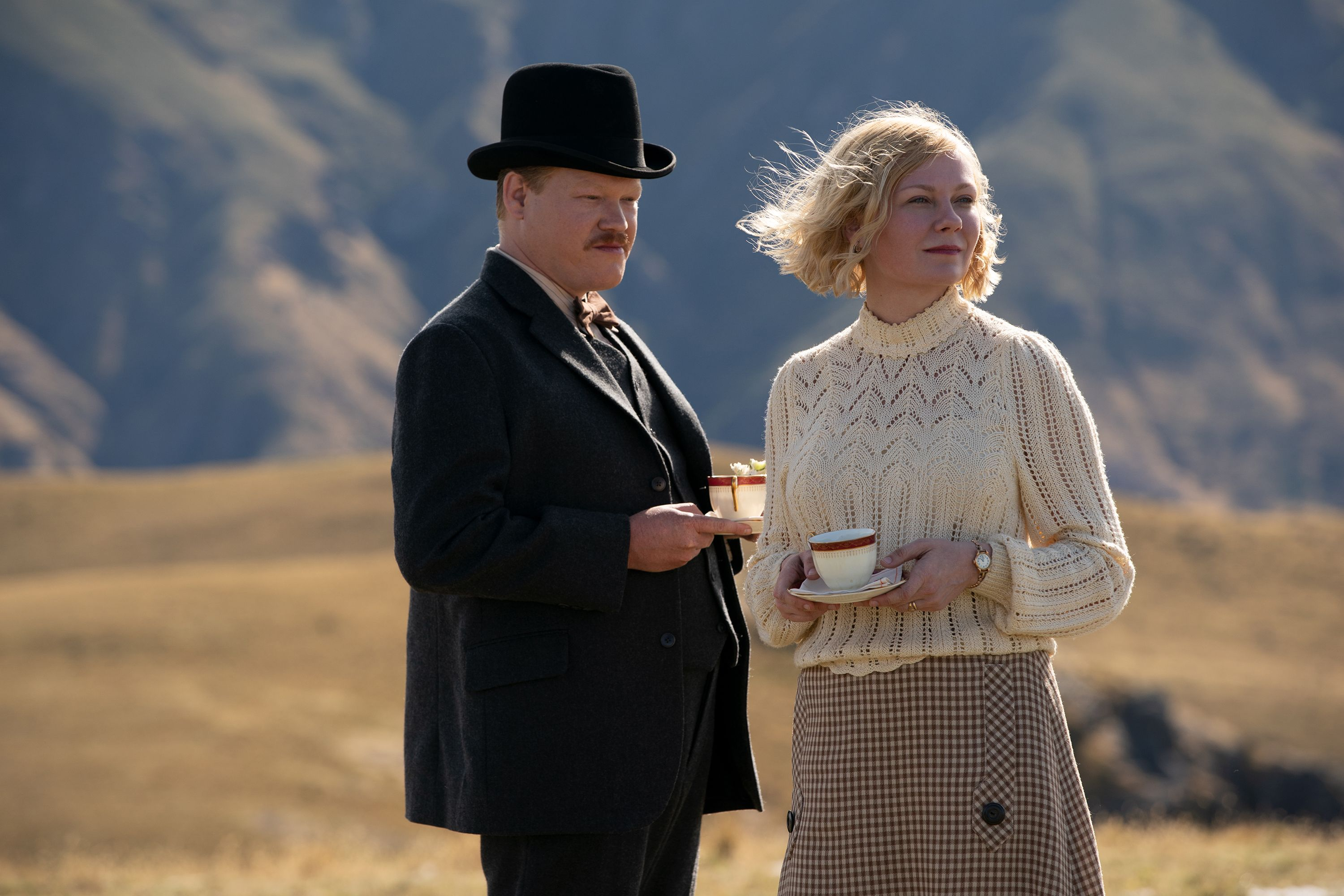
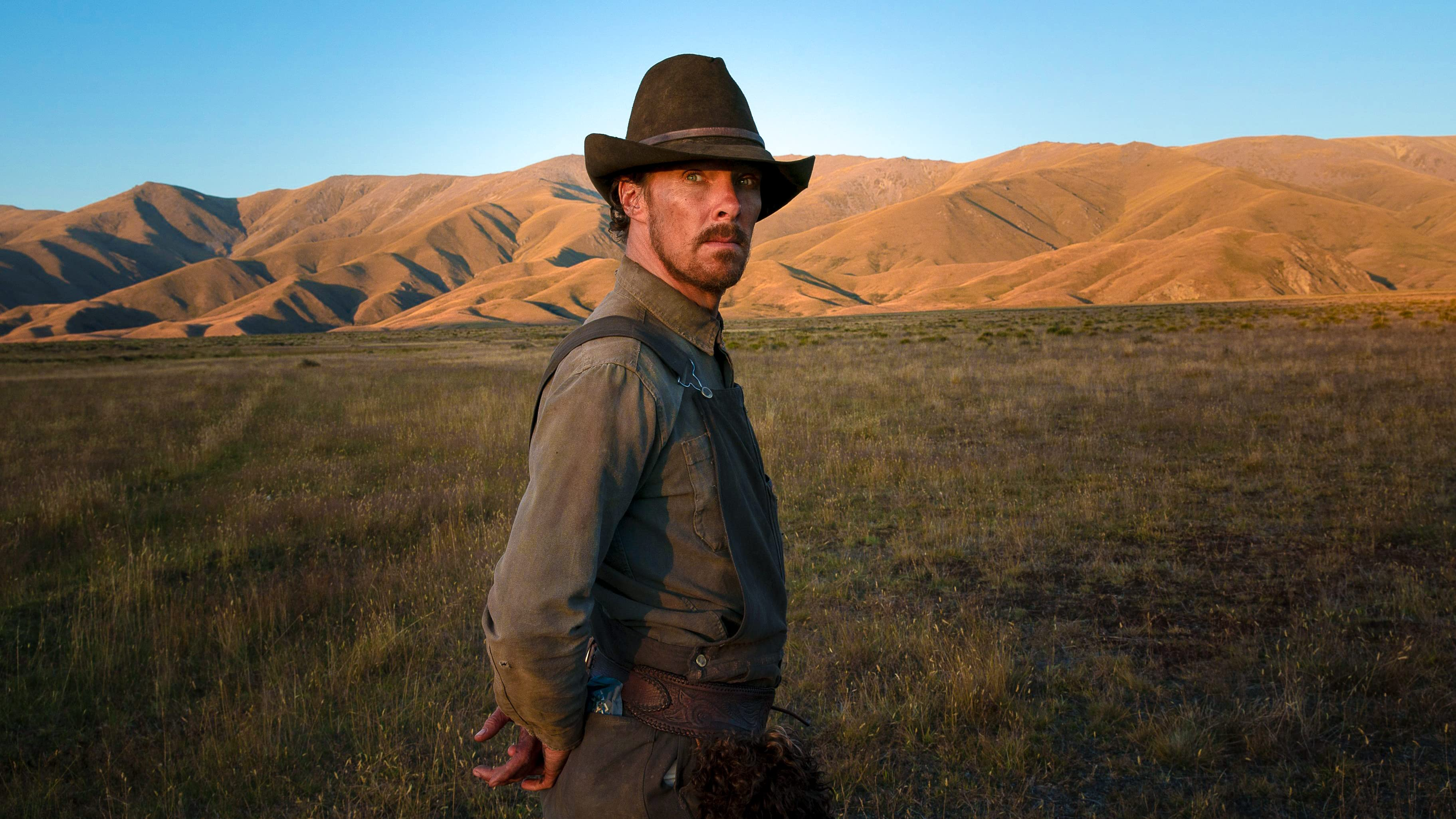
Benedict Cumberbatch in The Power of the Dog

The Power of the Dog isn’t for everyone. It certainly isn’t for children, the squeamish, or those bothered by a constant state of dread and anticipation. For the rest, it’s a dark revisionist Western that doesn’t go where you think it’s going to go. It’s got a practically airtight screenplay, and the acting and cinematography are excellent.

It takes place in 1925 Montana, which puts it well out of the 25-year window of most classic westerns (1865-1890). It’s a fascinating combination of old (the landscape, the cattle, the cowboys) and modern touches such as a car and a fairly modern bathroom. The clash between the old West and modernism is at the core of the film.

A simple retelling of the plot seems to give away the film, but it doesn’t. We have two brothers, one a very soft-spoken and kind man, and the other a combination of John Wayne playing his worst characters and Mr. Potter of It’s a Wonderful Life. The kind one marries a widow with a rather effeminate son, and the harsh brother can’t seem to stop from bothering him. The rising tension is palpable, but that’s all that should be said.

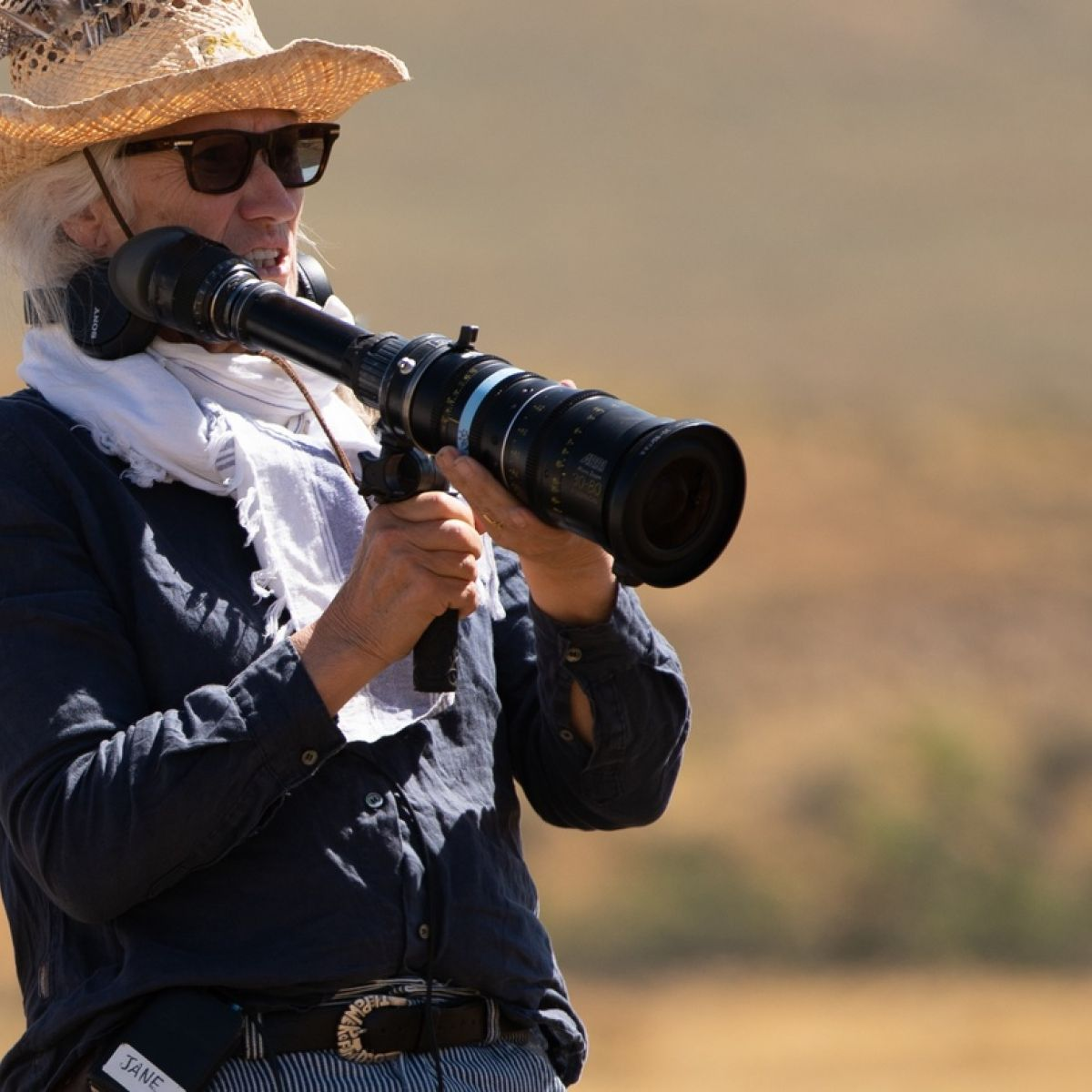
This is director Jane Campion’s return to form. Most would remember her from The Piano, which won Holly Hunter her Oscar. (Coincidentally, a piano figures into this film as well.) The directing is slow and deliberate, almost studied and careful, but intelligent. Her script is worthy of study, and happens to be divided into chapters, a gamble that doesn’t always pay off, but does here. There are a few moments that seem unsupported to me, even upon a second viewing. But there is a steady inevitability to the film that makes it captivating. Advice to casual viewers: Don’t be casual. You have to pay attention to what’s going on in every scene, as Campion gives you all the information you need, but never makes a particular big deal out of any one action.

Some have said this is Campion’s attempt to make a Terrence Malick film (Days of Heaven, The Tree of Life), with its slow pace and its many, many nature shots. But the film is more like Campion’s version of There Will Be Blood. There is a strong central male performance of a character we really don’t like. There are beautiful shots of a landscape both inviting and menacing. But perhaps most striking is Jonny Greenwood’s score. He scored Paul Thomas Anderson’s The Master, Phantom Thread, and most tellingly, There Will Be Blood.

In some unfortunate ways, The Power of the Dog can be seen as a pale imitation of TWBB. It’s not, but there are real reasons to think so. The music is a less intense version of There Will Be Blood’s, with all the dissonance accompanying the visuals. It’s no longer a new approach, so it might seem simply derivative. Also, and perhaps most important to the comparison, is the lead character. Benedict Cumberbatch is deservedly already winning awards for his performance here for his charismatic and problematic Phil, and he’ll certainly be nominated for an Oscar. But if you’re comparing this excellent actor to Daniel Day-Lewis’s Daniel Plainview in TWBB, Cumberbatch can unfairly suffer from the comparison. For one, as good as he is (some of his work in Sherlock is a master class in acting), Daniel Day-Lewis is simply the greatest English-speaking actor of this generation (IMHO). Also, Plainview stands in for America and much more in TWBB, while Cumberbatch’s Phil is a particular individual. Yes, his character is working to upend stereotypes, and he stands for a revisionist look at Western masculinity (at least). But Phil simply isn’t as broad as Daniel Plainview, and he is rightly not played that way. Cumberbatch is excellent here, and shows us the incredible range of his talents.

Playing the romantic couple at the heart of the story are real-life couple Kirsten Dunst and Jesse Plemons. Dunst turns in her best and most mature performance here, and there has been a great deal of talk of her first Oscar nomination. She may get that, and she is very good here, but she almost certainly won’t win. Plemons is solid but very soft; his part is necessary, especially in contrast to his brother, but he nearly disappears at times. The blazing star of the film is Kodi Smit-McPhee, who plays (or to be more accurate, underplays) the son of Dunst’s character and therefore step-nephew to Phil. Smit-McPhee has been acting for most of his life (The Road, Dawn of the Planet of the Apes, X-Men: Apocalypse), but this is the very definition of a breakout role, even with as internal a performance as he gives. The tension between his character and Phil is extraordinary, with many shades of meaning and possible meaning. And to quote Forrest Gump, “That’s all I have to say about that.”

It’s been 12 years since Campion has directed a feature (Bright Star), and nearly 30 years since The Piano. The Power of the Dog is a tough, smart, and a work of art full of surprises, and we can only hope it’s not another 12 years before we see another film from this director.

Posted in Film Reviews, Newer films | Tagged , , , , , , , , , , , , , , , , , , , | 1 Comment

Dune (2021)

Dune really isn’t as bad as many of the reviews have indicated. It has its strengths, and definitely has its weaknesses. And then, it has a tone that will either put you off or turn you on.  Note: I’m not a fanboy, about Dune or Star Wars or Star Trek—not even The Lord of the Rings.  I haven’t read the books associated with these films, and I never saw the 1984 version of Dune. So I’m pretty much of a blank slate, and I come to the film simply as a film.

Dune (2021) - Does it hold up? - Royals Review

Since the story doesn’t really grab me as much as it would a fan, and because the movie tends to shy away from strong narrative and big dramatic moments, I was forced to pay attention to other things—the look, the sound, the performances—to get my impressions and enjoyment. There was plenty to admire, perhaps less to enjoy. But first, there were two small weaknesses that affected things overall.

One is that while it was always marketed as Dune, the film opens by calling itself Dune: Part 1. This is something of a bait-and-switch. Of course it makes sense to wait until after opening weekend to finally determine to proceed with Dune: Part Two (coming 2023). But thinking you’re going to get the whole story when you only get half can lead to disappointment, an experience no film wants to bring to itself.

The second weakness is rather humorous and only slightly distracting. It’s simply that Jason Mamoa is in a completely different movie than the rest of the actors. His name, Duncan Idaho, already sets him apart, but his entire performance is on another plane entirely. First of all, he is presented almost as a Chris Pratt-like hero, with funny lines that make one think we are in the Marvel universe (think Iron Man and Thor). Then those lines quickly disappear, and there isn’t an ounce of humor in the rest of the film. But Idaho stays around as a character for quite a while, and like Bill Murray in most of the films he is in, he exists and acts in a parallel universe. The intense urgent whisper that characterizes the others is never a part of Mamoa’s performance. The moody, rather dour feel of the film doesn’t reach Mamoas’s character or performance, and he is almost more of a Guardians of the Galaxy character than one who fits in with the dark and somber atmosphere.

But aside from that, even if you’re not intrigued by the world or events of Dune, there is much to admire. As usual with director Villeneuve (Arrival, Blade Runner 2049), the visuals are stunning. There isn’t much of a chance to get a strong sense of place, as the action keeps moving from location to location. But otherworldliness certainly characterizes every location we see, and if things aren’t always beautiful, they are generally striking.

Then there is the film’s soundscape. Composer Hans Zimmer (Dunkirk, Interstellar, Inception—do we see a pattern?—Gladiator, The Lion King) helps turn Dune into something of a Christopher Nolan film with a strong, ever-moving atonal score. No soaring orchestral melodies here. It’s lush, to be sure, but also loud and immersive at times. As with his Nolan films, the music here is not an add-on, but is part of the visual/aural experience.

Then there are the performances. I’m an Oscar Isaac fan, and (spoiler alert) he leaves much too soon. Then there is Rebecca Ferguson (several Mission: Impossible films, including two upcoming ones, as well as The Greatest Showman and Men in Black: International), who has the role of her career so far as the partner of Oscar Isaac’s character and the mother of the lead. There’s a great deal of action to the part, but the emphasis is on her strength and protective love for her son. As dramatic as things get, she beautifully underplays the role, which only adds to its power.

Then there is future Oscar winner Timothée Chalamet (Call Me By Your Name, Little Women, Lady Bird) as Paul. Chalamet is almost a genre unto himself at this point. There is no other young American actor of his unusual talent and presence, and the film is lucky to have him, even if Villeneuve seems to clamp down on any possible scenery-chewing, and keeps him (and Ferguson) speaking so low that it’s often hard to hear what they are saying. But holding a film of this magnitude on his slender shoulders is something of a triumph for a young actor. He has an almost ethereal (and yes, otherworldly) beauty that is combined with an easy and naturalistic acting style—quite the combination. We always discussed what makes a “star” in my film classes, and we’ve all agreed it goes beyond talent or even the love of the camera. Chalamet is not traditionally handsome, he has a rather angular face, and he is as thin as they come. Yes, he is very talented as an actor, but so are many others. Whatever the “it” factor of a star is, Chalamet has it in spades, and the film would be considerably weaker without him.

Zendaya, a kind of female equivalent to Chalamet in terms of looks, waif-like qualities, and delicate elegance, is more of a presence than a character. I assume she will have a greater role in the second film. Stellan Skarsgård seems misused in the film’s version of Jabba the Hut, and I can only hope the paycheck was worth it. Josh Brolin continues his tough-guy role here and does what we expect him to do—be strong, smart, and brave.

If you’ve been put off by negative reviews, don’t stay away. The book and its concepts have created a cottage industry of loyalty and criticism in equal measure. The film, while generally bleak, has its own life and strengths that make a viewing worthwhile. Go for the sake of the legend; stay for the visuals, the sounds, and the performances.

Posted in Film Reviews, Newer films | Tagged , , , , , , , , , , , , , , , , , , , , , , , , , , , , | Leave a comment

No Time to Die

The last James Bond film starring Daniel Craig will probably best be remembered as simply his last Bond film. As a film, it’s way too long, and has too many featured characters, especially when it comes to “Bond girls” and “Bond villains”. The film is gorgeous to look at, and the action sequences, while sharing about the same level of believability as Marvel sequences, are exciting even when they defy every law of gravity and physics.

As Bond, Craig (admittedly my favorite Bond) has recalibrated the famous British agent, and has reminded us that he is supposed to be “a blunt instrument.” He reformulated the character so much, and yet dominated the scene for so long (five films) that the Broccoli family can now pretty much go in any direction they want to for the next phase. Also—spoiler alert, bigtime—his death at the end obviously opens things up for new directions.

This is a film that seeks to tie up every loose end possible. The Bond that loved and lost Vesper (Eva Green) now finishes up his romantic connections with Léa Seydoux’s Madeleine. The film uses the relationship not only to broaden our Bond emotionally, but also to motivate Bond to make the final decisions he selflessly makes to wrap up the plot. The film also gives Craig the gift of several emotional scenes, many done in close-up, to remind viewers and producers that he is more than just an action hero and has plenty of years left of his career. (Note: Knives Out 2 and 3 are currently in various stages of production.) Other than these scenes, there isn’t much new to Bond here, and as much as I admire Craig, he seems to be hitting the age ceiling for Bond in the film, and he isn’t used to his best as he is rushed from scene to scene to scene. Bond’s humor, a key element in the series’ success, was almost nowhere in sight; there was a quick “one-liner” in the middle of a fight that half the audience could see coming and was too sophomoric for a film like this; I felt bad for Craig having to say it.

Seydoux is an accomplished French actress with a respectable lists of film credits, and she brings a steely strength combined with a personal warmth that is needed for Bond’s love interest and (another spoiler alert) possibly the mother of his child. She also makes a good action heroine…which only make Ana de Armas’s presence as the slinky Paloma all the more confusing. Paloma is the sexy Bond girl the film apparently thinks it needs, but she appears and then disappears out of nowhere, and any promise she brings to the film is frustrated by her quick exit.

Equally as frustrating and head-scratching are the two villains. Oscar-winning actors Rami Malek (Bohemian Rhapsody) and Christoph Waltz (Inglourious Basterds and Django Unchained) play the two bad guys, but the latter has almost no screen time. That’s regrettable, as he has much more screen presence even in his short scene than Malek, and makes a stronger villain. Malik’s Safin is underexplained, undermotivated, and underplayed…and not very interesting.  

Fortunately, the overstuffed film brings back some old favorites that each could have/should have had more time: Ben Whishaw’s Q, Naomie Harris’s Moneypenny, Jeffrey Wrights’ Felix Leiter, and Ralph Fiennes’ M. Getting rid of one sexy female and one villain, and giving us more time with these four, would have combined to make a stronger film.

Craig, even with less to do here, still makes for a compelling agent, and in some ways the film is a good send-off for him and his version of 007. There is (spoiler) another 007 in the mix here, but the less said about her the better, and we can only hope that this is not the future 007 that the franchise will present. The Scarlett O-Hara-like search and discussions for the new “Bond” are currently underway, but if the franchise sticks to history, we’ll all be surprised.

No Time to Die should be seen in theaters to fully appreciate its stunning locations and action sequences. It’s far too long and something of an overpacked and confusing mess, but it’s the last in an important phase of the series, and for that reason, is a must-see for Bond and action fans alike.

Posted in Film Reviews, Newer films | Tagged , , , , , , , , , , , , , , , , , | Leave a comment

Shang-Chi and the Legend of the Ten Rings

If Crouching Tiger, Hidden Dragon and Avatar had a baby, it would be something like Shang-Chi and the Legend of the Ten Rings (hereafter referred to simply as Shang-Chi). Not being a particular Marvel fanboy, but being interested in how Marvel studiously lays out their universe and the superheroes therein, I can say easily that Shang-Chi does its job. And that is introducing a new-to-most-of-us hero that will join the others. Like Black Widow, it’s an origin story, but of someone who has (spoiler alert) passed away. Unlike Black Widow, we are being introduced to a character who will likely join the rest of the Marvel cast soon. With the film’s economic and critical success, Marvel clearly has another hero who can join the others or support a film of his own.

The film follows the usual path of a background set-up, a shocking revelation of who our hero really is, the fish-out-of-water adjustment, and then far too many fights. Fortunately, they mix things up a bit. The first part of the film moves along quickly, setting out the world of San Francisco, and the rather rudderless lives of two folks who park cars for a living. This simple fact does double duty by demonstrating how very stuck the two are in dead-end jobs, and also by laying the groundwork for some superior stunt driving later. Just enough time is spent here to establish the world of our two main protagonists, including the conflicts of cultural expectations and language.

There are loads of flashbacks that probably overtell the tale of Sean’s (Shang-Chi’s) birth and spiritual heritage. There is a huge improbability at the heart of how Shang-Chi’s parents get together, but hey, none of this is real anyway. But the fight scenes there and in the main story of the film are quite beautiful and are a fresh mix of Crouching Tiger, The Matrix, and the standard Marvel fight scenes. There is a beauty and an elegance that is rare in the Marvel universe (and non-existent in DC’s). The only gripe I have here is that the two dragons fighting at the end–one “good” and one “bad,” are occasionally hard to differentiate when they are fighting one-on-one.

Certainly this film is both introducing an Asian superhero and simultaneously aiming at a greater Asian slice of the pie. To do that, it often has to thread a narrow path of pandering on one side and a dangerous cultural appropriation on the other. Haters will hate, of course, but the film manages a mix of humor, mysticism, family tensions, and actions that usually works. There is little that is offensive unless one is looking for it, and that is because of its safe mix of a gently laid out story and its comfortable leads.

Canadian actor Simu Liu is the eponymous lead, and he’s a good choice. In the beginning, he is relatable and easy as the car-parking millennial, not something every actor playing a superhero can pull off He has quite the arc to demonstrate as the film continues, but as he takes on his real identity, he becomes visibly more confident, until he (spoiler) is believable facing off with his father. I could see him acting a few times, but for the most part, he is an Everyman the audience can easily connect with.

Comic relief is supplied at first by Awkwafina, so good in a similar way in Crazy Rich Asians. It wasn’t always the smoothest of performances, but that could as easily be attributed to the challenge of such a comic character in a generally serious superhero film as well as the actress. More comic energy comes from Sir Ben Kingsley, who will always be known for his Oscar-winning turn in Gandhi, as well as his roles in Schindler’s List and House of Sand and Fog. Here he brings back his Iron Man 3 role of Trevor Slattery, and pretty much steals every scene he’s in. He’s almost in another cinematic space here, as Bill Murray often is in his films, but he manages to build on what Awkwafina has provided him in the earlier part of the film and simply stretches the film in his comic direction.

Two legends add weight and legitimacy to the story: Michelle Yeoh and Tony Leung. Yeoh, a Malaysian actress known to most of us today as the rather strict mother of Henry Golding’s character in Crazy Rich Asians, was the lead in Crouching Tiger, Hidden Dragon way back in 2000 after a successful career in Hong Kong action films. Here she is Shang-Chi’s aunt, and her mere presence and strong persona bring a gravitas and authority that connects this film to so many others she has been a part of, providing innumerable resonances of culture and action.

The other legend is Tony Leung, here making his first American film. The film needed a strong presence to play Shang-Chi’s father, Xu Wenwu, and Leung brings it in spades. Unfortunately, the role is the least clearly written in the film, and at times only Leung’s acting abilities can distract the viewer from the confusion about his character and motivations.

Like a good sequel (which this isn’t), Shang-Chi and the Legend of the Ten Rings is the same but different. It belongs to a Marvel universe that it manages to extend and re-create so it can fit in, and it brings in Asian characters and story elements that open whole new fruitful opportunities for the Marvel universe. Yes, it’s a great problem-solver for Marvel, but it’s also chockful of nerd bait for some and simply enjoyable filmmaking for the rest of us.

Posted in Film Reviews | Tagged , , , , , , , , , , , , , | Leave a comment

The Umbrellas of Cherbourg (Les parapluies de Cherbourg) (French, 1964)

DNow is probably the right time to take a first or second look at The Umbrellas of Cherbourg. There is nothing else like it, not even writer-director Jacques Demy’s next film, The Young Girls of Rochefort, and that one starred not only French legends Catherine Deneuve and her sister Francoise Dorléac, but other French legends Danielle Darrieux and Michel Piccoli, AND Oscar winners George Chakiris (West Side Story) and Gene Kelly. Yes, that’s quite the cast, and it’s an incredible film. Yet there is nothing quite like Umbrellas.

Film Night: Umbrellas of Cherbourg – Huguenot Museum
Catherine Deneuve and Nino Castelnuovo in Les Parapluies de Cherbourg

Umbrellas is an obvious homage to the golden age of the American musical, with its slightly heightened emotions and colorful costumes and sets. But it’s not a satire like Singin’ in the Rain; it’s a love letter and a tribute that takes subjects and themes to another level. It’s completely sung-through, which in the mid-‘60s could have been distancing, but now after Les Misérables, Phantom of the Opera and even the more recent Annette, it’s not such a strange thing. It almost feels comfortable.

The story could be described as thin (no spoilers here), but where it goes is unlike any classic American musical you could think of. It’s tender, and almost heartbreaking (and perhaps not “almost” for some viewers). It resolves its narrative well and clearly, but the attendant emotions are complex and could be considered contradictory. The film addresses issues of love, first love, money, time, sacrifice, compromise, wisdom, sex, marriage, yearning, and regret—all wrapped up in a pastel bow. That’s not exactly a list of subjects addressed by classic American musicals.

The film is a technical marvel and has nary a misstep in its cinematography. The blocking of actors and the movement of the camera is so on point that you don’t even notice it; the movie just keeps rolling along. The music is extraordinary—imagine a completely sung-through film with no major songs. No one stops to sing a number. There is, however, a theme song, called “Je ne pourrai jamais vivre sans toi” and known as “I Will Wait for You” in English. It was pulled out as a discrete song and was nominated for Best Song (more on that later), but in the film, it’s a theme that appears at several moments. Suffice it to say that the music, by legendary Michel Legrand (Oscars for “The Windmills of Your Mind” from The Thomas Crown Affair and the score of Summer of ’42 and Yentl) never dominates the acting or the imagery, but is perfectly paired with both. (Note: This theme, and even the “single song” version of it, is one of the most haunting, evocative, stirring pieces of music ever written for a film. Just try to get it to leave your head, or your heart, for several days after viewing.)

Even the lip-synching is extraordinary. Real singers such as Jeanette MacDonald and Judy Garland liked to genuinely sing along with their recorded voices when filming to look as if their characters were singing what we were hearing. The “gold standard” for synching while singing to someone else’s voice, in my view, is Marion Cotillard in La Vie en Rose, but there she needed to look like she was channeling Edith Piaf as a performer. Here the synching is softer and subtler, looking as if it existed in a world where everyone easily and simply sings his/her words. I couldn’t find one instance of bad lip-synching, and that’s something of a successful tightrope walk in a film that needs to get a lot of things right at the same time.

The film is certainly famous in its own right, but it was also the star-making vehicle for the soon-to-be French legend Catherine Deneuve. Deneuve had been acting for a few years and was famous/infamous for having lived with and having a child with “bad boy” film director Roger Vadim (she came in after wife #1 Brigitte Bardot and before wife #3 Jane Fonda), having moved in with him at the age of 16. This was her breakout role, and it’s easy to see why. For one, she is breathtakingly beautiful, a topic which has been much noted and written about, but she is also sweet and tender and believable as a naïve, love-struck teen. Deneuve was later known as an ice queen, and you can see the coldness creeping into her performance in the last scene. But for the most part, her performance is touching, heartfelt, and light

TheUmbrellasofCherbourgLessonstoLearn

Director Jacques Demy, a “not quite” New Wave director, liked to have characters in one film appear in another. Here his early Lola (1961) character Roland Cassard, played by Marc Michel, appears in this film in an important role. Demy kept directing after Umbrellas, doing some interesting and experimental work, but he never achieved the artistic and commercial success of this film. Most serious film students will recognize, perhaps with surprise, the name of his wife, New Wave legend writer-director Agnès Varda, the only female director to have been awarded an honorary Oscar for her work. (Demy passed away in 1990, and Varda lived another 29 years.)

The film’s connection with the Oscars isn’t unique, but belongs to a handful of films that made the list two years in a row. It was nominated for Best Foreign Language Film in the 1964 Academy race, losing to Vittoria DeSica’s Yesterday, Today, and Tomorrow. In 1965, it was apparently eligible in all categories, and gathered five nominations for the music and the writing. It didn’t win any, but this was the year of The Sound of Music and Dr. Zhivago.

If you’re reading this and haven’t yet seen The Umbrellas of Cherbourg, try to fill that gap in your film experience. It has references to a lot of other films, especially in its use of music, color, and production values. But no one has been able to succeed as well as Demy has in blending all these elements into such a delicate but heart-wrenching soufflé. It’s lovely to look at, a joy to listen to, and manages an emotional, quiet gut punch at the same time.

Posted in Film Reviews, Older Films | Tagged , , , , , , , , , , , , , , , , , , , , , , , , , , , , , , , | Leave a comment

Broadway Melody of 1936 (1935)

Broadway Melody of 1936 is the second of four Broadway Melody films. The first, simply called The Broadway Melody (1929) is likely the most famous, as it was the first musical and first sound film to win Best Picture. It was also M-G-M’s first all-talking picture, the studio’s first musical, and the highest grossing film of the year. It introduced classics often repeated throughout the series (and later, in Singin’ in the Rain), such as “You Were Meant for Me,” “Broadway Melody,” and “Wedding of the Painted Doll.”

Broadway Melody of 1936 isn’t any kind of sequel, and just picks up on the idea of folks wanting to be in a show, and it shows us the numbers as they are rehearsed or performed. In just a few short years, the studios, especially M-G-M—which ended up making the greatest American musicals—learned how to film their numbers, from large group efforts to individual performances. The film is packed with then-famous faces, including Jack Benny,  Una Merkel, and Robert Taylor. But it is the newcomers that make the film worth watching, and one of them makes one of the most spectacular appearances as a newcomer that film has ever seen.

But first, the famous ones. Una Merkel is perfectly cast as the tough-but-tender wisecracker she often plays. Benny hadn’t yet become a legend, and he is almost in a separate film. Most of his scenes are with Sid Silvers, a comic second banana as an actor, but who as a screenwriter either contributed to or wrote the scripts for this film and the next two in the Broadway Melody series (“…of 1938” and “…of 1940”) as well as For Me and My Gal and even The Wizard of Oz. There’s a lot of Benny humor and physical comedy, and it doesn’t show the famous comedian at his best. If anything, Silvers might have the edge here.

Robert Taylor is one of the three actors of the time that the leads in Zoolander would have called “ridiculously good looking” along with Errol Flynn and Tyrone Power. Here he surprises, as he sings “I’ve Got a Feeling You’re Foolin’”, not the easiest song to sing. He doesn’t have much of a voice. It has little character, but he’s smooth and on key. This was a time when studios were stretching their dramatic and comic actors to see who might be a musical star. (Check out Jimmy Stewart…. https://www.dailymotion.com/video/x1l3co). Taylor has a nice natural voice, but he isn’t a singer.

The minor revelation is Buddy Ebsen, here in his first film with performing partner and sister Vilma, a dancing team that once billed itself as “The Baby Astaires.” For those who only know Buddy Ebsen in The Beverly Hilbillies or Barnaby Jones, his dancing is something to behold. It’s been described, as loose-limbed, rag-doll, and even “surreal.” All apply.  He and Vilma sing a rather silly song called “Sing Before Breakfast,” which introduces the main star of the film. Ebsen’s voice is like his dancing. He sings around the notes, eventually hitting the pitch, but often just barely. (He’s a much better singer than Taylor, though.) Check it out: https://www.youtube.com/watch?v=VHsE9_A_YSE

Finally, the woman that most folks have forgotten. It’s the inimitable Eleanor Powell. She had a small part in George White’s 1935 Scandals, where she is uncredited but gives a small glimpse of her incredible talent. Here in Broadway Melody of 1936, she is given the star treatment, and puts on an incredible display of dancing talent that was unequaled. She’s not much of an actress, and she is weakest playing the main role as the character. But when her character is imitating Katharine Hepburn in her first Oscar-winning role in 1933’s Morning Glory (very funny) or pretending to be a French dancing star, she’s quite good. But when she dances, watch out. The film gives her a gradual unveiling of her talents. She dances with the Ebsens in a “Wow, she can really tap” moment. Then she gets the classical ballerina treatment (and dances beautifully, often en pointe.) in an overly lush scene that reminds one of the sets for A Midsummer Night’s Dream from a year earlier. Having established those credentials, she does a dazzling technical display of her footwork as the French star, and then at the end, the film gives her the ultimate musical treatment, allowing her to tap like crazy, bend over backward like few others could, and spin like the best ice skaters—except for longer. This last segment is breathtaking, and anyone with an interest in film should see it: https://www.youtube.com/watch?v=fEaklU6UyZg and start at 1:50.

Perhaps the greatest dance ever recorded on film came four years later, when Powell was finally paired with her only equal, Fred Astaire, in Broadway Melody of 1940. Powell could never be part of a dance couple, as Ginger Rogers was with Astaire. But the pairing of these two giants who shared a great respect for one another is extraordinary. The number is long and starts slowly, but here is what most folks remember when they talk about the number: https://www.youtube.com/watch?v=Ti0FnSLBXSM.

I’d always thought of Powell as a machine-like technician, and a little on the cool side. But she has a glorious smile and a sweet demeanor on film. It’s just that she dances everyone (except Astaire that once) off the screen, and has acrobatic abilities that left even other dancers in awe.

The film, as a film, has its high points and low points. There is some interesting use of film technique, especially in the editing and use of double exposure. The downside of some of the Broadway Melody films is the awful tendency to showcase novelty acts that are out of place and generally annoying to the modern viewer. Here there is a recurrent character who does different kinds of snoring. Really. But this is what fast-forward was made for.

Powell was a unique performer, and she deserves to be more remembered than she is. One good look at her dancing should take care of that for one willing to give her a try.

Posted in Film Reviews, Older Films | Tagged , , , , , , , , , , , , , , , , , , , , , , , , , | Leave a comment

In the Heights

When it comes to the film version of In the Heights, context might not be everything, but for many folks, it might be the biggest factor in experiencing it. The Broadway version opened in 2008, and it was to be made into a film a few years after. Then there were problems, and things were delayed. Then they finally made the film, and looked to a June 2020 release date. Then COVID pushed it to June 2021.

Since the pandemic changed the timing for a lot of projects, what’s the big deal? Well, the film version of Hamilton was supposed to be released this coming October (2021). But instead, it was released on Disney+ in the middle of last year, and has been a popular streaming choice. For me and many others who have seen this version of Hamilton (in my case, several times), In the Heights comes off as a delightful but pale early version of a Lin-Manuel Miranda work, a great first draft for the deeper and richer Hamilton.

Is that unfair to In the Heights? Yes, but it’s still the way many are going to see it, with the monumental Hamilton firmly sitting in the background. It’s energetic (too much at times) and colorful, and its focus on a specific neighborhood and cultural community will always make it focused and relevant. (Disclosure: My family lived in Manhattan in the ‘70s and ‘80s—for the most part in a Hispanic neighborhood—and we had friends who lived in Washington Heights. The many New York City jokes hit home, and added to the experience.)

The film is a good half-hour too long, and feels like it just has to include large showstopper numbers that clearly worked better on stage. For a musician/singer like myself, those numbers have an attraction that might not work on others; my guess is that they will seem to go on too long and will be seen as distractions from the main story line/s.

Musicals always have the tremendous creative challenge of creating a universe in which people can sing and/or dance. Hamilton was essentially all-singing, but In the Heights, while having long and involved musical numbers, has many “normal” dialogue scenes as well. Opening as the film does with a large group number, it suggests that this is going to be all-singing as well, but then it settles down to going back and forth between spoken and singing/dancing scenes. Transitions are easy and natural, and nothing seems forced.

The plot is not the point, as the real point is Washington Heights—a place, not a story. But there is a central story, and many, many side ones as well. There are actually too many stories here, and the film loses its focus more than once. There are several attractive characters here whose stories we are interested in following, but the many group numbers often pull us away from our investment in these characters, and the abundant energy of the numbers isn’t enough to keep us as invested as we are in the individual people and their particular challenges.

Key among these people is Anthony Ramos, who occupies the soft, warm center of the film with a soft and warm character. What his character Usnavi does in the film and what he wants really doesn’t matter; it’s what Ramos radiates that matters. Ramos, who played the dual roles of John Laurens and Philip Hamilton in Hamilton, easily holds this film together, and while only a decent singer and dancer, holds his own in those regards and has a strong screen presence of likeability and relatability. It will be fascinating to see where he goes to from here.

There has been a good deal of press around the presence of Jimmy Smits in a major role. The non-singing dramatic actor does a little bit of singing (well done) and some dance-like moves that can substitute for real dancing. He provides the gravitas of the piece, and while Ramon remains the standout, Smits fills his role well.

The two female romantic leads are lovely and have lovely voices. But after hearing what Renée Elise Goldsberry and Phillipa Soo did with Miranda’s words and music in Hamilton, these two sounded more like Disney princesses. They are competent actors and very good singers, but they suffer by comparison (again, unfair, but real).

A real standout among the supporting playes is Tony nominee (for the stage version of In the Heights) Olga Merediz, who plays Abuela Claudia, and provides some real heart in the first half of the film. Then in the second half, she steals the film for a while with a showstopper number that reveals a surprisingly strong voice and a command we didn’t see coming. After all the big numbers (on the streets, in the pool, etc.), this is the number that really lifts the film. I was thinking in the first half of the film that hers was the character and performance that might draw a Best Supporting Actress nomination. Watching her big number (“Paciencia Y Fe”) only confirmed that.

In contrast, Daphne Rubin-Vega as Daniela has a similar number that showcases her energy and talents. But “Carnaval Del Barrio” is one big number too many, and reminds us of the difference between stage and film. My guess is that it worked well on the stage. It could easily have been cut or even drastically shortened. Coming as it does toward the end of the film, it tends to draw things out when things need to be wrapped up.

Multi-hyphenate Miranda, who originated the lead role of Usnavi on stage, makes a fun appearance as a piragua salesman. He sounds better and stronger than ever before, certainly more than in the film version of Hamilton or Mary Poppins Returns. Another even smaller cameo appearance as the Mister Softee man is provided by Christopher Jackson, who along with Leslie Odom Jr., was one of my two favorite Hamilton performers. (Jackson played George Washington.) The most beautiful male voice in the film is Corey Hawkins’; he plays Benny, and I could have heard a lot more from him.

Then there is a completely non-musical performance by music legend Marc Anthony, playing a straight, down-and-dirty role that wasn’t in the original play. He does a very good job, but it’s hard not to see the superstar under the tattoos and grit. Another supporting performance that gets stronger and more satisfying as it goes along is that of Sonny, played by the young Gregory Diaz IV. His part becomes more important as the film goes along, and really blossoms near the end. This is a multi-talented young actor that is well worth watching out for. He sings, dances, acts, and possesses a strong screen presence, especially for someone so young.

There are a few problems with the main love story. Ramos as Usnavi is just a little too hesitant and shy with Vanessa  (Melissa Varrera), and that gets old quickly. Also, during a scene where he supposedly “abandons” her, believability is strained to the breaking point both in what supposedly occurs and in how it’s shot. Director Jon M. Chu (Crazy Rich Asians) generally does a good job balancing the group numbers with the individual story, but this scene—an important one in the romance plot—doesn’t work. It’s not a fatal flaw, but it hurt.

The film goes into magical realism in one number for no good reason, and ends up reminding everyone of La La Land. Not sure what this brought to the film. Since there hadn’t been anything other than the usual suspension of disbelief that most musicals have, the scene was confusing and a bit distracting.

In spite of the overwhelming marketing campaign, the film doesn’t seem to be doing all that well. With a $55 million dollar budget plus marketing costs to cover, the film hasn’t even cracked the $20 million mark internationally. Is it worth seeing? It depends. If you’re a musical or Miranda completist, it’s worth seeing, and Ramos is now officially a star and worth watching. What it has going for it is a not-quite-unique musical style (see Hamilton), some good performers, and a specific focus on a community and a place. But it doesn’t have a song you’ll be humming on the way home (not that it has to…), it overreaches, and it’s too long. Your call.

Posted in Film Reviews, Newer films | Tagged , , , , , , , , , , , , , , , , , , , | Leave a comment

San Francisco (1936)

I had always thought of 1936’s San Francisco as the ultimate early studio disaster movie I hadn’t seen yet, with then-groundbreaking effects dominating the film. Actually, the amount of film covering the devastating 1906 earthquake is relatively small, but the effects are so good and so shocking within the context of the film that the impact of them far outweighs their time on the screen.

For most of its 115 minutes, San Francisco is a generally unbelievable struggle of good vs. evil, classical music vs. modern music, and love vs. exploitation. It stars Clark Gable well on his way to becoming the “King of Hollywood,” soprano Jeanette MacDonald at her height of popularity, and Spencer Tracy right before his back-to-back Oscars for his films in 1937 and ’38. In fact, this film gave him his first Oscar nomination for Best Actor (Paul Muni won that year for The Story of Louis Pasteur), though the case can be made that he should have been nominated in the new Best Supporting Actor category. But his effect on the film is strong. He’s playing a priest and long-time friend of Gable’s Blackie Norton; Tracy supplies a firm strong sense of morality throughout when others are either wavering ethically or simply choosing to be the bad guys (e.g., Norton), and his presence is onscreen even when he isn’t.

MacDonald’s Mary Blake is a classically trained singer trying to make it on the Barbary Coast in 1906. She secures a gig with Blackie Norton (Gable) at his house of gambling and drinking, the ironically named Paradise. There is a back-and-forth with Blake singing Norton’s kind of dance hall music, and a wealthy socialite and an opera empresario drawing her back to classical roots. Mary and Blackie inexplicably fall in love, and Mary later just as inexplicably falls for the wealthy socialite. Most of this is sheer hooey, as is the idea of MacDonald singing in a modern-day saloon.

This all leaves plenty of opportunity, however, for a half-dozen performances of “The Theme from San Francisco” (a.k.a., simply “San Francisco”) an earworm before there were earworms. The song is sung with every possible musical approach, including the rousing crowd anthem version with MacDonald going to town with an operatic descant that creates an aural combination that perhaps ought not to be. (The cynic in me wonders if the combination of the crowd performance of the title song combined with the aria-like descant is what actually caused the earthquake, which happens right after.)

The song gets in your head quickly and was so familiar to me that I has assumed that it had been written about the city before this film. But no, it was written for the film, and has become one of two of the city’s great anthems—the other being “I Left My Heart in San Francisco”. I also assumed that such a popular and singable song might have won Best Song at the Oscars, yet it wasn’t even nominated. That’s understandable, however, when you learn that three of the nominees included “The Way You Look Tonight” (Swing Time), “I’ve Got You Under My Skin” (Born to Dance), and “Pennies from Heaven” from the film of the same name. (“The Way You Look Tonight” was the winner.)

Note on MacDonald: She isn’t my favorite movie soprano. She has the rather “hooty” sound of some classically trained sopranos that covers the sound they’re producing and makes the words take a back seat. (In contrast, my wife has the same vocal range as MacDonald, but has a clear, almost “pop” sound, even on her high notes; that’s a sound I’ve come to prefer.) MacDonald sounds like she had come to film from opera, but the opposite trajectory was true. After her film career, she seriously pursued, with some success, a genuine operatic career. MacDonald does better with another song composed for the film. It’s “Would You?”, which musical lovers will remember from 1952’s Singin’ in the Rain. I had thought that Singin’ had tried to stick to the numbers written around the time of the earliest talkies, with “Beautiful Girl” from a few years later being the exception. Seems that “Would You?” Is indeed the biggest outlier.

In terms of acting, Tracy is the standout, and it’s not hard to see why he snagged a nomination. But the film really belongs to the two leads. MacDonald was a bit out of her element; she was better in smarter, sharper roles, like those with Maurice Chevalier. She’s not lost here, and she gives it her all, but her character is slightly unrealistic, and she is asking the viewer to believe things most simply won’t if they gave it any thought. Having just seen Gable (and Crawford) in Dancing Lady (https://wordpress.com/post/film-prof.com/1134), where I was pleasantly surprised by Gable’s range and depth, I was disappointed to see a more two-dimensional performance here. It’s a meaty role, but not as fleshed out as it could have been.

Note on Gable: It’s understood that many, many films are going to do their best to highlight the physical attributes of their stars, and certainly in the studio era, those stars were mostly female (see the poster above for the film’s attempt to do that with MacDonald). I grew up learning that Gable was “what women wanted, and men wanted to be.” But I hadn’t realized how often Gable was presented physically. In Dancing Lady, there is a gratuitous scene in a gym that shows off his muscles. In San Francisco, he’s put in a boxing ring with little more than a Speedo. There is a small attempt to connect those scenes to their films’ plots, but the goal of the scenes is obvious.

Part of the problem between Gable and MacDonald is that the leads have no real chemistry (see Dancing Lady again for an example of chemistry). Their characters would likely never have fallen for each other; only as cinematic stars and leads is this possible. Not outwardly visible is another possible reason: these two actors didn’t like each other, and had no relationship when the cameras stopped. Gable apparently did some rather immature things to signal his dislike, such as eating garlic before love scenes. You can’t see the mutual aversion on the screen, and it’s to the two actors’ credit. But there is no real connection.

The earthquake scene is justifiably famous, and should have garnered some kind of award. For the time, it was certainly state-of-the-art, and even today it can be jarring. Having recently seen a documentary on the earthquake and its attendant fires, I realized that the film nails the key components of the quake, and gives the viewer a surprisingly accurate experience. You can see it here: https://www.youtube.com/watch?v=hnk7FidwnTA

Once the earthquake sequence is done, the film goes from heavy melodrama to positively surreal. Gable/Norton looks for (and of course eventually finds) Mary/MacDonald, a man conveniently dies, and when Norton finds Mary, the film gets downright strange. The situation he finds her in is rather unusual to modern eyes and ears, and then the film ends with what is supposed to be a stirring expression of hope by, apparently, all the survivors. It’s probably important to remember that this film came only 30 years after the earthquake, and there were likely millions of viewers who remembered it, and thousands who experienced it. San Francisco had rebuilt itself in those 30 years, and the film (spoiler alert) ends with a modern (i.e., 1936) image.

An M-G-M production, the film has the requisite gloss of the studio, as well as the stars acting like stars as much if not more than their characters. Part of me would have loved to see what Warner Brothers might have done to it—adding an edge and getting down and gritty in a more realistic way. But clearly any film attempting to convince us that Gable and MacDonald are a believable pair is clearly going to try and distract us with energy (check), a believable supporting performance (check), and a plot that leads to a well-done demonstration of state-of-the-art special effects (double check). The film is a strange amalgamation of high- and low-brow, and pretty much everything aside from the earthquake sequence can’t be taken seriously. The parts never really gel, but as an example of M-G-M at its height, and a platform for two major stars who would never get together in or out of a movie, it’s fascinating.

Posted in Film Reviews, Older Films | Tagged , , , , , , , , , , | Leave a comment