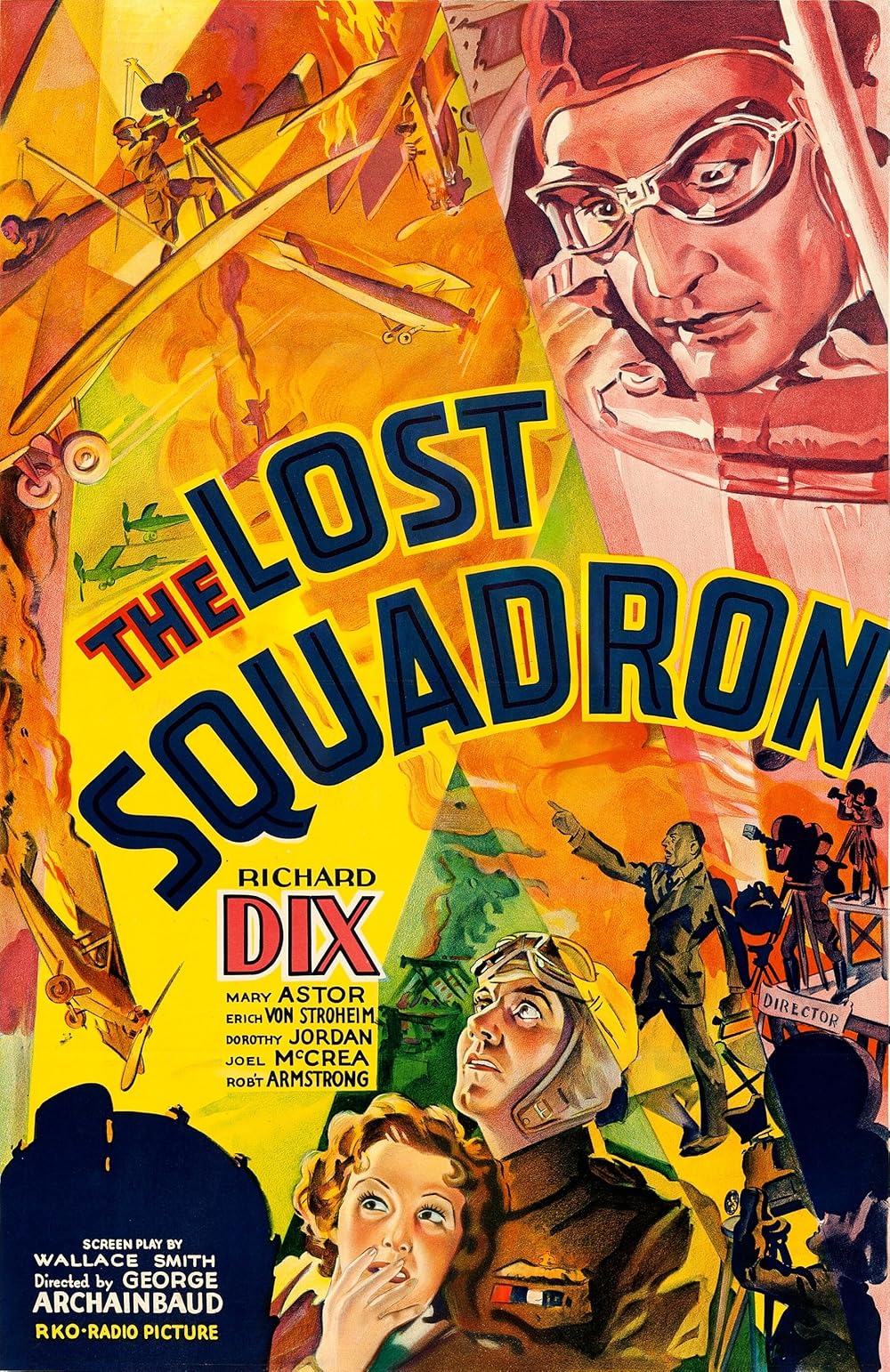
The Lost Squadron is a pre-Code* melodrama/buddy movie/action film/romance/murder film, and yes, the film is as pieced together and strange as that description sounds. The plot is an easy and straightforward one at the beginning but then it takes some fascinating twists and turns. Three World War II fighter pilots return as heroes to the States. Not all that surprisingly, especially if you’ve seen other films with a similar set-up (The Big Parade, The Roaring Twenties, The Best Years of Our Lives, Coming Home, etc.), they run into unemployment and a world that has changed, and not for the better, in their absence.
They decide to take their talent as war pilots and make some money doing airplane stunts for movies. Great set-up, and then the film goes in several different directions, all of which create a cornucopia of plot changes, major diversions, distractions, commentary, and of course, romance. The film, the first produced by David O. Selznick as production chief at RKO, may well be best known for its aerial sequences, which are first-rate for the time. The film was right in the wake of similar flying films such as Wings (1927, and the first Best Picture winner) and 1930’s Hell’s Angels and Dawn Patrol.
Aside from the aerial sequences, film historians will enjoy the tension in the film’s time and place. Lead Richard Dix, nominated the year before Best Actor for Cimarron, brings a silent film style stolidity to his already passive acting style. He locks down the film, and not in a good way; he seems a remnant of the silent era. Then there the fresh face and energy of Joel McCrea, who crashes into the film’s acting styles with an uneven but exciting sound film energy. Even in a supporting role, he brings more dynamism than the rest of the cast combined. Roger Armstrong, who would gain attention in the next year’s King Kong, falls somewhere in between. He’s solid, but rather wooden, even when playing the drunk.
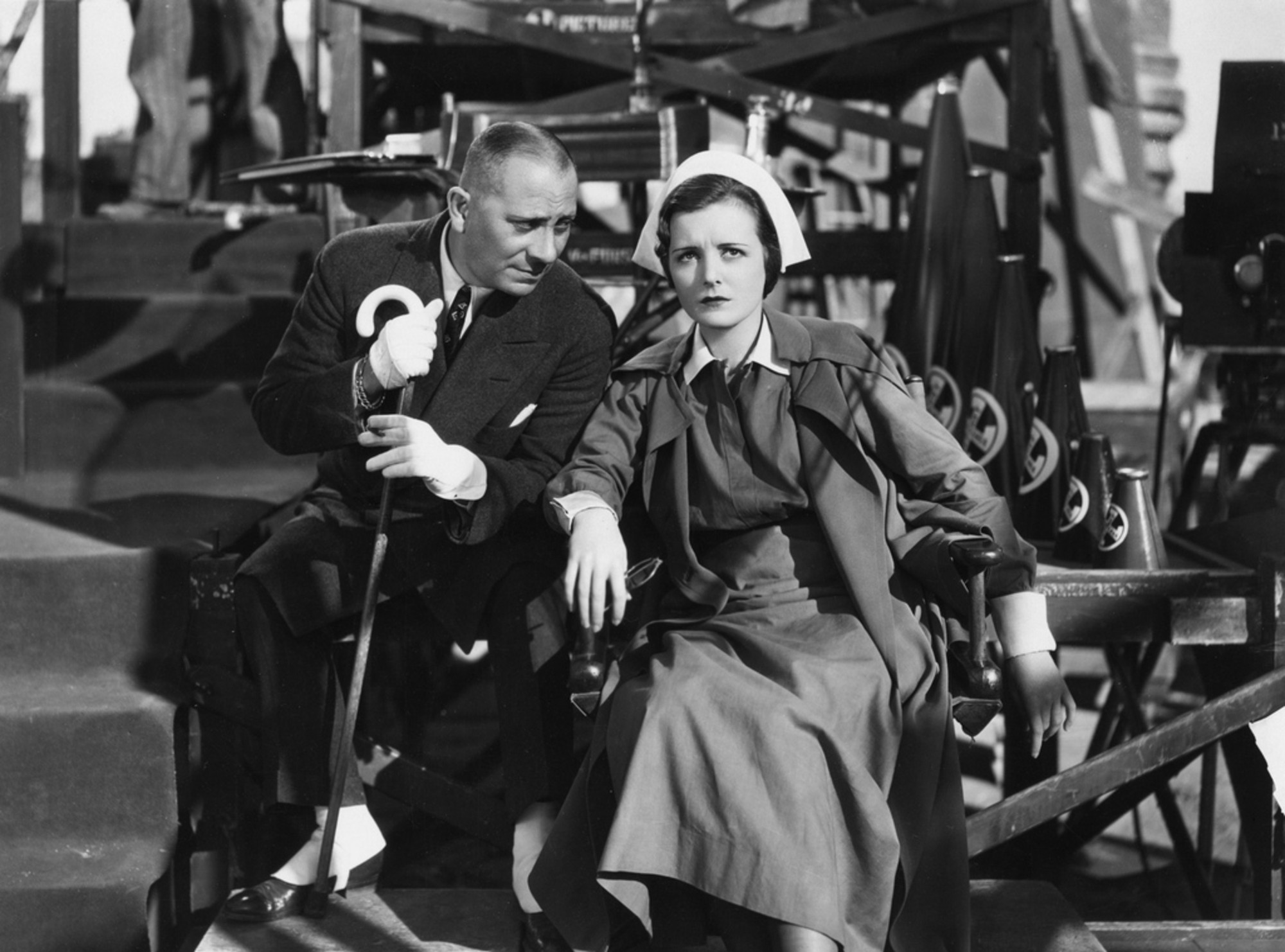
Then there are the two legends. One is future Oscar-winner Mary Astor (The Great Lie, 1942) (above, with von Stroheim) in a role that begins with some drama and interest, but which fades into virtual nothingness as the film goes on. It’s too bad, as she plays the bad girl whose broken emotional state is evident in her many poor decisions. That glorious speaking voice is on full display as a woman whose elegance and intelligence rises above everyone else in the film. When she slips off the film in a disappointedly unresolved way, we miss her.
One subplot that we don’t see coming until we’re in the middle of it is the creation of the film-within-a-film that the famed diabolical German director is trying to make. It’s a fine subplot, and one that almost turns this into a precursor to that same year’s What Price Hollywood?, released a few months later. Astor’s character Follette, who has dumped two lovers/husbands on her way up, is the unhappy wife of said director, who has made her into a big star over the years. The director is played with scenery-chewing panache and fierceness by silent film acting and director legend Erich von Stroheim. He’s the very essence of the hardheaded control freak he was rumored to be in real life. (Some saw this as perfect typecasting.) Stroheim was generally a better director than an actor, and he needs a tight controlling hand to give his best. Under the direction of French-born George Archainbaud, who began directing films in 1917 and was busy with television work until his death in 1959, there isn’t a nuance to be found in von Stroheim’s performance. He’s that perfect clichéd combination of Prussian directness and German roughness.
The film takes a grim and curious turn toward the end, and it seems rushed and less coherent in the final scenes. Even the action scenes are messy. Stories rush toward conclusions that aren’t properly supported, and some plot lines are rushed into completion while others are dropped completely.
The Lost Squadron is less than the sum of its parts. But its many parts can be greatly entertaining—the wildly conflicting acting styles of Dix and McCrea, the presence of Mary Astor before she became a major star, and a view of von Stroheim between his earlier Greed and his upcoming La Grande Illusion and Sunset Boulevard.
Historic note: This is thought by some to be first sound film to include a man giving the finger. But it was briefly seen in The Miracle Woman the year before.
As always, this is a time capsule demonstrating the tensions between silent and sound acting and directing. It’s also a good place to watch famous actors as they plateau (von Stroheim) and begin their ascent (Astor). All films reflect their time, and there are many shifting various styles and personalities to enjoy here.
* Pre-Code films are American motion pictures produced between roughly 1929 and mid-1934, characterized by risqué, subversive, and frank subject matter before the strict enforcement of the Motion Picture Production Code (Hays Code). This era, starting with the advent of “talkies,” featured themes of sexual freedom, drug use, interracial romance, and cynical crime.
Within a short period of time, I saw a $400,000,000 behemoth of a film, and right after, a short and narratively tight $60,000,000 film. I enjoyed the smaller film.
The first, of course, is the third installment of the Avatar films, Avatar: Fire and Ash. The second, Mercy, to my great surprise, bumped Avatar off the top of the charts for this past week as I write this. I never would have seen that coming.
Avatar: Fire and Ash
My eyes were both dazzled and slightly glazed over watching AFA. Of course, the world of Pandora is more beautiful and shimmering than ever, and director James Cameron is clearly advancing the world of visual technologies. But as ever, he is not the strongest of screenwriters and engaging narratives (though he shares writing duties here with Rick Java and Amanda Silver). He manages to venture out into a more layered approach to family relationships, moving past husband and wife to a strong emphasis on parent/children and sibling relationships: teens being punks to parents and each other, brother-sister rivalry, and the issue of bring non-related folks into the family.
But while more is explored here—after all, the movie is three and a quarter hours—there is nothing new or fresh. Cliches abound in the dialogue as well as in the situations outside of the “let’s get Sully” backstory. Perhaps the most “interesting” play on this is an awkward nod to the Bible’s Abraham and Isaac interaction, but the reference adds nothing of resonance to the action, and in fact, seems to undercut the meaning and emotion of it all.
Then there are the new bad guys, including the bad girl. The new girl is a riff on the femme fatale of noir cinema, but she is so shamelessly slinky in looks and behavior that it’s laughable. I was just glad she was dressed in a great deal of red, because the film could have been titled Avatar: One Battle After Another; there was such a swirl of creatures of various looks and intentions that it was hard to keep track of the players. There is no need for any film to have so many nonstop skirmishes unless it’s to spend more time in this visually stunning world. But that’s not enough anymore.
The “humans bad, blue creatures good” trope is getting a little old. The Avatar films are of course Dances with Wolves on Pandora, but as that film demonstrates by omission, there is always a place where nuance might be introduced. And then there are the nature worship and new age worship raves that abound. It looks like a combination of a Studio 54 party and a gathering of drugged, semi-sentient, semi-conscious demoniacs.
The fading interest in the Academy is clear:
Avatar—three wins out of nine nominations, including Best Picture
Avatar: The Way of Water—one win out of four nominations, also including Best Picture
Avatar: Fire and Ash—two nominations, not including Best Picture (it has a good chance of winning Best Visual effects again, but who knows?)
The box office shows the decline as well, though this is clearly a great run:
Avatar: $2.9 billion
Avatar: Way of Water: $2.3 billion
Avatar: Fire and Ash: $1.4 billion so as of 1/25
There are reports of another two sequels at least. Please, Mr. Cameron, use this incredible visual platform you’re created for something new dramatically.
Mercy
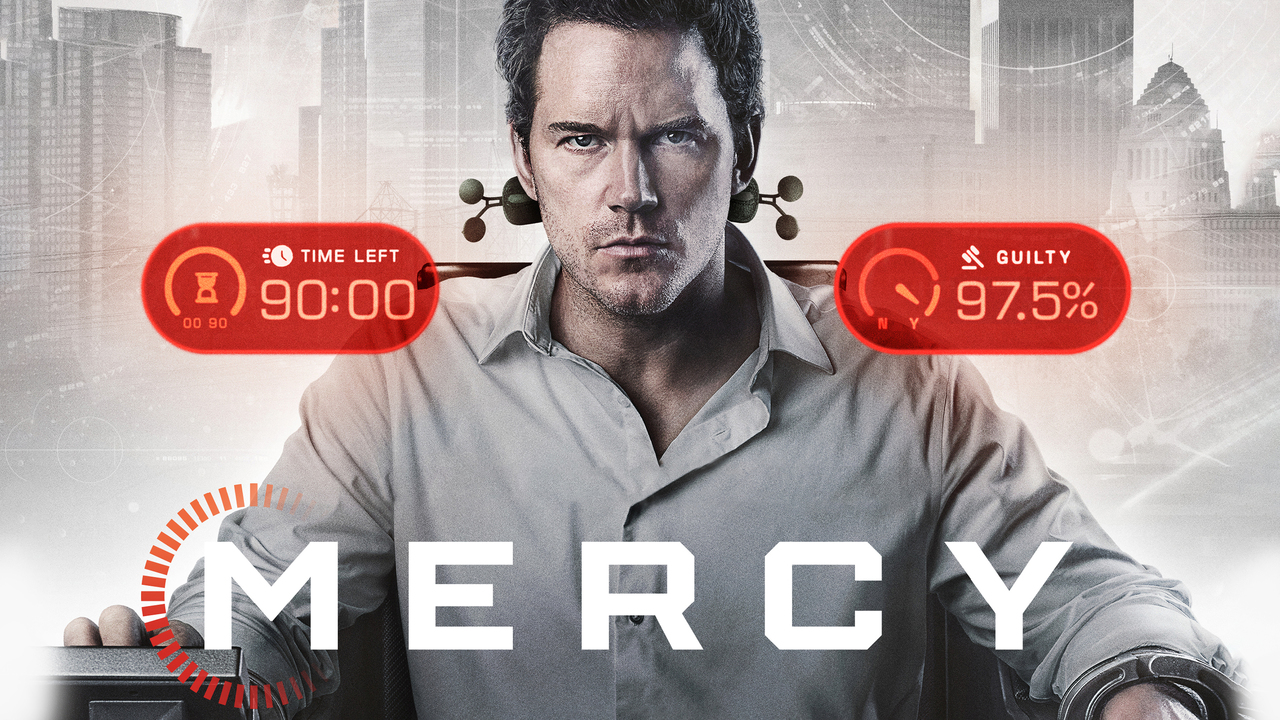
Mercy, on the other hand, is a small, laser-focused film with a great elevator pitch: Detective wakes up in a chair in the near future, and discovers he has 90 minutes to live if he can’t prove his innocence on a murder charge. His “handler” is an AI woman played by Rebecca Ferguson, who is nearly emotionless and is the epitome of legalism itself, but eventually comes close to (oh, never mind, spoiler alert). Other characters are introduced, but this is essentially a two-character film surrounded by readily-available visual content from every source imaginable—think Minority Report and Enemy of the State having a movie baby.
The film was made a couple of years ago and was released in January 2026 so as not to compete with seasons that were busier. Since January and February are generally considered the months where lesser films are dumped, it seems to have been a good strategy. Lead actor Chris Pratt was surprisingly good as a serious actor, and his comic persona disappears quickly as the film begins. Ferguson is necessarily more one-note of course, and there are some moments that were hard to play as her character was challenged.
The film builds nicely as the scenario unfolds and a few different characters are brought in. The reasons for the set-up and the gradual unveiling of the plot against him proceeds with energy and tension until the last 10 minutes, when the wheels fall completely off the cart. And it wasn’t even necessary. We were moving along fine even when a “this time, it’s personal” element is added (bad enough), and then at the last moment, we get a revelation of one more layer of deception that seems to come out of nowhere. There is little presented earlier to make this revelation resonate, plus it neutralizes the one thing that could have elevated Mercy above the usual action genre film. There is a question of guilt that runs alongside our main character’s, and it could have made for a powerful and provocative ending. But then, it would have made us think and muse, and that’s not what this movie wanted to do.
Bottom line: All in all, the simple tense drama of Mercy at just over an hour and a half was more of an enjoyable time at the movies than Avatar: Fire and Ash at more than twice the running time. And thank God for a movie well under two hours!
Remakes have a reputation of being inferior to the original. That’s not always true; there are many good-to-great films that are remakes. Some of the best include:
The Maltese Falcon ((1941), a remake of the 1931 film of the same name and Satan Met a Lady in (1936).
His Girl Friday (1940), a gender-swapping remake of The Front Page (1932).
True Grit (2010) vastly improved on the 1969 version.
Some Like It Hot is an American comedy classic based on the 1951 French film Fanfare d’Amour.
We can argue about all the strengths or weaknesses of the various versions of The Ten Commandments, Ben-Hur, The Fly, Invasion of the Body Snatchers, Love Affair, The Blob, A Star is Born, Hitchcock’s two films of The Man Who Knew Too Much, The Thomas Crown Affair, the Oceans 11 films, and The Departed/ Infernal Affairs. Nostalgia can make us think that the older film is better sometimes, until we give it another viewing. And some remakes take advantage of greater advances in color, sound, editing, or special effect.
Recently, talented director Spike Lee has made an unfortunately remake of a classic, and the second film doesn’t just pale in comparison, but raises the question: “What the heck was he thinking…?
Why did he even decide to do a remake of a near-perfect classic in the first place?
What series of “update” decisions led to such a weak and uneven film?
Why did the change from Japan to Manhattan result in such a series of messes?
Where did the power and elegance of the first film go?
The films are 2025’s Highest 2 Lowest with Denzel Washington and Jeffrey Wright, and 1963’s High and Low, the landmark Japanese thriller directed by Akira Kurosawa and starring the legendary Toshirô Mifune and Yutaka Sada.
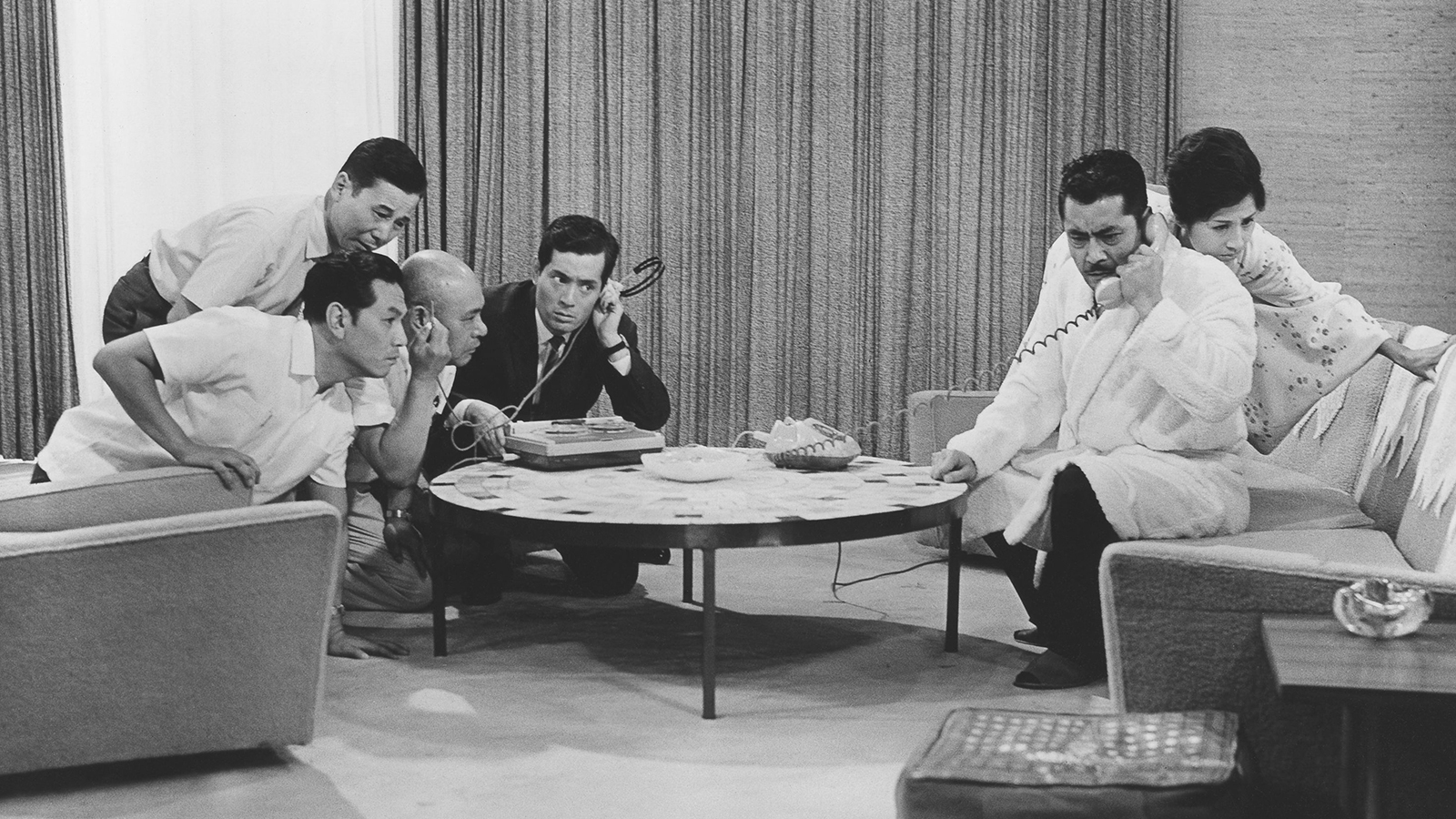
High and Low is one of Kurosawa’s masterpieces. The story is powerful, the tension is tight and unspools deliberately ratcheting like a slowly turning screw, the acting is consistently excellent, and the cinematography is a masterclass in how to deal with the wide screen. Mifune plays a wealthy shoe businessman whose son gets kidnapped, and then the film pivots dramatically. That quick twist kicks off the film’s unrelenting tension and sets the stage for the social commentary that runs throughout. (For those familiar with Parasite, many of the elements are similar.)
Mifune, Kurosawa’s favorite lead actor, is a kind of performer unconnected to any timeframe. After seeing him in many films set in the deep past (Rashôman, Seven Samurai, Yojimbo, Throne of Blood), it can almost be disconcerting at first to see him in a modern film playing a modern character. While everyone around him is very much early 1960s, Mifune is that as well but is also a transcendent presence that fills the screen even when he isn’t in the film, which is surprisingly much of the time. This is star power on the order of Tom Cruise crossed with Liam Neeson crossed with Samuel L. Jackson, and then some. Think Marlon Brando in The Godfather.
The film takes several different directions, but never loses its flow or impact. The “high” of course is the upper-class world of rich businessmen who live in expensive apartments on the top floor. Gondô (Mifune) has a subservient and intelligent wife and a submissive chauffeur. He is used to things going his way, and he can barely imagine that what he orders won’t get done. He’s on the verge of a major business deal (perhaps coup is the more accurate word) when the kidnapping occurs and he has to respond to the kidnapper’s demands. Then the twist changes everything, and the film opens a world of tensions between heart and mind, husband and wife, man and underlings, socio-economic realities, and the dark and light of the human heart. And it does these all at once.
That struck me most this time was Kurosawa’s use of mise-en-scene. This is a very wide-screen film at a ratio of 2.35 to 1, and his ability to move folks around in the frame is virtuosic. The entire film is a kind of cinematic visual opera. The spare music in the soundtrack is of its time, but not overdone or out of place by today’s standards. For those enjoying a great suspense story, and can handle the Japanese subtitles, this is a joy to watch. For those more intently interested in filmic form, it’s a joy and a masterclass.
Not so with Highest 2 Lowest. In fact, the “2” is a symbol of much of what’s wrong with the film. The number is a tribute to Prince, and it signal to where Lee went wrong. The bones of the plot of the story are there, but few other elements of the 1963 film are there. Yes, Denzel plays the rich businessman (David King), but here, instead of shoes (Mifune’s character’s business), we have Denzel shoehorned into the role of a music entrepreneur (think Sean Combs /Diddy or Jay-Z, neither of which work well right now as models). Kurosawa spent a short amount of time extolling the virtues of his lead’s dedication to a well-made product, and having established that, we don’t revisit shoes.
Unfortunately, once on this music path, Lee keeps going awry. Of course, Denzel can do pretty much anything, but this characterization isn’t a good fit. Washington can play ghetto in fits and starts, but in the long run, that doesn’t work. Gondô (Mifune) is believable throughout, as an expert in his field, as a loving father and husband (though with a typically Japanese subservient wife, as a ruthless businessman, and has a man with an eventual conscience. His powerful presence at the start of that film keeps us wondering for a while what he is going to do in facing his various dilemmas.
We never really question Washington, who is simply too decent to wear the selfish/bad-guy aspect of his character. (That’s another article for another time.) He, like Gondô, eventually comes around to doing the right thing (yes, I had to go there). But we don’t get to visit the fierce sense of stubbornness, selfishness, and offended pride that we get from Mifune.
Moving away from Kurosawa’s stunning black-and-white photography, we’re introduced into a world of bright colors and loud music, which eventually (and ironically for a film about a music mogul) becomes leads to one of the most irritating and annoying soundscapes in modern history. Seemed like a good start, as of course we all expect a strong soundscape and bright color palette in a film taking place in modern Manhattan. And it sure seemed like a good start…
Instead of homing in on the thriller and suspenseful elements of the original film, which adapt as the plot evolves but which never relents as gears shift. In Highest 2 Lowest, we have so many unnecessary and bizarre distractions that the energy of the original plot consistently gets lost. I get that Lee loves New York (and I get that, having lived there for seven years), but where Kurosawa really gets into the “low” of the locale and the social strata (making for strong social and human commentary), Lee can’t seem to get there. He is too distracted by visiting areas that become draining side trips. The worst by far is the action set-piece (if it can be dignified by such a term) that takes us through far too many streets of Manhattan, too many of which are the locale of a Puerto Rican music festival (again, the music is a fatal distraction). To add confusion to distraction, the festival introduces us to Rosie Perez—yes, the real actress, who of course got her start in 1989’s Do the Right Thing, a distracting fact in itself…and Anthony Ramos of Hamilton fame. This doesn’t celebrate this music and these two talented actors as much as turn them into diverting elements—and diverting not in a good way. They and the music deserve better.
The trajectory of the original film demonstrated the high to low in a way that the remake barely acknowledges. High and Low has an open-wide, breathing mise-en-scene in the beginning and then gradually moves to a more kinetic one filled with moving camerawork, tighter shots and quicker edits as we move to the underworld of the kidnapper/s. It’s a great example of how to present contrast. Highest 2 Lowest, by contrast, is all over the place, with inconsistent pacing and an ironically bumpy rhythm for a film about music. Virtually nothing about the casting is believable, the story loses its way and its intensity too many times to count, and the role of music is erratic at best. And then there is that coda. The 1963 film was supposed to end with more of a Psycho-like explanation of the bad guy’s behavior, but Kurosawa chose to have a devasting conversation between Gondô and the kidnapper end with a literal, devastating bang. The newer film has a similar conversation that is way too long (again, losing its much-needed intensity) and sets up a clash between a music wannabe and a successful mogul that pales in comparison to the resounding high/low clash of the original.
And then there is Jeffrey Wright, perhaps best known for HBO’s “Westworld” and American Fiction (2024), for which he was nominated for Best Actor. (Spoiler alert ahead) Wright plays Denzel’s character’s chauffeur, and it is his son that is wrongly) kidnapped. The original film had the same chauffeur role (played by Yutaka Sada), but the role of class and honor that was in the original are lost in the remake. Sada played a family servant well aware of his lower strata in society, and in some ways, didn’t automatically assume that his boss would come through with the money. His anguish is all the more potent because he is usually very quiet and submissive, making his outbursts unexpected and powerful. He is something of a weak man, but this is a combination of social place, the job, and the quiet deferential nature of his position. Jeffrey Wright, on the other hand, doesn’t quite know what to do with such a role, though he is clearly giving it everything he has to make it work. He’s by nature a strong man, a man of influence, and the balance with the main character is off. The modernizing of that character is half-hearted, making for a performance and a dynamic with Washington that ultimately doesn’t work.
Then there’s that coda. OMGosh. High and Low made it clear that the protagonist was ultimately be OK, and that he would continue his work with a new company and new approach. Normally, I prefer “show me” over “tell me”. The earlier film let us know verbally and succinctly what was going to happen, and then gave place to that impassioned exchange that brought the film to a powerful if disconcerting climax.
Instead, Highest 2 Lowest decides to give us an after-ending following elongated, enervated conversation that spends far too much time showing us that the “best years in the business guy” had a future. We see that his son has learned a good deal of the business and is presenting a new performer to his dad for a possible place on his label. So instead of just enough to make the point, we get THE WHOLE SONG. As a musician, I was delighted to hear a wonderful new voice that has flavors of Mariah Carey and Whitney Houston. But instead of it being used to further the plot, we hear the WHOLE DARN SONG. To compound that problem, the song moves from a simple accompaniment by the pianist in the scene to a puzzling and awkward invastion of a non-diegetic background accompaniment full of other instruments that come out of nowhere. That just confuses things: Where did that come from, why is this turning into a AGT audition, and what happened to the realism of the rest of the film? It’s not just an unwanted and unneeded end to a film that didn’t need another stumble—it’s simply bizarre. Finally, that focus on the music is the problem.
Bottom line: Ignore the newer film and check out High and Low where you can find it. Get comfortable with the subtitles and you’ll be in for a ride that combines an exciting, even thrilling story that also happens to be a work of art.
Film awards season is upon us officially with the Golden Globe awards, and while the various minor award-giving groups seem to be multiplying like shmoos, there is just one Great Prize—the Academy Awards. There is an annual cottage industry working to predict what films might win what at this time of year, but we look in vain for any single explanation to why a film wins an Oscar.
There are a lot of factors that go into Oscar victories, and every year there are also head-scratchers. Some winners gave great performances the years they won, and that is the reason for the win: Vivien Leigh in Gone with the Wind and A Streetcar Named Desire, Marlon Brando in On the Waterfront and The Godfather, Meryl Streep in Sophie’s Choice, Robert DeNiro in Raging Bull, Anthony Hopkins in The Silence of the Lambs and The Father, Casey Affleck in Manchester by the Sea, Marion Cotillard in La Vie en Rose, and Daniel Day-Lewis in anything, just to name a few. Other wins were good, but they also had powerful forces of personality or nostalgia behind them.
There are innumerable stories behind yesteryear’s unworthy Oscar wins. There was the Louis B. Mayer factor, which led to such wins as The Broadway Melody (1929) over any number of better contenders, and Robert Donat’s win in Goodbye, Mr. Chips (1939). More recently, there was the Harvey Weinstein factor, which led to the Best Picture Award for The English Patient (and Juliet Binoche’s win for Best Supporting Actress) over Fargo and Jerry Maguire (1996). Perhaps most famously among recent films, Shakespeare in Love won over Saving Private Ryan (1998), Chicago over Gangs of New York or The Pianist (2002), The King’s Speech over The Social Network (2010), The Artist over several other better films, to everything connected to The Cider House Rules, Life is Beautiful and the forgettable Chocolat. There are acting wins that he was able to finagle as well (see Binoche’s above), some of which have not dated well at all, e.g., Renée Zellweger, or were simply a case of “Category Fraud,” as in Kate Winslet for The Reader.
Then there are the career wins, which may or may not have much to do with the quality of the work. Here are just some of them:
Mary Pickford, Coquette (1930)
Note that all the rest listed here are for Best Performance by an Actor in a Supporting Role.
John Mills, Ryan’s Daughter (1970)
Ben Johnson, The Last Picture Show (1971)
John Houseman, The Paper Chase (1973)
George Burns, The Sunshine Boys (1975)
John Gielgud, Arthur (1980)
Don Ameche, Cocoon (1985)
Jack Palance, City Slickers (1991)
Alan Arkin, Little Miss Sunshine (2006)
Christopher Plummer, Beginners (2011)
Pickford’s award was clearly not based on her inferior performance, but was an award for her legendary work as an actress and producer in silent films. The rest include performances that were good to great, but there is an element of the career reward in all those wins.
Then there is the story of the “Oops, sorry, we probably should have given it to you last year or so”) awards. This happens when a great performance loses out to a lesser one, and the Academy feels guilty and wants to atone. Sometimes that consolation prize is for good work. Many times, it’s not.
THE LADIES
Bette Davis in Dangerous (1935). This is probably the most famous of consolation prizes. Davis, after a few years in minor roles, burst on the scene as Mildred in Of Human Bondage. This was a solid acting year, if not a great one. Claudette Colbert won Best Actress as part of the sweep that was It Happened One Night. The other nominees were Grace Moore for One Night of Love and Norma Shearer for The Barretts of Wimpole Street. Two great performances were not even nominated. One was Myrna Loy in The Thin Man, and the other was Davis’s in Of Human Bondage. The voters staged a dramatic write-in vote, and there are rumors that her write-in brought her into second place. So for 1935’s Dangerous, Davis won for Best Actress for a solid but hardly stellar performance.
(The Academy had a write-in winner the next year for the dreamy cinematography for A Midsummer Night’s Dream, the only write-in nominee to have ever won the Oscar.)
Joan Fontaine in Suspicion (1941). Some might argue that she deserved her Oscar for Suspicion, while others think this was to make up for not winning it for the previous year’s Best Picture winner, Rebecca. She’s fine in both, but certainly not better than Bette Davis in The Little Foxes, or Fontaine’s sister Olivia de Havilland in Hold Back the Dawn, or Barbara Stanwyck for Ball of Fire. With that line-up, it looks more and more like a barely-deserved consolation prize.
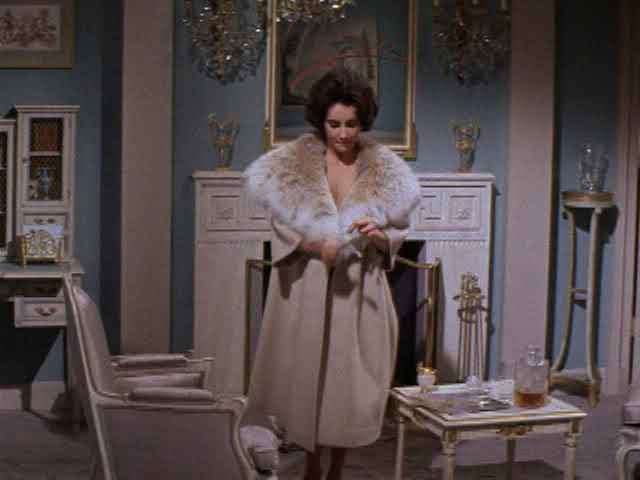
Elizabeth Taylor in BUtterfield 8. Taylor had been nominated for Raintree County (1957), Cat on a Hot Tin Roof (1958) and Suddenly, Last Summer (1959), a streak that put her into Bette Davis and Greer Garson territory in terms of consecutive nominations. Her work in BUtterfield 8 is “fine” but that’s all. But, hey, she almost died making Cleopatra, so the sympathy vote was hers, even if the performance wasn’t deserving.
Nicole Kidman in The Hours (2002). Kidman was nominated the year before for Moulin Rouge! and didn’t win. Her performance here should have been in the supporting category, but with her miss the year before, and without a standout performance that year, the Academy gave her a career award.
Kate Winslet in The Reader (2008). Like Kidman’s win in The Hours (and looking forward to Viola Davis’s win in the wrong category for Fences), she was put in this category precisely so she would win the prize. This was the way the Academy chose to reward her work in the lead roles for Titanic (1998), Eternal Sunshine of the Spotless Mind (2005), and Little Children (2007). A great actress who won the award for the wrong film in a fraudulent category.
THE GENTLEMEN
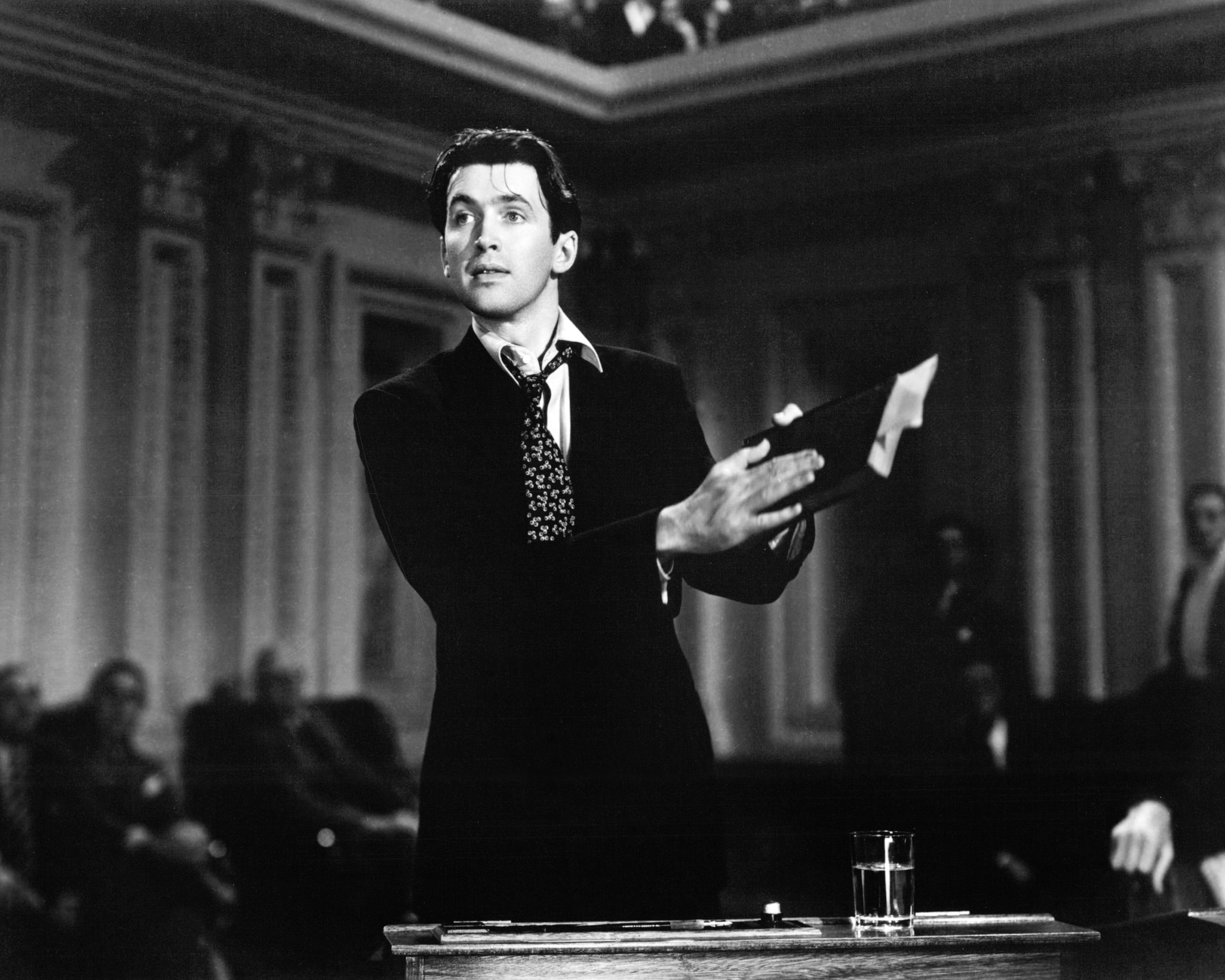
James Stewart in The Philadelphia Story (1940). This is probably the most famous example of an actor award win coming right after the deserving performance lost. The deserving one was Stewart’s work in Mr. Smith Goes to Washington. (Clark Gable in Gone with the Wind and Laurence Olivier in Wuthering Heights might have won, and Robert Donat did for Goodbye, Mr. Chips). A sad note is that this consolation prize kept it from going to Henry Fonda for his work that year in The Grapes of Wrath, a performance much stronger than Stewart’s in The Philadelphia Story.
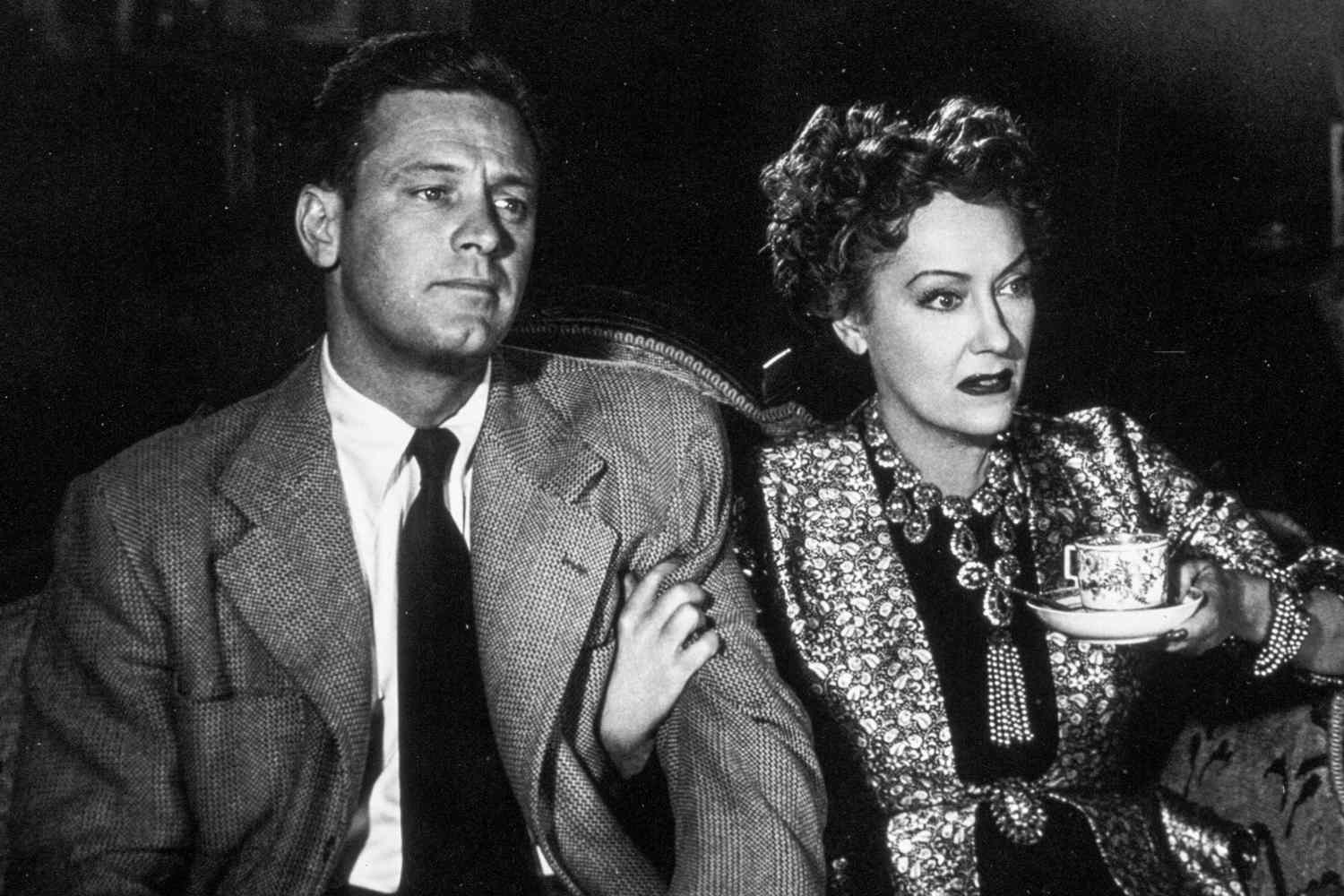
William Holden in Stalag 17 (1953). This may be the second most famous example of an actors’ award coming after the one that deserved it. 1950’s Cyrano de Bergerac got the award for José Ferrer. But Holden is generally agreed to have received the award as a consolation prize for 1950’s Sunset Boulevard.
Henry Fonda in On Golden Pond (1981). He was nominated several times before and should have won for The Grapes of Wrath. But nostalgia, concern for waning health, and the apparent need for a career win brought home the gold for Fonda (who died shortly thereafter).
Robert Duvall in Tender Mercies (1984). I think Duvall deserved the Oscar for that performance, but it was also a career win after a lifetime of solid work and nominations for The Godfather, Apocalypse Now, and The Great Santini. A worthy career win nonetheless.
Colin Firth in The King’s Speech (2010). Some view this as simply the consolation prize for losing the year before for A Simple Man, where he gave an excellent and also Oscar-nominated performance. But his work in The King’s Speech shouldn’t be minimized just because it was less nakedly emotional. Firth had to find the character of a prince in crisis and add the technical elements of a stutter and speech impediment. It that was a consolation prize, it was a good choice.
THE IRONIC AWARD in this list goes to George Clooney, who won a kind of “We like you a lot” mid-career Oscar for a mid-OK performance in Syriana (2005). The irony? His best work was yet to come in Michael Clayton, Up in the Air, and The Descendants. And he’s not done yet.
2026 OSCARS
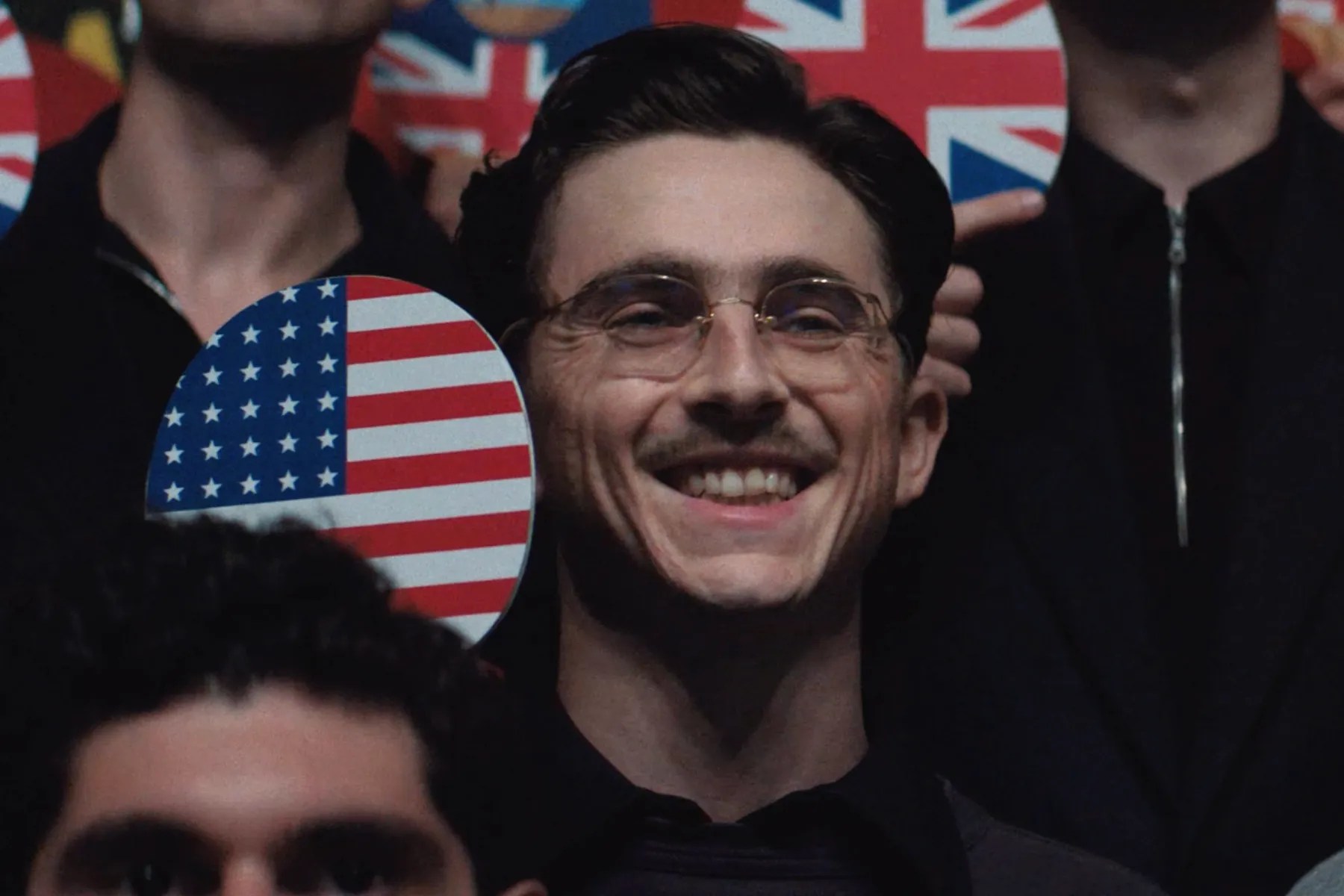
Will we have a consolation prize this year? It’s a possibility that Timothée Chalamet could win for Marty Supreme, a possibility that has grown stronger with his Golden Glove win. He easily could have won for Call Me By Your Name and probably should have for A Complete Unknown. The latter was just last year, but the quality of his Marty Supreme performance wouldn’t make a win this year a consolation prize.
So, basically, no. No consolation prizes this year.
Dedicated to Greg Blossom, who insisted I watch this film.
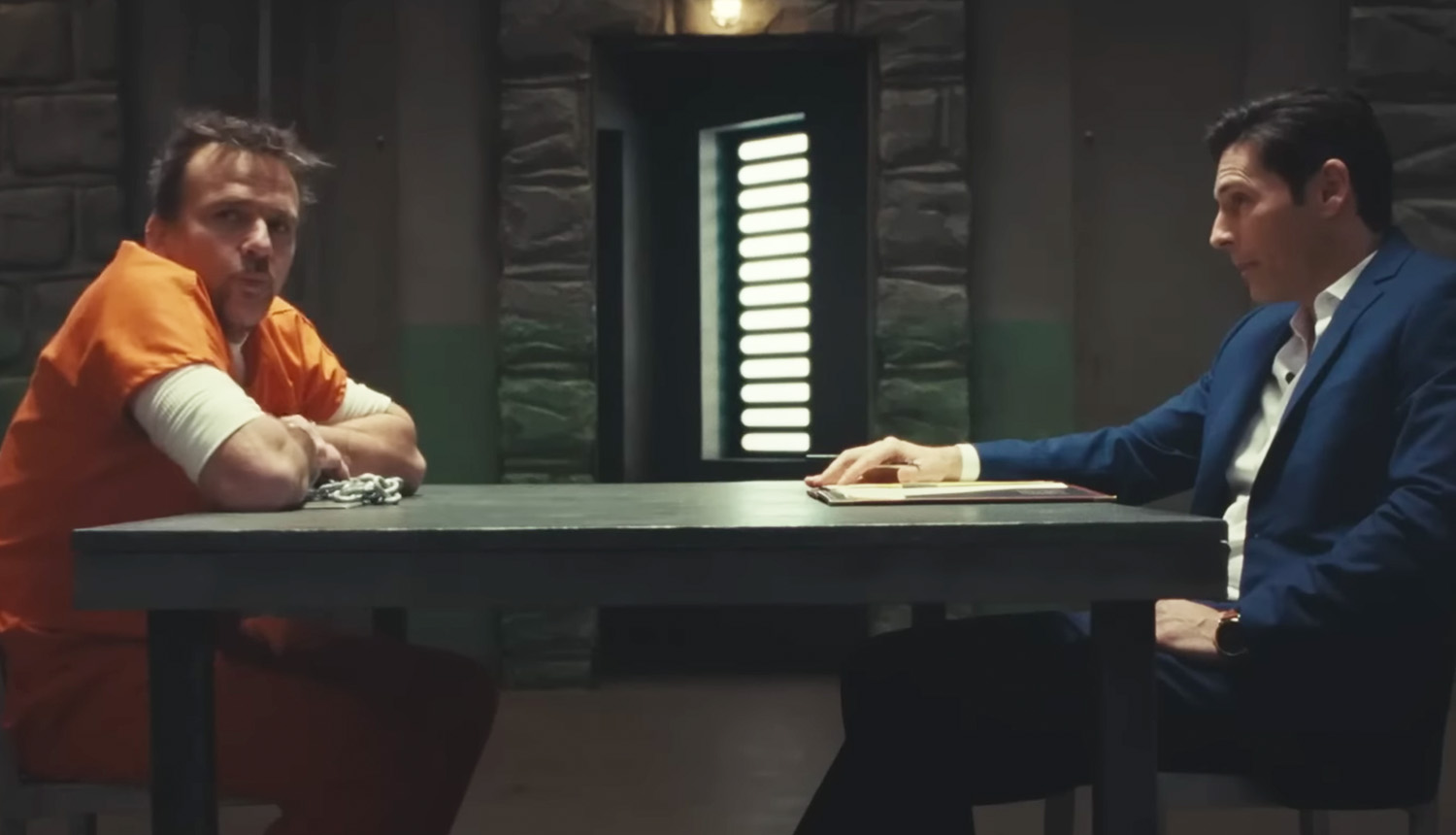
Imagine C.S. Lewis’s Screwtape Letters as a film. That’s the brief but deadly accurate description of 2024’s Nefarious. The film is from Believe Entertainment, producers of the God’s Not Dead films, Do You Believe?, and The Book of Daniel. If that puts you off, don’t let it. And if you think you know what you’re going to get with this film because of the three I mentioned here, you’ll be in for a big surprise.
IMDB describes the plot as follows: “On the day of his scheduled execution, a convicted serial killer gets a psychiatric evaluation during which he claims he is a demon, and further claims that before their time is over, the psychiatrist will commit three murders of his own.” That’s all of the plot I will go into here. It’s an easy and elegant set-up, with much of the film being an equally simple two-person conversation. But oh, what conversation, and what a great central performance by Sean Patrick Flanery.
The back-and-forth between the prisoner and the psychiatrist is the first of two great aspects of the film. The first is that performance of Flanery, which could easily have won a Best Actor nomination if the Academy reached further out to films like this. Actors and directors make choices as to how to deliver a performance, and while many might argue with some acting choices here, I found those choices believable and even powerful at times. This isn’t a chewing of the scenery, but a demonstration of both an evil entity and a man in agonizing pain. The rapid-fire responses to the psychiatrist’s questions (often delivered before the question is completely asked), the demonic laughter, the fierce intelligence of the character—these make for a disarming, gripping exchange. “Christian film” or not, this is a powerhouse performance.
The other powerful element is the fierce delivery of theology. For non-Christians or for those not that familiar with the Bible, it all might be a bit much to take in—this firehose of accusation, truth spewing, and prideful manipulation. For someone with two film degrees who has also been a Bible teacher for almost a half-century, these scenes were exhilarating. There is enough doctrine here gushing from our demoniac for a book or a 10-week Bible study.
Then there was the rest of the film. The long conversation at the beginning between the psychiatrist and the warden combined a skillful reverse tracking shot with a couple of second-rate actors overly explaining in that awkward “we need to fill in the audience even if it sounds weird and patronizing” way. It made me want to go back in time and ask for the chance to do some script doctoring. In fact, almost every scene not involving Flanery fell into that category. Earnest attempts at acting, but unable to realistically inhabit whatever character they were playing. (Spoiler alert) Even in what should have been an easy scene where the officer/guard instructed the observers at the execution what they can or cannot do is a role that any real guard could probably have pulled off believably. But this was an actor trying to act like a guard. “A” for effort, but….
There are scenes that were so ridiculous as to defy explanation. One is the execution scene, where a guard has a gun in the room with the execution viewers. It explains what happens next, but the fact that the guard had a gun there and the act it leads to were both beyond belief. The worst moment of the film, however (major spoiler alert) is the scene where the demon-possessed man attempts to kill the psychiatrist. As soon as the several guards in the room didn’t do anything when they easily could have—several times—made me want to redo that scene as well.
Then there is the coda featuring Glenn Beck (yes, that Glenn Beck) that nearly ruins the film. Apparently, Beck was instrumental in moving the film forward based on his support of the book on which the film was. I had always counted the coda at the end of Psycho as the worst in film history, but this one pushes that to number two. Seeing a real media personality doing an interview that tries (but fails) to explain what was happening in the film takes us right out of the movie, and neutralizes to an unfortunate extent the emotional, mental, and theological tension that made the film so thought-provoking. The last moment of the film is intriguing, but that last scene with Beck…not good, not good at all.
Nefarious is both brilliant and lame, sometimes in the same scene. The spiritual truths in it are mature and frightening in their fidelity to the Bible, and level of theological understanding is deep. The central performance by Flanery is excellent, and I hope those that cast films take a look at what he is doing. Nefarious has been marketed as a Christian horror film. That’s true to some degree. But if either of those two words puts you off, put those thoughts aside and take a look at what this film is trying to do. It doesn’t always succeed, but you’ll never forget Flanery.
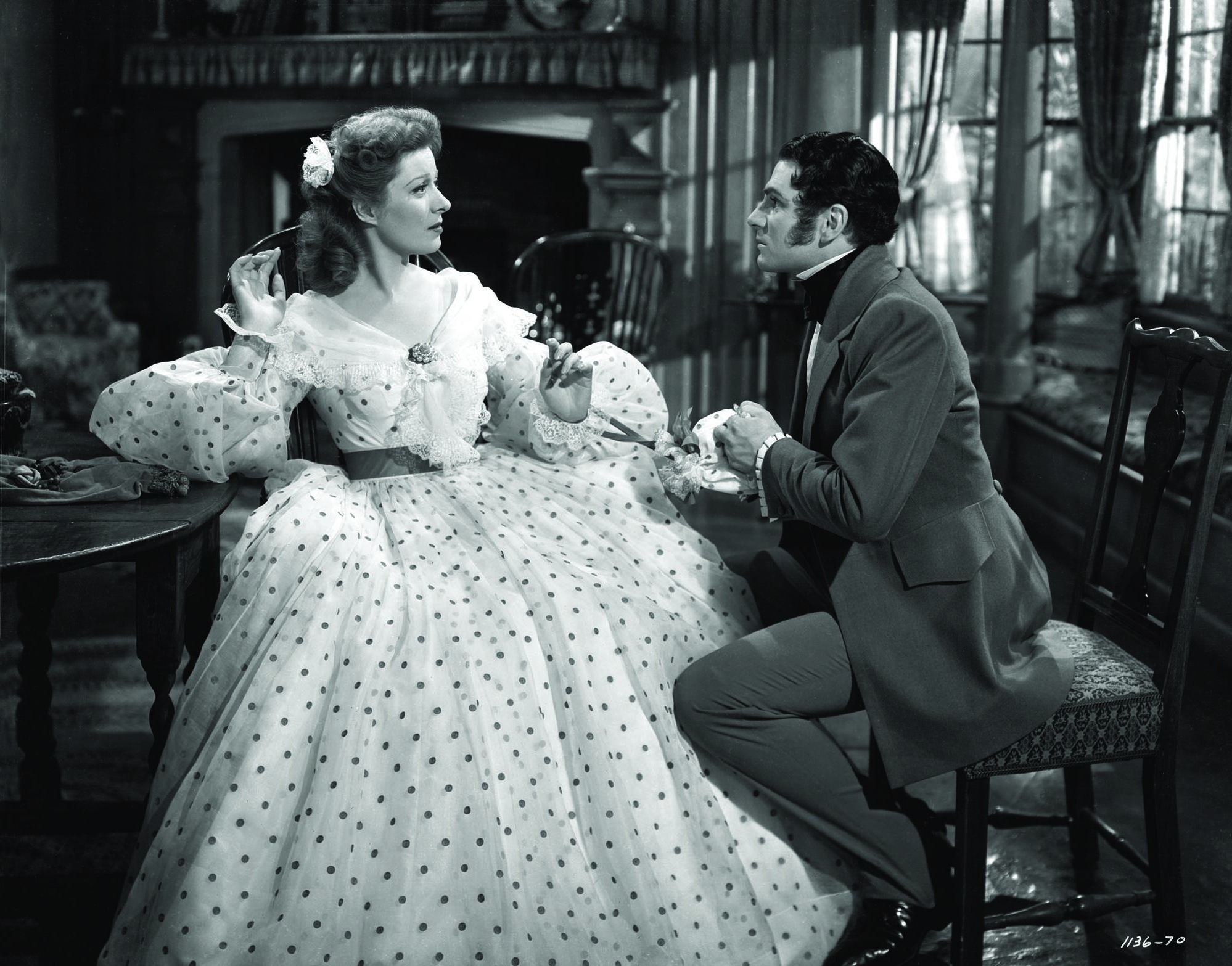
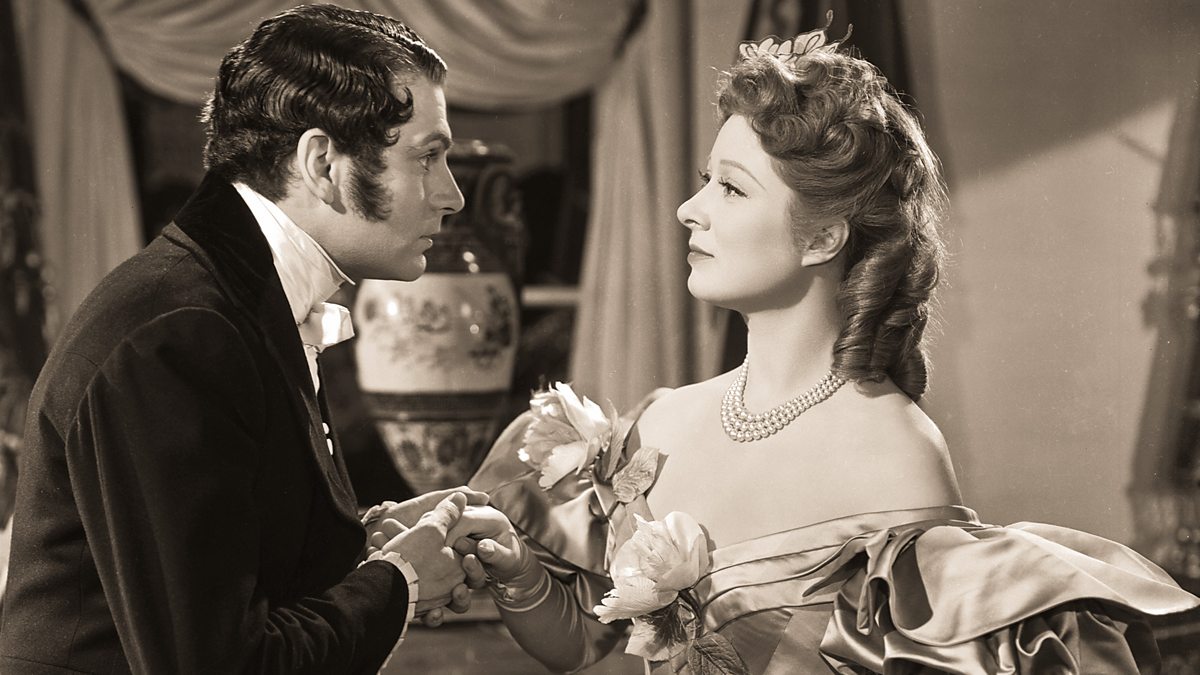
I had to dust off some my recollections of this film for this review, having seen it only once several years ago. With its MGM polish, high production values, and the star power of emerging legends Greer Garson and Laurence Olivier, it played better in my memory. Star power goes a long way in a film like this, which is wrapped in literary pedigree, unrealistically large sets, and wrong-period-but-lovely costumes. The years have been unkind to this film, and not undeservedly so.
The 1995 BBC mini-series started the modern trend of Jane Austen adaptations, of which the 2005 version starring Keira Knightley and Matthew Macfadyen and directed by Joe Wright (before he got self-conscious) is my personal favorite. That film brought the story back to its correct era, had a heroine of the right age, and possessed a grit and toughness with sets and costumes and attitude that Louis B. Mayer wouldn’t have imagined. It also balanced the various sisters’ stories with deftness and economy.
MGM apparently wanted some kind of elevated romantic drama here rather than a sharp social satire, and while they got a version of that romance, the final result was an unconnected group of witty, pithy soundbites engulfed by a not-quite-believable central relationship. The studio had a book based on class tensions that contained plenty of bite. (Some great lines that remain: “Oh, if you want to be really refined, you have to be dead. There’s no one as dignified as a mummy.” And, “How clever of you, Miss Bingley, to know something of which you are ignorant.”) Some of that bite remained, which was the highlight of the film. But far too much was softened.
They had costumes and sets left over from Gone with the Wind, and they were going to use them, even if that meant an anachronistic setting for the film. In terms of casting, there were two emerging stars that needed to be showcased, even if they weren’t completely right for their roles. We can only be grateful that the film wasn’t made earlier, and that we didn’t get Norma Shearer as Elizabeth, and somewhere between Clark Gable, Robert Taylor, Errol Flynn, and Robert Donat as Mr. Darcy—this last name being the best of those options.
Greer Garson had burst onto the scene the previous year in Goodbye, Mr. Chips, and had won an Oscar nomination; Louis B. Mayer rightly had high hopes for her, and she was going to be Elizabeth whether she was a good fit or not. Olivier had also won a nomination the previous year for Wuthering Heights. So, two good actors, both talented and good-looking—what could go wrong? Not that much, but it doesn’t go quite right either. Garson is lovely (and boy, does the camera capture that) and pulls off her lines with a quiet wit and a fierce intelligence unfortunately buried so deep as to be nearly invisible. Plus, she is far too old for the part. She is four years older than Olivier, and a full 16 years older than the character in the book. She is maternal rather than romantic and maturely calm when she should be fiery and on the cusp of adulthood.
Olivier seems bored in the part (Oscar historians, not that his nomination that year was for his far superior work in Rebecca). He seems removed, almost seeming to wonder why he, the great stage actor, was in the picture in the first place. He wanted his then-paramour Vivien Leigh to be Elizabeth, but apparently their real-life romance was on the verge of becoming scandalous, and Louis B. Mayer didn’t want to risk that coming out. Plus, Mayer had recently hired Garson and wanted to use her in roles he knew she would quickly outgrow. (Just two years later, she was Mrs. Miniver in the film by same name playing a woman with a college-age son.) Garson, while clearly bright and possessing a full understanding of the depth of her dialogue, has a gentle and velvety outer layer around her as a performer, robbing the lines of the edge that Elizabeth has with Darcy. Perhaps Leigh would have provided the right kind of attitude and energy for that part after all. That is a film I would have liked to see.
Two hours can be constricting for a story with so many side stories, and the 2005 version addressed that well. But the Bingley/Jane story, which provides such delightful romantic contrast with Elizabeth and Darcy, is given such short shrift here as to be nonexistent at times (and again, Jane, who is supposed to be two years older that Elizabeth, is played by Maureen O’Sullivan, who was seven years younger, which is quite visible).
Other changes didn’t help. Mr. Collins was a vicar in the book, but the Hays Code didn’t want criticism aimed at a clergyman. (Clearly that ship of hesitance has long since sailed, especially in British films and television.) His transformation into a librarian robs the film of more of its bite and makes his living and connection to the rich and powerful Catherine de Bourgh simply confusing. And that marvelously fierce and dreadfully imposing de Bourgh, played so beautifully by Dame Judi Dench in the 2005 version, is turned into a comic presence that replaces our experience of hesitance and fear with near-slapstick amusement.
Mrs. Bennett is the usual over-the-top performance, but in the hands of Mary Boland, only comes across as slightly ridiculous. Fortunately, Mr. Bennett is played by Edmund Gwenn (Best Supporting Oscar a few years later for his performance as Kris Kringle in Miracle on 34th Street), and his calm presence and line-readings are a godsend. He’s the best thing in the film.
All in all, there is less here than meets the eye, the eye constantly being consistently overwhelmed by the overdone production values and anachronistic costumes. The story is upholstered by gloss and glamour, with little of the bite and passion it could have had. It’s an option for film historians, coming at the height of the studio era with two huge new stars at the center. But most curious viewers should simply opt for the 2005 film or the BBC miniseries instead.
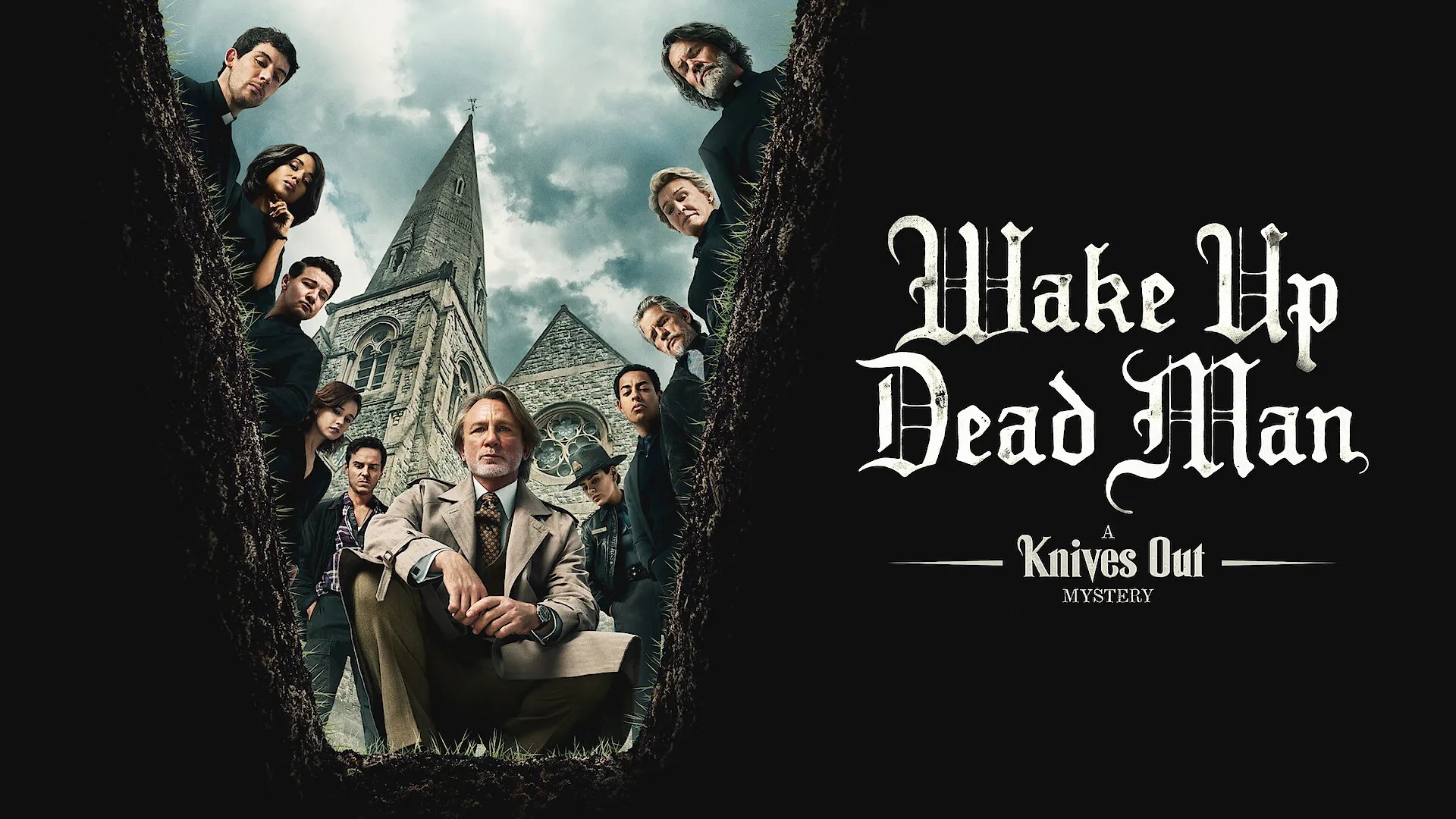
Wake Up Dead Man: A Knives Out Mystery is the third installment in the Knives Out mysteries, which feature direction by Rian Johnson and star Daniel Craig as Southern detective Benoit Blanc. The films are Agatha Cristie-style mysteries that begin with a murder and involve a whole crew of potential suspects, all who gather at the end for the full revelation and explanation by Blanc.
It has its problems, but it’s also incredibly great in a couple of ways, which I’ll get into later.
There’s a lot here. The film is complicated, far too long and doesn’t always make sense. For fans of the impressive cast, however, and for those who love jumping on this particular mystery film bandwagon, it can be a lot of fun. The setting this time is a small cult-like Catholic church in upstate New York, which (as a Northern New Yorker) at least looks beautiful in the overhead shots.
I will leave it to other writers to get into the weeds on the action. For the sake of my sanity and time, I will continue this article with bullet points.
Daniel Craig has clearly relaxed into his character, and he’s never been better in the role. While the accent is always a little head-tilting, he wears Benoit Blanc like a warm blanket. He’s fun to watch, and he seems to be enjoying the part more than ever.
The first half hour should have been much shorter and to the point in setting up the plot. It seems indulgent and unnecessarily crude and childish. The entire set-up could have been done more quickly and elegantly (speaking cinematically).
The great Glenn Close is given a role that is embarrassingly shrill and unoriginal as the harpy who sees demons everywhere and apparently must shriek her responses. But at the end, the talented actress connects with the character in some lovely closing moments.
It was nice to see Jeremy Renner back after his horrendous but heroic accident. But his role was bland and he looked the worse for wear.
I generally like and enjoy what Josh Brolin does, but this role has him locked into a demagogic role that is unbelievable and uncomfortable from the start, and not in the good “mystery film” way. My only condolence was that this was not the typical Protestant demented clergy, but it was a Catholic variation on that theme. He chewed every piece of furniture in the entire town, which he was called to do. But that got old after a while.
Andrew Scott, Thomas Haden Church, and Kerry Washington are wasted in roles that are neither engaging nor challenging for them. They all move the plot along and bring their star power to their roles to some extent. But the film doesn’t allow them to shine. Mila Kunis, however, was surprisingly good in an unexpected casting choice.
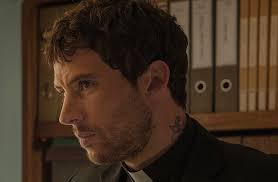
Saving the best for last: Josh O’Connor was excellent in the type of role that is usually handled terribly. He plays the tormented priest who lands in Josh Brolin’s church, sees the cultic nature of this man and this small church, and works to fix it. Between Mons. Wicks’ (Brolin) overbearing and controlling behavior, and the stories that eventually come to light regarding the murder and the “goings-on” of the various church members, there is a great deal to fix. But O’Connor brings his Father Jud to full-blooded life. O’Connor (“The Crown,” Challengers) has been the “next big thing” for a few years now and has finally become a real thing in 2025. His character is the struggling minister somewhat in the mode of PBS’s “Grantchester,” but deals with his demons in a visceral and realistic way that finally, finally seems genuine and resonates to someone who shares his true faith yet also understands his mental and spiritual battles.
Most representations of struggling ministers either make my eyes glaze over with the evident anti-faith context of the show (yawn, yawn), or the very shallowness of both character and struggle. O’Connor’s Father Jud is the most realistic struggling minister I can remember, not just because O’Connor gives a great performance, but also because Father Jud has real, deep faith and a desire to live out that faith in a world that has been working against him. While there are a few slight doctrinal issues I could take issue with, this is a man of deep faith in Jesus Christ who isn’t afraid to pray, often declares who Jesus is to him, and whose Christian life is pulsating with passion and deep sincerity.
Lastly, shockingly, the film doesn’t make fun of Father Jud’s faith, but shockingly, affirms it. I say “shockingly” twice not only as an homage to Casablanca, but because I can’t recall a film from a major studio outside of faith-based studios upholding such a strong profession of profound belief in Christ. This isn’t David Niven in The Bishop’s Wife or other traditionally bland and generic Protestant ministers. And thank God that there isn’t a hint of Elmer Gantry or Robert Mitchum’s terrifying Rev. Powell in Night of the Hunter. Father Jud’s faith is never made fun of, and it drives him forward and sustains him in the best way. For someone who is so very tired of seeing either ministers with dark and pervy pasts, or passionless lightweights that bear little resemblance to real ministers that I know, this newest Knives Out edition is breathtakingly refreshing. For those of who truly believe and want to live our lives for Christ, it is invigorating to at long last see ourselves on screen.
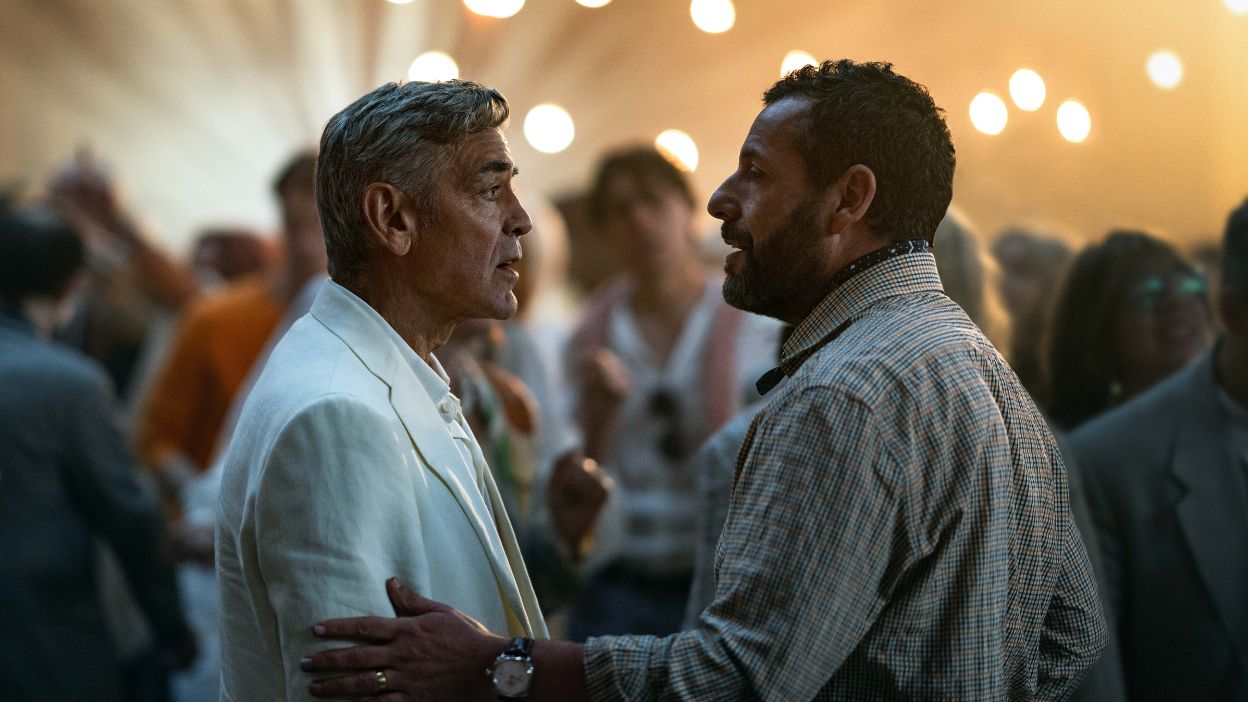
Jay Kelly is the newest film starring George Clooney. It’s directed by Noah Baumbach (Oscar nominations for best adapted screenplay for Barbie, and for best original screenplay and director for Marriage Story). The story is written by Baumbach and actress Emily Mortimer (Lovely and Amazing and Lars and the Real Girl). That, despite the fact it was produced by Netflix, had the shortest of theatrical runs, and is now streaming on that streaming service, it should still be considered a “real movie.” That’s a term that is in danger or at least in flux right now, especially with the Warner Bros. kerfuffle. But this movie should be put in the category of a real film with a very good director, a thoughtful script, beautiful cinematographer by Oscar-winning Linus Sandgren (La La Land), and an excellent crew of accompanying players, including probable Oscar nominee Adam Sandler, co-writer Mortimer herself, Greta Gerwig (Mrs. Baumbach and the director of Barbie, Little Women, and Lady Bird), Laura Dern, and Billy Crudup, the strongest thing in the film. So no, it’s not a streaming offering they call a movie, but it’s a real film.
There are a lot of things to respond to. It’s beautiful to look at, has deeply moving themes (especially to older folks), a lot of plot points—too many, in fact. But it’s essentially three things: a buddy/bromance film between Clooney and Sandler, a look at Hollywood stardom and how it affects everyone in the orbit around the main star, and an occasionally poignant look at regret. There’s a lot to dissect here—too much, in fact. There are ex-roommates, ex-wives, disaffected children, career choices by everyone, trips to France and Italy, train sequences, fans of every stripe, and in the center, a star who may be as hollow as his fame has proven to be.
Where the film settles on these many issues isn’t always clear. The bromance between Jay Kelly and his long-time manager (Sandler) is first cousin to that of Bill Nighy’s character and his manager in Love, Actually, though that earlier film resonates more strongly than here. Once we get past that central pair, things get uneven. Kelly has had two daughters who harbor a great deal of resentment toward a father that was mostly missing from their childhoods. The older has found a life for herself that isn’t filled with resentment; it’s just that any space Jay might have created in her life has long since been filled up with other things. The younger daughter has our sympathies as Jay (spoiler alert) tries to connect and “make it all better,” but she is at the age between finding a full life like her sister’s and that age where the very existence of a disconnected father—especially a world-famous one—is intrusive and embarrassing.
The many side stories don’t work together. Too much time is spent on the daughters, though one gets far more time than the other. Sander’s character is happily married, though fully aware of the loss that Jay has taken with his choices, which he shares as his manager. Then there is Laura Dern playing “Laura Dern lite” in a role that makes little sense being in this film, especially as it relates to Sandler’s character. Her eventually withdrawal from the film is first surprising and then quickly forgotten.
Sandler, who ironically has the bigger career than Clooney if one counts cash, takes another major step away from his comic past to being considered a serious actor. It’s quite a trajectory from The Hanukkah Song and The Waterboy to Punch-Drunk Love and Uncut Gems, and now this. He enters the battle between having such a strong and comic persona and working to be a serious actor here, and the serious actor is winning. As expected, his line deliveries are often right on the money, and perhaps as not expected, he has moments of great depth and feeling.
Then there are two men standing: Clooney and Crudup. Clooney is the lead and wears his age and weariness well. He is still a grand movie star in the Great Hollywood Tradition, which this film addresses in an almost transcendentally meta way. It’s a brave step for him to take given the many similarities in age, stardom, and the possibilities of regret. It’s a good performance, too, one of his strongest in a while. He still has that head shake that seems an integral part of his acting style, and there are moments where we don’t know if we’re seeing Jay Kelly acting like the star people expect, or Clooney doing his charming thing—even if we know that the charm is fake. Can be confusing at times.
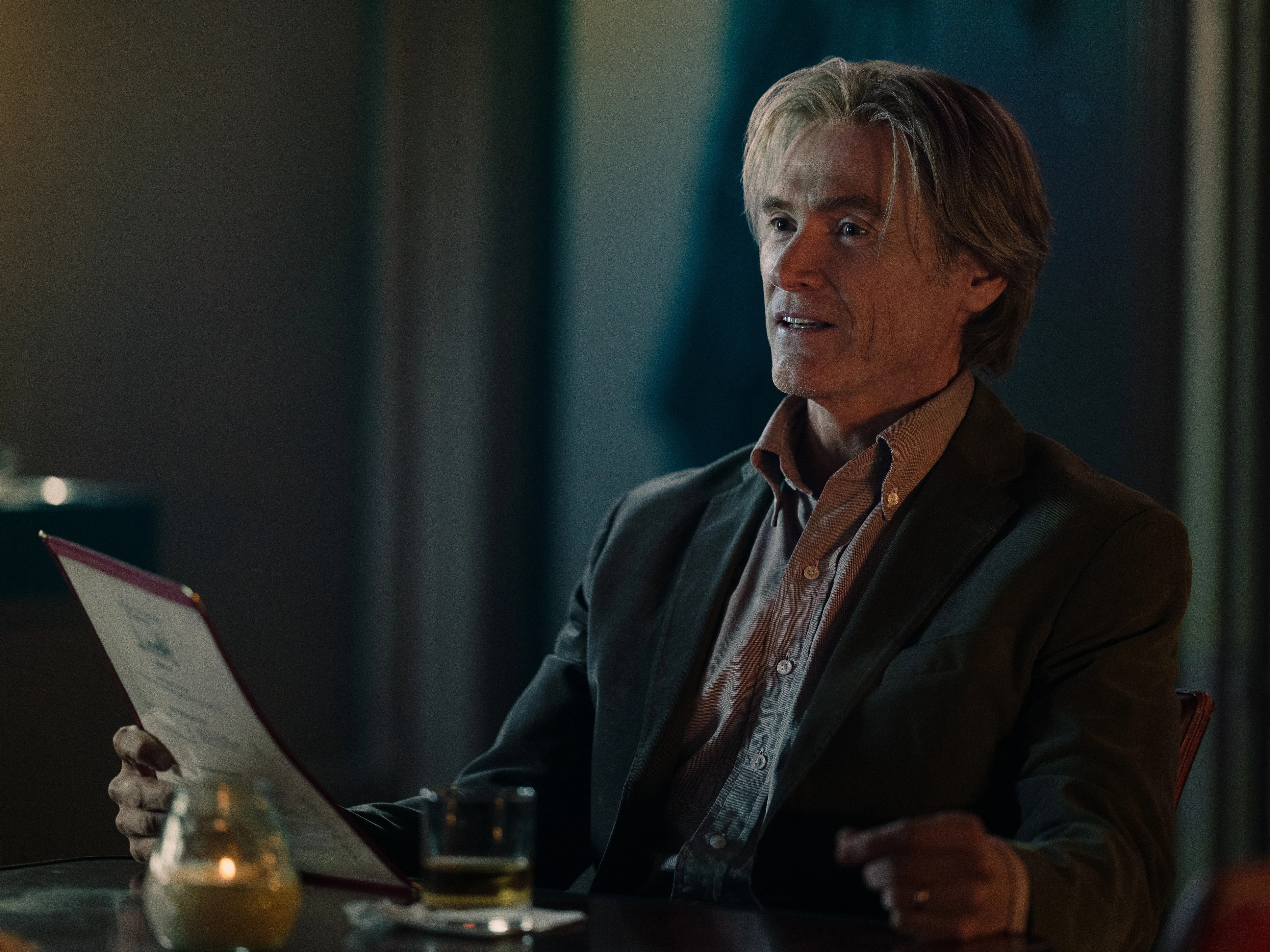
Clooney’s acting style is soft around the edges, and that is no more apparent than in his scenes with Crudup, who would steal the film if given more time. Crudup has an edge to his acting style, and that works well with Clooney’s softness in their scenes together. As we quickly learn, Crudup’s character knew Kelly back in the day, and their scene as they catch up is riveting, especially as it takes a turn. Crudup does a quick masterclass in acting, even as we are watching what we know is acting. His edgy charm bounces off Clooney’s in a lovely character dance. (I chose to ignore the obvious age difference between the two men who were supposed to be roommates at one time. Clooney is seven years older and looks it, and Crudup looks younger than his actual age.) Once Crudup leaves the film, which happens too quickly, he is greatly missed.
There are many directorial and script elements that are delightful, though it doesn’t all coalesce as well as it might. One lovely moment is when Kelly meet’s Crudup’s character again after decades. He at first has a hard time recognizing him and walks on to his next appointment, and then looks back to connect with him, a lovely foreshadowing of the role that Crudup’s’ character will play. It’s a lovely cinematic touch.
Then, perhaps because of my age and place in life, there is a character trait that Kelly has as a younger actor, where he (big spoiler alert) wants to do a scene over again. That is a story and personality element that is played well through to the end, when it hits the hardest of all. It leaves the film hanging on a poignant note that is revealing, deeply affecting, and subtly heartbreaking at the same time.
Jay Kelly may be remembered as a Clooney film that follows him din a bold and meta way as he ages, or a Sandler vehicle that moves him along as an actor, or a cinematic chimera that comingles classic cinema with the often frightening rise of modern streaming services production. (In a world where a classic Hollywood studio is going to end up being a branch of a streaming service, we can all be afraid, very afraid.) For many, however, this should be remembered as a solidly made film that entertains and yet touches on more than a few haunting memories and regrets.
The second half of the two-parter was never going to be better than the first. The first had the element of freshness with its two leads, the joy of creating its world, and of course, that showstopper among all showstoppers, “Defying Gravity”. The title of Part Two reveals, as if we weren’t going to guess, that “For Good,” the big number of the second act, was going to be where the film was headed.
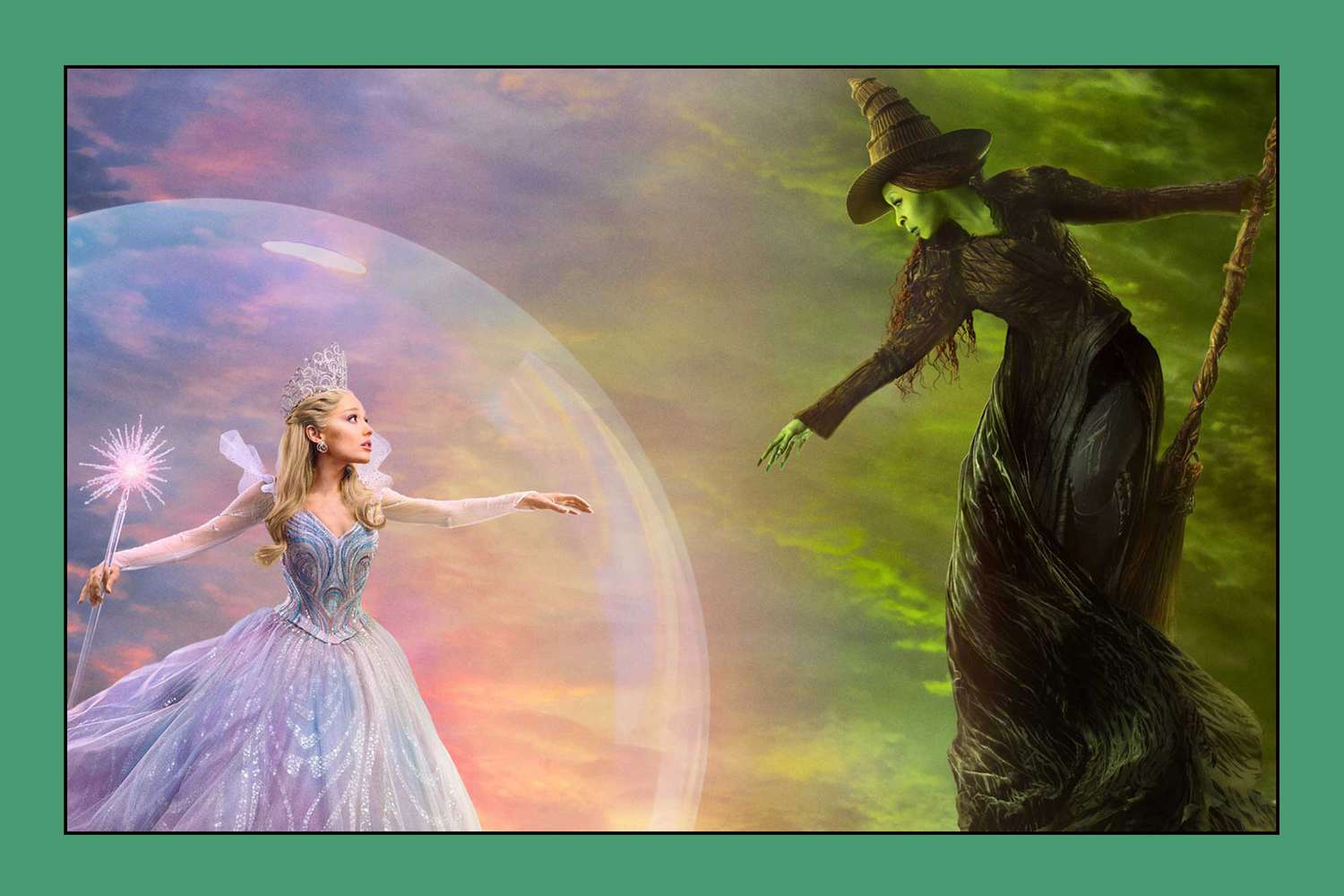
The strengths of For Good (the film) are of course its leads, Cynthia Erivo and Ariana Grande. Both are excellent singers, and their blended voices, to quote a phrase, are “like butter”. Every moment that either or both are singing are the high points of the film. What they are singing around, however, is more than their superior vocal chops compensate for. The film simply asks us to do too much.
Of course, there will be many who are so familiar with the Broadway musical that they will rightly enjoy the singing and just slide along with the familiarity of the story, even if there are a few twists, omissions, and second-rate song additions. But there are also too many implausible situations, plot twists, and awkward attempts to shoehorn this back story into the main story (otherwise known as 1939’s The Wizard of Oz).
But first, the size and breadth of this enterprise have to be taken into account. The film is the epitome of over-production, from the hordes of townsfolks singing so fully that it’s hard to pick up all the words, to the multiplicity of sites and rooms that tend to overwhelm whatever cast member/s find themselves in and what the narrative is working to do at those points. After an overlong and overdone ending to Part One, this film needed a tightening that would help us accept the declaration of friendship that the film keeps dancing around until we finally heard the nearly overproduced version of that famous duet.
Instead, we are tossed into too many subplots that take too much time to unravel, and which don’t need the attention the film grants them. The fact that two new songs (“There’s No Place Like Home” by Erivo and “The Girl in the Bubble” by Grande) were added to the film indicates that the concept of Part Two had been heading in the wrong direction. What the film needed wasn’t a fleshing out but a lessening and a contraction. The film may have suffered from the The Phantom of the Opera and Les Misérables effect, where every darned song had to be fully inserted into the film at the cost of cinematic freedom. Yes, there is irony that to the fact that “There’s No Place Like Home” is sung by the Wicked Witch of the West/Elphaba. But it just adds to the ever-increasing pileup of contradictory elements that are both the basis of the play/film and that ultimately don’t come together by the end.
There will be endless dissections of where the film deviates from the book and the play, but the film is the film, with all its own issues. Here are just a few:
Who is really wicked, and what caused it? What seems a lofty philosophical issue is germane to the film, and the further we get into the film, the more those questions become muddy. Glinda’s move from self-deluded shallowness to some kind of maturity is clear enough, but what of Elphaba? She goes from poor little different child to guarded young adult to attitudinal grownup who chooses evil, and then backs off from that, and then goes back to that, and then…I couldn’t keep track. (Spoiler alert) The film presents her at the end with a somewhat loving partner, a somewhat repentant spirit, and a view of her future life on the set of Dune (both parts).
Then there is Nessa’s journey as the other witch, and that is just as confusing in its shifts.
Aside from the whiplash-inducing changes of heart and character, there are some other puzzlers. We can see from Part One that Fiyero and Elphaba are at the core of the romance here despite the Ken doll/Barbie symmetry of Fiyero and Glinda when they are in the frame. But what was delightfully obvious in Part One as Fiyero and Elphaba discovered each other is here stretched to its logical but not believable conclusion. Their first meaningful glances and growing love worked when they kept their distance from one another, but the “night of passion” scene crashes and burns. For one, we don’t need it in a film like this, and two, what worked at a distance between two accomplished actors doesn’t work when you press them together. It doesn’t help a viewer aware of Jonathan Bailey’s and Cynthia Erivo’s very public gay identities to have to work to accept them as a legit couple. But good actors are good actors, and they both give it their all. But bottom line: There is as much chemistry between them as Julia Roberts and Nick Nolte in I Love Trouble (or more recently, Gemma Chan and Richard Madden in Eternals). The longing looks from the first film were convincing and worked much better at establishing and building their relationship.
There isn’t a weak performance in the film, but there is a distinct difference in how we relate to each character. We connect with Glinda at first based on her joyful silliness and Grande’s acting and singing, but her journey to a level of self-awareness is fraught with so many bumps that it’s hard to stay on her side. We connect in the same way with Elphaba, but her journey is the most confusing. We’re on her side as the outcast at the beginning, but her next series of decisions eventually erodes our connection with her. The same with her sister Nessarose (AKA The Wicked Witch of the East), whose journey is confusing and bizarre.
Then there is the issue of how this film’s world and characters dovetail into the original 1939 film, and this is where the wheels pretty much come off. Nessa’s death, which we all are familiar with as Dorothy’s first experience in Oz, comes to Elphaba in a dream or premonition, which makes as much sense to us as it initially does to her. Nessa’s romantic interest/slave Boq, played by Ethan Slater, who is by far the most accessible and likable character in this whole enterprise, (big spoiler coming), does an inexplicable turnaround so that he can eventually become…someone from the 1939 film. The monkeys have no idea who they are supposed to be working for, and the “wonderful wizard,” playing along with the good/bad reversal, is revealed in his fullness as a tyrannical and fascist dictator, which doesn’t exactly connect with the original.
The two most evil characters are played by Jeff Goldblum as the Wizard and Oscar-winning actress Michelle Yeoh as Madame Morrible. Goldblum brings a level of quirkiness that is at first endearing (Part One) and then confusing in Part Two as we segue into the Wizard that we all know from 1939, who really wasn’t that bad. Yeoh’s character is just bad as this film’s Wizard and stays that way, and we have no problem accepting that wickedness from such an authoritative performer. Unfortunately, they have also been tasked with singing, and neither can manage it despite being trained in every trick a singing coach can pull out.
Minor points that drove me just a little crazy: Elphaba goes on a rampage about Dorothy’s shoes, not because of their power, which makes sense, but because (huh?) it’s the only way she can remember her sister. Then, in a moment only a handful of grammarians would notice, Elphaba makes a cute reference to “the wizard and I,” which is the name of a song in Part One, but which should have been “the wizard and me” here. I know, that’s nothing, but a cute Easter-eggy reference at the expense of good grammar is borderline…wicked.
This film is going to make a lot of money because of Part One, but it’s already losing its steam, and for several good reasons. It should have been a single film with less pretension, more focus, and a couple of fewer songs.
This year’s The Running Man, is a) a sequel to the 1987 film starring Arnold Schwarzenegger, or b) the latest from director Edgar Wright (Hot Fuzz, Scott Pilgrim vs. the World, Baby Driver), or c) the latest from quickly rising star Glen Powell). Of course, it’s all three, but these three descriptions may determine your mindset going in and your thought process going out.
The plot in brief: Family man in need of money gets a spot on a reality show that can win him a billion dollars at the risk of being killed, which is almost a foregone conclusion. Why is this so dangerous? Because there are network goons out to kill you at all times, and there are rewards for anyone, yes anyone, to kill you too. With Schwarzenegger at the center, the older film knew that it couldn’t be taken too seriously, as its lead was, of course, Arnold, who is indestructible and can’t be taken all that seriously. Plus, not everyone in the world was after him.
This film departs from the Stephen King book and the 1980’s film in several ways, which you can Google anywhere. For me, the two biggest departures are the tone and the lead. The first version was always going to be tongue-in-cheek, and the hits on media, society, and “the man” were touched upon, but not dwelt upon. The new version is cinematic nihilism– not my favorite tone nor theme. This is a dark, beyond cynical, nearly humorless, bloody action film with some great character performances and an aimable central character that bring moments of, if not lightness, then at least some distraction from the fetid pessimism of the rest of the film.
There are some standout moments here and there, most provided by star cameos or intense secondary characters. William H. Macy was a welcome sight, and then a disappointment in his absence. Having Michael Cera pop in as well-prepared conspiratorialist sends the film in an awkward narrative and tonal direction for a while, but it’s an enjoyable side journey. Colman Domingo (above) bites deeply and successfully into his role as the TV show host. He rather brilliantly represents everything wrong with today’s reality TV and media, apparently a sharp indictment of us all. Then there is Josh Brolin, who chomps up his role with the same intensity as Domingo. His role goes from big to bigger to biggest, which is all that should be said before seeing the film.
That leaves us with Glen Powell, the actor currently working harder than any other at the moment to become and stay a star, even at the risk of overexposure. For the producers, he was probably a good and bankable fit. But he’s given two hurdles from the get-go. One is that his character was burdened with a literally incredible situation at the beginning, and then Powell really can’t bring what’s necessary to the role—internally, anyway—until the end of the film. Powell is so likeable a screen personality that we instantly align ourselves with him from the start. The fact that this strong and able man is suddenly unable to get a job is hard to swallow, as is his situation as one who needs medicine for his desperately ill daughter. It’s just a bit much…couldn’t someone have come up with a slightly more compelling and believable set-up for such a risky action? We were already going to side with Powell no matter what, and the film would have been the stronger for a less melodramatic impetus.
There are advantages and disadvantages to having Powell as your star. He’s a great physical action star, and far more human and vulnerable than an Austrian bodybuilder. His action scenes are completely believable, with one ridiculous exception. American films have traditionally found inane reasons to show the female form, even when it doesn’t make sense (for me, the first awareness of how absurd this can be was The Poseidon Adventure and Carol Lynley’s continual loss of clothing). Of course, Paul Newman was quick to go shirtless in many of his films, as was Matthew McConaughey. Right now, our shirtless male star is Powell, and the film goes to unintentionally humorous lengths to show off his physique.
There was the usual post-shower scene where we see what great shape he’s in. But then it gets borderline ridiculous as he has a towel around his waist that undergoes intense strain as he manages any number of escapes that would have pulled it away in a real world. (It’s on him for a wildly unreasonable length of time.) Then HE decides to get rid of it just in time for viewers to see a quick naked peak before he crashes into a possible escape route. It’s on a recent par with what happens with Oscar Isaac in the most recent Frankenstein (https://filmprof.wordpress.com/wp-admin/post.php?post=1982&action=edit). These hijinks take me out of the film as much as a blatant anachronism or a badly acted scene. We know Powell is in great shape. Showing that off shouldn’t be such a key component of the performance.
Then there is a Powell persona. His character here, Ben Richards, is supposed to be angry, very angry. After showing us his anger, his TV interviewer says before he is chosen, as if we need someone to explain it to us, that he is the angriest contestant they’ve seen. Please, again, show (which you did), not tell. But the problem is that Powell has a nice guy/romance lead/slightly humorous action hero vibe. He simply can’t seem to conjure up the anger the film needs him to have. He’s doing this best to “act” it, but he doesn’t seem to have that level of fury, that is, until the end, when he believably screams into the camera; that’s the only time I accepted rage from his character. Powell is the Cary Grant of action stars now: he’s “the man all women want, and the man that men want to be” (or at least have a beer with). The’s not the dark, mysterious, deeply flawed hero the film needs. But the producer’s choice: excellent. Box office guaranteed.
Then there is the multi-layered socio-political-cultural commentary. Having the public at large be able to kill a TV contestant is dark stuff, and it sets the tone quickly. There are a few kind folks along the way who lighten the tone temporarily, but those scenes imply that kindness has become a rare and almost unrecognizable aspect of humanity. This kind of commentary is hard to work in consistently to a film drenched in nihilism. Literally everyone is out to get Richards, and the film implies that from high to low, everyone is out to get…us. Of the other two contestants accepted along with Richards and whose lives are at stake as well (spoiler alert), one is a jerk who shouldn’t have lasted as long as he did, and the other is a cocky woman dangerously living the supposed high life. She lasts a big longer….
The highlight of the dystopian future presented to us, however, is the presence of the reality series “The Americanos”, a hysterically funny near-perfect imitation of “The Kardashians”. Not seen nearly enough in the film, the quick glimpses remind us of the stupid/silly side of the gradual deterioration of a culture. It’s funny and profoundly sad at the same time.
To enjoy the film, you have to connect with constant danger, bloody encounters, a series of betrayals, and a confusing series of messages on morality and society. Then you’re left with an action film with a great if depressing premise, which totally muffs the end. Instead of bringing things to some kind of logical conclusion, the film simply ramps up the volume until you forget that it’s not really going anywhere and not coming to a cohesive conclusion.
As for Powell, if he’s not the best actor for this kind of film (it needed to be a younger Liam Neeson or Denzel Washington type who could express the conflicted shadings of the character), then he is a great producer’s choice of a star that can prove he can carry a film, even if he’s only surfing the character rather than fully embodying it.