Mission: Impossible–The Final Reckoning

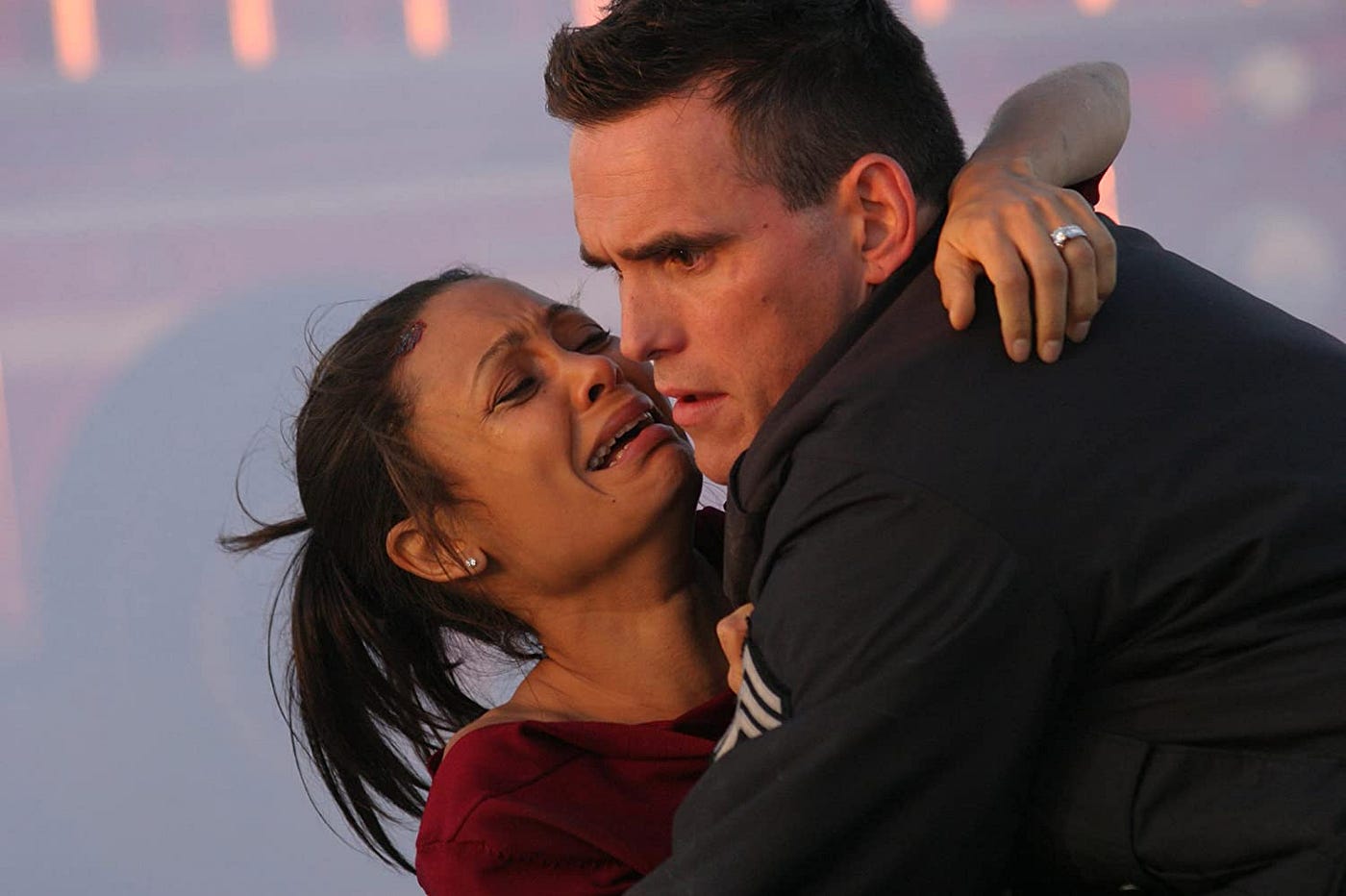
Full disclosure: I’ve semi-enjoyed the previous films in the series, but TBH, they all blur in the mind. I made sure I saw the prior film (Dead Reckoning, Part One) the night before I saw this film. That helped me with the setup of FR, which jumps right off the end of the earlier film and plunges the viewer right into the action.

Although who knows what Tom Cruise is planning on doing in the future with this series—there have been indications that this is the end, and that it’s not—this film seemed like a wrap-up … a L.O.N.G. drawn-out and overly reverential finale. I’ve not been engaged enough in the individual characters over the years, except for Simon Pegg (always enjoyable, even when playing serious), and I’ve been even less engaged with the dynamics between and among the characters. If you enjoy the characters and their interplay, then this one is for you. And there are plenty to choose from in addition to Cruise and Pegg. Of course there is Ving Rhames, who is the emotional anchor of the film. He may well be the best thing in it. Then there is Hayley Atwell, whom I’ve enjoyed in other films, but doesn’t register as strongly here. (Probably not her fault, as her character is not as strongly defined as it could have been. She’s given a lot to do, but not much to be.) It was fun to see Hannah Waddington as an Admiral, and to see Janet McTeer and Angela Bassett in roles that unfortunately barely tapped into their strengths.

Two actors brought their pervious acting personas into this film in somewhat conflicting ways. Nick Offerman is of course a comic actor, and here he is given a straight and even dramatic role. He pulls it off well, but one has to get past seeing Ron Swanson in a military uniform. Then there is Tramell Tillman, who is going to give future casting directors and directors a challenge. His character in “Severance” is fascinating and disturbing. There is an is he?/isn’t he? quality in his Mr. Milchick, and it works perfectly, if not disquietingly, in that series. But that quality needed to be pushed back here, and it wasn’t always. I wonder where his career is going to go, and if there are directors who can either use that aspect of Tillman or can help him bury it for the sake of a character. So as far as those many characters go, except for Rhames, I’m not fully on board.

I am on board, however, with the technical aspects of the film. Fraser Taggart’s cinematography is crisp and clean, with an abundance of power shots that can get a bit old as the film progresses. But otherwise, it’s a great looking film, with more depth in the images and a welcome use of shadow.

The biggest strength of the film IMHO is the soundscape. The score by Alfie Godfrey and Max Aruj is blended expertly with the sounds created by the sound department. The film should clearly get a nomination for Best Sound. In some films, Best Sound means the loudest sound. Not here. The sound is assertive without being aggressive, and works like a classical pas de deux with the visuals. It should be studied as an example of providing a full and rich music score and soundscape without overpowering what we’re watching.

The film is too long by almost an hour, unless you like elongated action scenes that are well done and extended to the point of exhaustion. There isn’t an action set piece or stunt that wasn’t stretched out, causing them to become films-within-the-film that have a life of their own and that fail to connect with the rest of the film, which does have a plot that might have been enriched by those scenes.

Also drawn out was the delivery of nearly every actor in the film. I understand that we’re doing a reverential homage here to the previous films in the series, but does that mean that we all have to speak so very slowly and enunciate so clearly so much of the time? I was longing for the tempo of a ‘40s film like White Heat or any other film that moved. I thought I’d be seeing an action movie and but ended up with a talking marathon interrupted by action set pieces. The slow speaking also extends to the so-called suspenseful scenes. When folks are on the verge of being blown up or otherwise destroyed, it’s amazing how slowly folks can speak. The absolute worst example is the long and drawn-out last scene between Cruise and Rhames. What clearly was intended to be a deeply emotional scene between two old friends moves into sheer nonsense. Spoiler alert: Rhames is going to die, he knows it, and there is nothing he can do. Nothing, that is, but warn his beloved friend Cruise that if he doesn’t get moving (i.e., fun fast), he’s not going to make it. But the goodbye is stretched out beyond credulity and instead of being emotionally realistic, it ends up being another last-minute, will-he-make-it setup for more Cruise flying on foot. It this is supposed to make Cruise’s character emotionally deep, it instead presents him as something of an idiot for waiting so long, especially when his closest friend is trying so hard to save his life.

And speaking of the 1940s, the plot here is in the same confusing league as The Big Sleep. The film is scarily both prescient and cutting-edge in its plot about AI taking over (no spoilers here). But there’s an awful lot going on, and not being a big fan of the series, the plot seemed overly complex and confusing. The bottom line was always clear, though: The world needs Tom Cruise to save it, again and again.

Then there is the TV habit of having everything explained to us as viewers by a large group of folks, each taking their turn, each taking their time, adding finally to something like a full understanding of what is going on and what needs to happen. Some of the lines here are laughable:

  • “I need you to trust me…one last time.”
  • “Every risk you’ve taken, every comrade you’ve lost in the field, every personal sacrifice you made, has brought this world another sunrise.”
  • “For every life you try to save, you gamble millions more. And now the fate of every living soul on Earth is your responsibility.”
  • And my favorite: “It’s just pain.”

But then there was the humor around the cutting of the red wire—well done. And “You’re spending too much time on the internet” garnered a good laugh.

I experience three Tom Cruises. One is the serious actor that can do both heavy thespian lifting and classic comic roles (e.g., Born on the Fourth of July, Magnolia, Tropic Thunder). Then there is the action star (take your pick). This film features the aging star at his finest, running (sometimes unnecessarily) everywhere with great abandon, and showing us again and again and again what incredible shape he is in for a 60-year-old. And then there is the wackadoo Cruise who challenges folks on medications and who avail themselves of counseling help, and who has a scary relationship with the even scarier Scientology leader David Miscavige.  (You can see a starter video at https://www.reddit.com/r/Fauxmoi/comments/1lc7t7b/tom_cruises_2004_acceptance_speech_for/). But honestly, a deep dive is available and recommended on how crazy Cruise is if you just begin to look, especially with films such Going Clear: Scientology and the Prison of Belief or Leah Remini’s brave series, “Leah Remini: Scientology and the Aftermath.”

If you are a dedicated MI fan à la Star Wars, then it may well work as an enjoyable homage to the entire series. If you’re looking for a great action film that moves the plot along with energy and verve, this isn’t it.

Posted in Film Reviews, Newer films | Tagged , , , , , , , , , , , , , , , , , , , , , , , , , , , , , , | Leave a comment

Strait Undercover

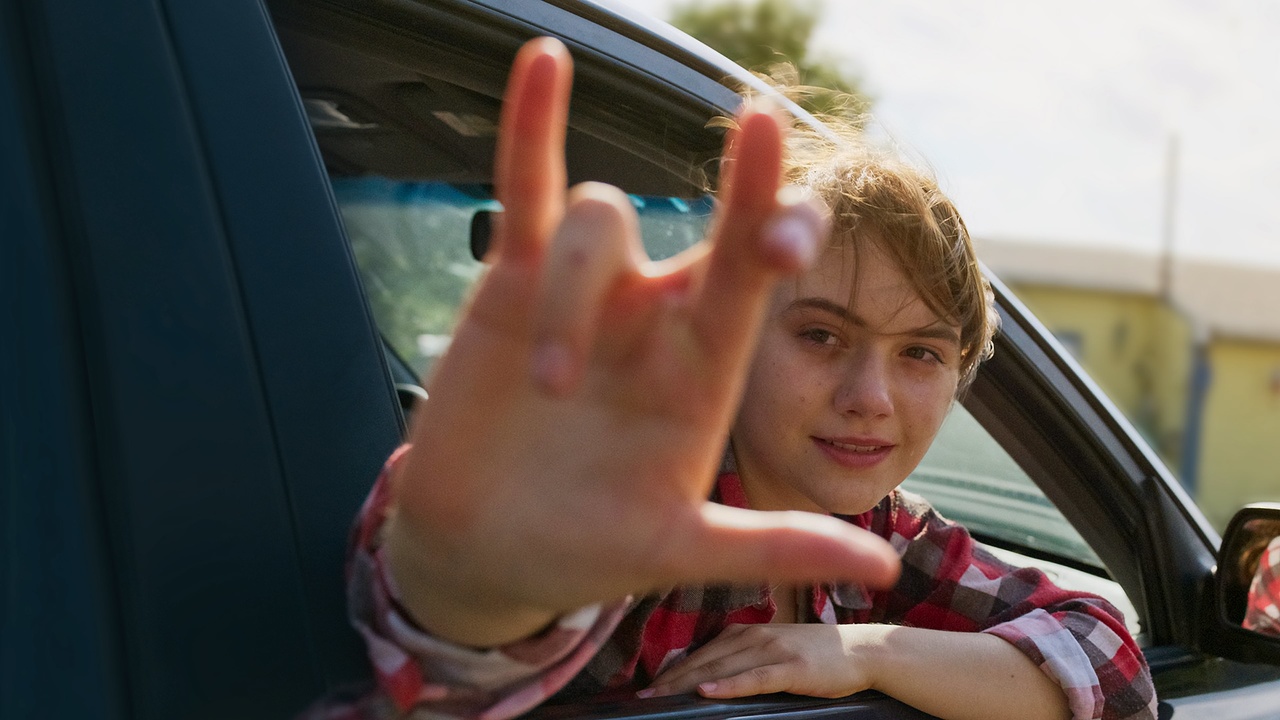
The plot of Strait Undercover is described on IMDB as “A biotech company secretly housing a government contract for terminator seeds and a Nexxus robot is infiltrated by a low-level USDA agent who connects telepathically with nature.” Sounds bizarre, and it is. But that doesn’t matter at all, as the plot is just an opportunity to highlight the acting talents of Race Eberhardt, who is reported as being the first person with obvious disabilities to be the lead in a film that never calls attention to his disabilities. There have been many actors, genuinely disabled or not, who have played similar leads in other films (e.g., The Theory of Everything, I Am Sam, What’s Eating Gilbert Grape, The Peanut Butter Falcon, etc.), but this one ignores Race’s disabilities completely and puts him squarely in the lead role without comment.

I can’t be objective here for a couple of reasons. One is that I know Race personally and have for a few years now. The other is that Race’s acting career began with Artists Unlimited, a Rochester, New York-based theatrical troupe that “provides opportunities for individuals with developmental, physical, or intellectual disabilities to participate in the performing arts.” Race is an integral part of Artists Umlimited. I have been one of the artistic directors at AU for a few years, and have recently joined the Board of Directors as well.

This is a low-budget film with few “real actors” that won’t ever be nominated for an Oscar, although the film looks great. But Race in the lead is a revelation. Writer/director Ben Genyo, who discovered Race a few years ago and decided to build a film around him, uses his main actor as well as any director ever used his lead. Race has a lot of strengths as an actor: he can be funny, angry, loud, and thoughtful, and Gonyo finds and pulls out that acting “sweet spot” in every scene. He clearly knows what Race is capable of, and he draws out his best in every scene.

It takes a few minutes to adjust to having a disabled person as the lead character in a film that draws zero attention to that. But once you get used to Race’s rhythms and personality, it becomes delightful.

If I were writing my typical film analysis (see www.film-prof.com), I might go into the other actors, the editing, the production values, and the intriguing twists and turns of the plot. That’s not necessary here. The plot is bonkers but fun, and the only standout visually is some truly beautiful shots of western New York State, from beautiful landscape shots to old, classic farmhouses. Yes, Strait Undercover is low-budget and independent, but it’s also groundbreaking. If you thought you couldn’t enjoy such a film, just give yourself the opportunity—if you can find it—to see how a good director with sensitivity and insight can locate and draw out the treasures inside his lead.

Posted in Film Reviews, Newer films | Tagged , , , , , , , , , , , , | Leave a comment

Yentl

My head is still spinning after my recent rewatch of 1983’s Yentl after originally seeing it in the theater when it was released. Spinning because so much of it was so very good, spinning because much of it was so not good, spinning because there are so many moving parts to consider—and because it’s been hard to view the film as a film apart from all that has been written around it—including from director Barbra Streisand herself. It’s been presented as an example of sexism in the industry, from getting it off the ground to the uneven awards attention to it. It departed significantly from the original short story from Isaac Bashevis Singer, and that provoked some backlash, most strongly from the author. Streisand and the film echoed Orson Welles’ Citizen Kane in that it was her first directorial feature, she produced it, co-wrote it, and starred in it—exactly like Welles and Kane. And exactly like Welles and Kane, there was a great deal of personal animosity around her probably rooted in jealousy, and also, probably, due to personality conflicts with a strong temperament.

Overall, this is a solid-directed film that looks great, thanks to Streisand’s eye, the cinematography by David Watkin (Oscar for this work on Out of Africa), and the production designers. Streisand had a limited budget but made the best of it with her use of small, well-lit rooms and some lovely landscape shots. There is a confidence and artistry at work that is seldom found in a first film. The “No Wonder” scene (https://www.youtube.com/watch?v=yAgMoKBGjT8) is a master class in camera movement, lighting, timing of lines, singing, and acting. It’s complex, touching, and extraordinary.

Continuing with what works, we have Tony-winning actor Mandy Patinkin in his first film. Streisand reports a lot of problems with him, both due to personality conflicts, his attitude, and his making the often-difficult transition from stage to film acting. She originally wanted Richard Gere, partly for his looks. But Patinkin was Jewish, looked right for the part, and was excellent in the role. He was strong, funny, angry, hurt, excited, and in love at all the right moments. Streisand apparently had to work with him to introduce stillness into his performance and to forego theatrical mannerisms, and to her great credit, she clearly succeeded. In spite of Streisand’s overwhelming presence in the film, Patinkin gives the better performance

Amy Irving has the responsibility of looking softly beautiful and acting genuinely sweet à la Melanie in Gone with Wind. She succeeds on both fronts.

Then there are the difficulties: the script/story and the central performance. Streisand and co-writer Jack Rosenthal veered away from the more realistic but downbeat story of Singer’s tale and turned it into a feminist manifesto. Yes, the story is of a young woman who wants to read but can’t because her Jewish culture only gave that privilege to men, and therefore she dresses like a man and pretends. The genuine pathos of that is unfortunately driven into the ground by the unsubtle repetition of that major dilemma, making us connect more closely with Patinkin’s character as he gets his fill of Yentl’s ceaseless questioning and challenging. Nuance, and therefore deep pathos, are sacrificed as we are told, endlessly, what’s wrong and why it should change.

Also, and most regrettably, the ending has the central character embracing her identity as a woman and going to America!, where women are free to read. So instead of a moving, focused, perhaps sad story of a woman torn by culture who faces an uncertain future, we are given a girl-power, find-my-true-self, I-am-woman-hear-me-roar filmic manifesto. That may have been fresh in 1983….

Plus, that closing sequence, essentially a complete repeat of the ending of her first film, Funny Girl, just nails that ‘80s female empowerment story trajectory down. Streisand/Yentl (at this point, there is no distinction) is on a boat, singing her guts (if not her heart) out and proving once more that she is one of the great singers of her generation and can hold out a note like nobody’s business. And that’s just indicative of one of the film’s biggest problems, and that is Streisand’s performance. One is tempted to say that she should have either acted or directed, but not both. I would agree with that, but that thought is relegated to the dustbin of “if only”.

There is a full, luscious, and romantic score by Michel Legrand (winning the only Oscar for the film, plus previous Oscars for the score of Summer of ’42 and the song “Windmills of Your Mind” from 1969’s The Thomas Crown Affair. (Lyrics for all three wins were by Alan Bergman and Marilyn Bergman.) There is a certain sameness to the various songs, but they are by the same composer, and arranged in a specific unvarying style, and sung in a uniform style by Streisand.

That’s where some of the head-spinning comes from. Streisand has a glorious voice, but it stays unchangingly beautiful throughout and that beautiful voice seems to determine more than it should. It doesn’t bend to the character or the situation as much as it bends to the ideal of the perfect Streisand vocal performance. Yes, she acts in each song to a point, but the lovely voice and stunning vocal interpretation take precedence; the acting is subservient to the gorgeous sounds we’re hearing. With few exceptions (“No Wonder” being the great exception) we rarely experience anything but perfect and lovely singing, and we’re left less affected by the story or the character as much as by the impression that, darn, that girl can sing!!

Then there’s her performance. Yentl is a fable, which can account for a young-looking 40-year-old female getting away with acting like a man two decades her junior. That smooth face, those beautiful nails on her hands, that voice that in spite of a few seconds of her trying to speech in a lower pitch, still sounds like a young girl—they all are something we and the film’s characters are expected to accept as a version of manhood. When Yentl gets emotional, or even when she doesn’t, she sounds like no male on earth.

But even with accepting the fairy-tale aspect of the story, we have an uneven central performance. Streisand’s vocals and her intensity when acting can cover a multitude of thespian missteps, which are so constant throughout the film that it is easy to just accept them or ignore them. Streisand is a legendarily self-focused performer, and when she’s acting, she’s acting—one can see it. We see the work, the focus, the dedication. But then there are moments when she is obviously not paying attention to what she’s doing, and some grace notes appear. Usually they are when she is unselfconsciously reacting to someone else, and we get a glimpse of what the performance might have been if directed by someone who could have challenged her to let go and accept someone else’s direction.

Then there is the actual character of Yentl, or Anshel, which is Yentl’s “undercover” name. Must as she might have tried, Streisand seemed unable to shake off the American Yiddish mannerisms that worked so well in Funny Girl, and instead comes across as Sadie from Brooklyn far too often. Instead of Singer’s “Yentl, the Yeshiva Boy” (the original story’s title), we far too often have “Rose the Borsch Belt Comedienne.” The Fanny Brice intonations are so threaded into the performance that there is no escaping them, and we can become inured to them. But that doesn’t make them right for the part.

Perhaps because I am a singer and work with singers and actors to get the best performances from them, I am more sensitive to elements of singing and acting that don’t work for a play or film. Streisand’s performances as singer and actor are powerful and engaging, but they are to the detriment of a film that in all other ways is a handsome picture with some good performances. And finally, and simply, it has some of the best singing that, while not always appropriate in context, is some of the most entrancing you’ll ever hear.

Posted in Film Reviews, Older Films | Tagged , , , , , , , , , , , , , , , , , , , , , , | Leave a comment

Ryan’s Daughter

Fifty-five years after its release, 1970’s Ryan’s Daughter surely needs another look. The reputation of this David Lean-directed film has suffered over the years for a couple of key reasons: its own genuine weaknesses plus the breadth of its scope. Some of the criticisms leveled against the film upon its release hold up well today: it’s a slight story that’s given an extraordinary cinematic presentation. It’s gloriously photographed by Lean’s go-to cinematographer Freddie Young (Oscars for this film, Lawrence of Arabia, and Doctor Zhivago)—all Lean films. The music is by Maurice Jarre (Oscars for the scores of A Passage to India, Doctor Zhivago, and Lawrence of Arabia—all Lean films).

The cinematography dwarfs the story, even when the broader issues of Irish resistance to the British and the at-first-minor-and-then-major story line of the Ryan of the title and his political activities are taken into account. There is a line that can be traced from Lean’s earlier work to this penultimate film, and then finally, A Passage to India. Lean began as an editor in his native England in the 1930s, working on classics like Pygmalion, 49th Parallel, and One of Our Aircraft is Missing. He is reported to have taken over directing duties from Noel Coward in 1942’s In Which We Serve after just a few weeks, and his directing career was off and running: Blithe Spirit, Brief Encounter, Great Expectations, Oliver Twist, The Sound Barrier, Hobson’s Choice, and Summertime, all before his first epic. Those films, many of which are still quite moving, were marked by a taut storytelling technique that was stylish without being self-conscious. What followed them was the multiple Oscar-winning The Bridge on the River Kwai, which won seven Oscars, including Best Picture and Best DIrecor.  This success began a trend that led to his greatest epics and may at the same time have been a kind of early death knell for this career.

Kwai was followed by one of the great epics of all time, Lawrence of Arabia, which set a still-fascinating personal story against a historical background whose events were tightly woven into Lawrence’s personal journey. Most consider this film his greatest, and its combination of story and historical setting may well be the best any epic can achieve. The film, like Kwai, won seven Oscars, including Best Picture and Best Director, and Lean seemed to be able to do no wrong.

Lean’s greatest financial success came next with Doctor Zhivago, which marked a slight downturn artistically. It won five Oscars, but the winning and losing nominations tell the story: It was nominated for Best Picture and Best Director, but didn’t win. Winners were for Robert Bolt for screenplay, Cinematography (Young again), score (Jarre again), Costume Design—color, and Best Art Direction/Set Direction—color. When the technical awards are the winners, and the top categories go to other films, one can hear the bell tolling, even in the midst of great success. The central love story seemed a bit thin, even with the easy-on-the-eyes couple of Omar Sharif and Julie Christie at the center. The adultery, which seems to be a theme in a lot of Lean’s films, seems particularly unpleasant, and the film leans on its music score far too much to paste over some of its narrative weaknesses.

Which leads us to Ryan’s Daughter. Lean took a very long time to direct this film, waiting for full year, for example, for the right storm to arrive for its climactic sequence. The visuals are still impressive, but the connection between nature and the plot, while done with aplomb, puts a lot of pressure on the central love stories to rise to the level of the beauties and fierceness of nature. And they don’t rise to that level, making the personal challenges and traumas seem that much lighter and insignificant by comparison—a loss for the film, as the realities of the situation are gut-wrenching. The gun-running that features so strongly at one somewhat tacked on rather than integral. Many felt a film this slight (and there is nothing wrong with slight) may well have been approached more like his Brief Encounter, which was smaller, more focused, and exquisite.

Forgetting all the cinematic background and looking at the film with fresh eyes, it still seems too small for its visual and aural setting, but there are some elements that should be noted, for good or bad. The music by Maurice Jarre has a central theme that became the hit “It Was a Good Time,” and it was impossible to not hear that song and its lyrics when the first notes of the theme appeared (and appeared, and appeared…). Yes, the film is nearly 3.5 hours long, but even a delightful theme can wear out its welcome after a while. The rest of the scoring, apart from the use of the central theme, seemed amateurish and typical of a second-rate Hollywood studio film.

Then there is the casting. The main male character, who is a shy, quiet, sex-averse small-town teacher played by…huh?…Robert Mitchum. Lean apparently said he like to cast against type, and he certainly did so here. Reports are that Lean wanted his own Lawrence, Peter O’Toole to play the role, but the timing wasn’t right. Mitchum acted beautifully, but his persona as a strong red-blooded American male is so strong that it was constantly at odds with the character he was portraying, plus you can catch him acting at times rather than embodying.

Christopher Jones as the British officer is quite another story. He is introduced with an overwhelming phallic symbol that was a big shocking visually, and he should have been nominated for Best Standing Silhouette with how many times Lean had him standing, generally with his back to the viewer, against the sky. Apparently, there were several personal reasons that Jones doesn’t register much, but to describe him as a recessive presence only scratches the surface. His dialogue had to be re-recorded by another actor, which included only a handful of lines, and in his lovemaking scene with the lead actress, he looked as if he were about to fall sleep.

That lead actress was the surprise to me. Sarah Miles was known for being lovely, and that was all I recalled from my first viewing. But her Oscar nomination as Best Actress was well deserved. She wore her loveliness like an outer garment, never leaning into it as many screen beauties do. Her eyes did much of the acting for her, and she moved from angst to anger to touching softness with ease. Perhaps an actress with a stronger personality would have lent this character more fire and agency, but this was one area in the film where the love story and the historical context met and thrived: her character, Rosy, seemed as much of the product of the time and place as the Irishmen that were fighting the British. Another actress might have burned a hole through the film with this character, but Miles’ softness of look and personality made her performance of a piece with everything surrounding her.

The film is also remembered for providing an Oscar for one of Britain’s most stalwart character actors, John Mills, who worked with Lean as early as in In Which We Serve (1942). Here, Mills played Michael, the “village idiot” with the good heart. All I could think of was how Tropic Thunder failed to mention this performance in one of its most famous sequences, but indeed, Mills (father of Oscar-winning Hayley) won the Oscar for his portrayal. Looking at the performance with more modern eyes, it seemed overdone except for the last few scenes.  A performance not nominated but which should have been was screen legend Trevor Howard’s work as the town priest, a magnificently complicated character with more personal authority than anyone else in the film. As a pastor myself, I could relate to his character very strongly, and I felt what he was feeling in each of his scenes (though—spoiler alert—I would never slap someone I was counseling). It could rightly be called a towering performance.

Again, from today’s perspective, the treatment of the Irish townspeople comes across as condescending. They constantly needed the priest to come in to break up fights, mob scenes, drunken brawls, and beatings. They were generally portrayed as a mob rather than a group of individuals, though there were some personalities we got to know—but none that we came to respect. They drank too much and were easily led, especially down wrong roads. They were insensitive to anyone needing sensitivity, and were as hot-headed and judgmental as a group could be. That could well be the fault of the script, but when the only townsperson we come to like, aside from the priest, is the “village idiot,” there seems a lack of nuance.

This film was one of the last of the big road-show films that were meant to be long, higher-priced, large in scope, shown in special theaters, and with an intermission. But by the time the film appeared, that moment had mostly passed. Now, with its availability on streaming services, it’s well worth watching for those with the patience for long scenes with shots that dwell on nature’s beauty and wrath. (Note to parents: the illicit love scene is signaled way before it occurs, and a little fast-forwarding can get you past it pretty quickly.)

Ryan’s Daughter was a great disappointment critically, though it was successful financially. Rumors had it that Lean’s disappointment with how his film was received was the sole reason behind the big break that occurred before the release of his last film, A Passage to India (1984). That may well have been part of it, but there were apparently many stumbles along the way in terms of what would be his next project. Like Ryan’s Daughter, the film, while praised visually and for its performances, was rightly called “a big movie about very small things.” The Academy crowned it with 11 Oscar nominations, but it won only two, for Peggy Ashcroft as Best Supporting Actress in what might be considered a career win, and for, once again, Maurice Jarre’s music score. Oscars for Best Picture, Director, Actress in a Leading Role, Screenplay, Cinematography, Art Direction, Costume Design, Sound, and Editing all went elsewhere. But its success left Lean with a success on which to retire.

Lean’s success with his big, epic, color films should be appreciated. But his earlier work in England with his black-and-white films should be as much respected, if not more. In many ways, they stand up today in ways that some of the big epics don’t, and his work in the 1940s and 1950s should be require for all serious cinephiles.

Posted in Film Reviews, Older Films | Tagged , , , , , , , , , , , , , , , , , , , , , , , , , , , , , , , , , , | Leave a comment

Snow White (2025)

Oy! Where to begin with Snow White?!

Let’s start with the star, Rachel Zegler, the female lead of the recent West Side Story. Her presence outside her newest film has far overshadowed her presence within as the titular character, and she has become, I have to agree, a PR nightmare. Her statements trashing the groundbreaking original 1937 film and her breathtakingly narcissistic political statements have all served to present a picture of an unrestrained (hey, Disney execs, where were you?), uninformed, self-serving entitled brat that couldn’t help but dig a hole and just keep digging and digging. Zegler is talented (but she’s a better singer than a thespian) and will eventually come back from the precipice here. But for now, it’s hard to see the film without seeing the actress (and rehearsing the specifics of her babblings)—deadly for a movie.

The film itself? There are good parts, some very good. There is also rampant stupidity throughout. There are one or two good decisions on how to update without mangling. There are many more poor decisions that make this film a mess. There is confusing ideology for those interested in that aspect; yes, there is a pro-communism aspect that is hard to miss. To me, the biggest glitch is the imposition of an extremely self-centered “girl power” onto this classic fairy tale. I get that just waiting around for a prince doesn’t quite work in 2025. But if I hear one more song crying out that the ultimate expression of life is to become the great person you know you are and to give full expression to your id (hello, The Greatest Showman)—well, my hair is already white, so I’m not sure what effect it will have on me.

Back to Zegler and one note of so-called controversy. The movie is called Snow White, and Snow White is supposed to have skin as white as snow. Zegler is Columbian, yet nothing close to having dark enough skin to exempt her from the role. She easily looks like Snow White. Actually, no real person matching the 1937 Snow White would look healthy enough to take on the role. So here is what I have to say about that tempest in a teapot:

Apart from Zegler, the film has plenty of problems of its own. They have taken out a lot of the music of the original and replaced it with generic modern Disney princess music. I get it that most music of the 1930’s isn’t going to fly with modern audiences. But they dropped the lovely “Some Day My Prince Will Come,” a big mistake. They could easily have repositioned it and made it work well. (Why, why didn’t they ask me—I would have known exactly what do to with that song!) Is “Waiting on a Wish” the substitute? Sigh….

“Whistle While You Work” remains intact, even if the song now has a rather bossy and ungrateful princess bossing the little people around. The most successful update, IMHO, is “Heigh Ho,” which gets a modern update that almost gets too big for the film, but which ultimately stays in its place and honors the original. Some nice vocals there, too.

Of all the new songs, for which I predict both little humming from those walking out of the theater and a short shelf life after that, the most enjoyable to this author was “A Hand Meets a Hand,” a song Snow White sings with Prince Charming, the prince, the male lead, played by Andrew Burnap. I’ll get to him later. (Also, the song sounds suspiciously like “I Like the View from Here” from “Spirited,” also written by Benj Pasek and Justin Paul.)

The less said about “Princess Problems, well sung by Burnap but jarringly modern in the worst Disney TV style, the better.

None of the major players escapes unscathed, regrettably, and for quite different reasons. Even if you never heard of Zegler before seeing the movie, you come away with the impression of a girl with a lovely lilting voice that wasn’t allowed to let loose, in terms of either acting or singing. Zegler isn’t a deep actress (at least not yet), and she skims the surface of the lead character with aplomb and deftness, but with little more. It seems that she was often concentrating on hitting her mark sometimes, understandable when you know you’re going to have animated creatures all around you.

Burnap is an interesting choice. He has a bigger and much more expressive voice than he is allowed to show here (perhaps not to compete with Zegler’s?). He’s also interesting visually. He is handsome, but not in the typical almost too-too-looking Disney prince mode (perhaps not to compete with Zegler?) That makes sense in that he is not a prince, but a thief, albeit one dressed in woodland chic. He and Ansu Kabia (“Miss Scarlet,” “World on Fire”) come out best in the film.

Which, both ironically and unfortunately, leads us to an actress and person I admire, Gal Gadot. First, the irony. As been noted by many folks, while Zegler is a very pretty, even lovely young woman, Gadot is, again IMHO, one of the most beautiful women in the world. There is no way this film’s Snow White is “fairer” than Gadot’s wicked queen. Given Gadot’s height and presence, she constantly overwhelms SW in all their scenes. Gadot looks as if she could swallow Zegler in one gulp, and there were moments…

But unfortunately, there are two weakness in Gadot’s performance. Again, as has been duly noted elsewhere, Gadot doesn’t have a great singing voice. Yes, she hits the notes, but that doesn’t make her a singer. A singer doesn’t just hit the notes but surrounds the notes. She can’t do that, and it undermines her big song, “All is Fair,” which is in the Disney mode of “Poor Unfortunate Souls” (The Little Mermaid) and “Mother Knows Best” (Tangled). Those songs had belters that knew how to bring down the house. Gadot, with a great deal of help from the production design and choreography, almost pulls it off, but not quite.

Lastly, and this is hard to write, Gadot just doesn’t bring the evil. I noticed just one (silent) moment when I saw the proper level of malevolence in her eyes. Her wicked queen is glamorous, selfish, conniving, and does great work with those hands and nails. But if they had only asked me, as a director of actors, I could have drawn the proper level of scary nastiness out of her. This wicked stepmother just isn’t frightening enough. (Again, why didn’t they ask me? 😁)

Then there are the dwarves, the little people, the woodland creatures. Opinions vary greatly, but I think they should have given seven actors with dwarfism the chance to have significant roles in a major film, Peter Dinklage’s comments aside. The creatures are well rendered, especially Dopey, whose liquid eyes could melt the hardest heart. But this is supposed to be a live-action remake, and we’re back in Song of the South and Mary Poppins territory here. The singing forest animals make sense as computer-created, but the mix of real people with the “creatures” doesn’t quite work here.

There’s a lot more to kvetch about with this remake. We could call it a creative mélange of ideas and styles and perspectives, but really, it’s a mess. Some individual scenes work well (the duet, the run through the scary forest, the actual kiss), and there are some lovely visuals now and then, but all put together, one has to wonder what it was supposed to be all about. This film will be analyzed for a very long time.

One last positive thought. The de rigueur Disney community dance scene at the end features actual creative choreography, not just a demonstration of how exhausting and packed with gymnastic gyrations a dance number can be (hello, Wicked and “Spirited”). I can only hope that this is the one thing that creatives will take away from the film.

Posted in Film Reviews, Newer films | Tagged , , , , , , , , , , , , , , , , , , , , | Leave a comment

Quick Takes on Black Bag and No Address

Black Bag is a cross between the Brad Pitt/Angelina Jolie film Mr. and Mrs. Smith and an Agatha Christie film, albeit modernized and quite slick. It’s a film about marriage (surprisingly supportive of monogamy) and it’s full of schemes and lying and double- and triple-crosses. It’s directed with whip-smart precision by Oscar-winning director Steven Soderbergh (Traffic) and has some of the best actors around, including Michael Fassbender, two-time Oscar winner Cate Blanchett, as well as Mank’s Tom Burke, “Bridgerton”’s René-Jean Page (still on the short list for the new James Bond, though I don’t think this film will further that cause) and James Bond’s Moneypenny Naomie Harris. Great cast, but not used to their fullest.

Michael Fassbender can burn through the screen when given the chance, but here he is emotionally unavailable to the rest of the cast and to us. Makes it hard to connect. His wife is played by Blanchett, who wafts ethereally through most of the film like a chiffoned combination of Kay Francis and Tallulah Bankhead at their most removed and elegant. The life in the characters has to come from the second tier, who are the only ones bringing the energy throughout.

I may see this film again, as I respect the actors and the director. But here is where I have to mention my personal experience. I was still post-surgical and very tired, not an ideal situation for seeing this film. The sound was also down in the theater, making the soft-spoken and rapid dialogue almost impossible to understand. Yes, I actually fell asleep until my brother Chris elbowed me. I don’t mind films that demand my close attention, but there was so much going on (quietly), so much just alluded to, and so little light shed in the first part of the film that I gave up trying to understand the plot. Having so many folks lying and conniving and hiding their actions and motives are a bit much for me when I’m fully awake; when I’m still recovering and having a hard time concentrating—not a good combination.

The film is beautiful to look at, but it is overcomplicated (probably not in The Big Sleep category) and can only be put together in pieces, assuming the viewer is able to take in those pieces. My friend Kyle Rice happened to be at the same screening, and he make the excellent point that the central scheme should have been more clearly exposited, especially toward the beginning, so that at least that part of the film wasn’t in the shadows until the end. It’s fine to keep wondering who was doing what to whom, but the parsing out of the central scheme that connected the main players was a bridge too far.
Maybe a second viewing will help.

No Address

No Address hasn’t been released yet, but I was able to see an advance screening. It’s a message film about homelessness. It’s a bit beyond criticism for two reasons: the theme is about a situation we can all agree is terrible and should be understood and addressed on many levels…and a dear friend was involved in its distribution.

It has a few real stars: William Baldwin of Baldwin brothers fame and Beverly D’Angelo of the Chevy Chase Vacation movies. The rest are relatively unknown but may have a future. What is strong and touching is the reality of the situation the film presents. It gives logical reasons why folks find themselves homeless, what that life can be like, and what can be done. Earnest is the key word here.

This is a first-time effort of this production company, though independent producer/director Julia Verdin has a strong track record (Maya, 2004’s The Merchant of Venice.) Its key strength is the heart-breaking situations that can lead to homelessness. But the characters are often stand-ins for various scenarios rather than deeply-etched and fully human individuals.  Their humanity is often sacrificed to the outlines of what they represent.

It’s to the film’s credit that they present one character who is clearly at fault for his situation, rather than portraying everyone as victims. Baldwin’s character makes one bad decision after another and winds up on the street. His fall is a bit cliché, as he begins the film as a businessman wanting to rid a development site he has a financial interest in as a homeless encampment, and ends up, of course, on the street. The other scenarios played out are not the fault of the people who found themselves in this situation, so the film plays it fair that yes, sometimes, back choices lead to bad situations.

What was perhaps the freshest aspect of the film was its view of life in the encampment, presented with a fascinating tension. There is a great deal of support there in the camp, with heavy “we are the family we couldn’t find elsewhere” vibes. The love and deep concern were genuinely touching. Yet…the film also shows how someone can get so caught up with the newly created family dynamics that they might not easily grab the opportunity to get out of that circumstance. In a film that teeters toward paint-by-numbers in its main characters, this is a welcome shading.

Make no mistake. This is a message film first and foremost. But the message needs to be heard. And this film should be seen.

Posted in Film Reviews, Newer films | Tagged , , , , , , , , , , , , , , , , , , , | Leave a comment

Thoughts and a Few Predictions for the 2025 Oscars

Note: This entire article is dedicated to Steve Hogan.

My first thought on this year’s Oscar show is that it will be the least watched in a long time. There are no big points of interest, except perhaps a win for Demi Moore for Best Actress. That’s of some interest to those who have followed her personal and professional trajectory. But even that nomination is part of a film that few people have seen (The Substance), and many have understandably stayed away from.

There is also no big film vying for Best Picture that has captured the public’s interest. Last year, we had Barbie vs. Oppenheimer. Yes, Wicked was a big financial success, but it hasn’t done well in any category at any of the year’s awards, and there are enough issues with it that it won’t win the big prize. As for the rest of the nominees, the timing of many of the films’ releases, and the fact that some are essentially just “streamer” movies, has worked against them. Lastly, some of the films combine a mixture of languages and outré subject matter that have served to limit their audiences. As of this writing, the only film that has any cultural buzz is Conclave (yes, because of the pope’s illness), but all this has came after the nomination, as did Conclave’s somewhat surprising win at the Screen Actors Guild Awards). So, bottom line: No front runner, and no film that has the captured the average moviegoer’s interest.

So, I don’t care enough this year to do a complete predictions list, but here are some random thoughts:

Two acting awards are locked down: Kieran Culkin for A Real Pain and Zoe Saldaña for Emilia Pérez. No one else has a chance. I would have liked to see Edward Norton’s incredible performance in A Complete Unknown take this prize. But his and Culkin‘s performances, while equal in skill, are wildly different in the characters they portray. Culkin gets to go from stillness to tears to outright insanity, while Norton has exquisitely internalized a softer and deeper character. Both deserve the award, the Academy loves big and energetic performances. Yet Norton is a treasure who has done a deep character dive that I thought he was incapable of. I hope he gets his due soon.

Zoe Saldaña is a shoe-in for her work in Emilia Pérez, but TBH, all the nominees did work worthy of the award. Not one weak link in this incredible chain: Monica Barbara (A Complete Unknown), Ariana Grande (Wicked), Felicity Jones (my favorite for The Brutalist) and Isabella Rossellini (Conclave).

Best Actor: Hmmm. It looked like Adrian Brody was a pretty sure thing for The Brutalist, and his performance has a huge range, with highs and lows that the Academy loves.  He is extraordinary in the film, but he has already won for The Pianist, and the Academy might (might) have been affected by the recent momentum for Timothée Chalamet for his incarnation of Bob Dylan in A Complete Unknown. A few months ago, I was rooting for Ralph Fiennes to get the award for his quietly intense and precise performance in Conclave. But for no reason I can figure out, I’m hoping for Chalamet and still thinking it’s going to be Brody.

Actress: It looked like it was going to be Mikey Madison for Anora a few months ago. But now I think it will be Demi Moore. But Moore has two things going for her aside from the quality of her performance. One, she has a narrative as an actress and a human being that the Academy loves. Also, she is up against Cynthia Erivo for Wicked, who has won almost nothing outside of a musical category, and a group of actresses starring in foreign language films. I think the foreign language actresses might cancel each other out, putting Moore on top.

I can’t help but guffaw at the Academy for its nomination of Karla Sofia Cascón and its aftermath. I could hear the backslapping and virtue signaling from here in upstate New York when the Academy nominated Cascón in the Best Actress category, congratulating the actor on a good performance while simultaneously nominating for the first time a (yes, I’m saying it) a biological male in the Best Actress category. Cascón is a “trans woman” and the film is about a trans woman, so it seemed a perfect fit for today’s Academy to celebrate the film and its central performance. But then there came the revelation of all the controversial tweets Cascón released a few years ago. Now the actor is persona non grata and hasn’t attended recent award shows that have the actor nominated. But apparently we will see Cascón at the Oscars, where the actor will surely be awkwardly celebrated from the stage at some point.

 Thanks to those who have kept reading this….

Animated Feature Film. I just have a question: Will Wallace and Gromit: Vengeance Most Fowl win after Flow and The Wild Robot cancel each other out? Or will Inside Out 2’s massive grosses sway the voters?

Dune: Part Two is an extraordinary film whose earlier release in the year will likely limit its awards. But it should win some technical awards: perhaps Best Cinematography (though The Brutalist may well take this one). Same for Production Design, which I think Dune will win as The Brutalist, Conclave and Wicked duke it out. I thought Sound would clearly go to Dune, and it still might. But three of the other nominees are strong contenders as well  (A Complete Unknown, Emilia Pérez, and Wicked. Visual Effects: Dune better win.

The Screenplay awards double as an award for the actual writing as well as for an entire film that won’t win Best Picture. Adapted Screenplay: This is the Academy’s chance to anoint Conclave. Original Screenplay: Probably Jesse Eisenberg for A Real Pain. The Academy loves giving actors this award (can you say Matt Damon and Ben Affeck?), and it is a deep but uncomplicated script that is as worthy to win as its competitors in this category.

The Brutalist’s score is extraordinary, and it should win Best Score.

In the “who cares? Category, I nominate “Best Song”.

Oh, yeah, Best Picture and Best Director. No obvious leader here. For me, it’s a duel between The Brutalist and Anora for both categories. But has anyone reading this even seen these films? Asking for a friend….

Of course, all the categories I’ve left out here are full of films made by hard-working and talented people. But most haven’t captured the public’s interest, and I haven’t had the time or inclination to see all of them.

Of course I’ll watch the show, but I have to quote Jesse Eisenberg as Mark Zuckerburg in The Social Network as I watch: “You have part of my attention—you have the minimum amount.”

Posted in Uncategorized | Tagged , , , , | Leave a comment

A Real Pain

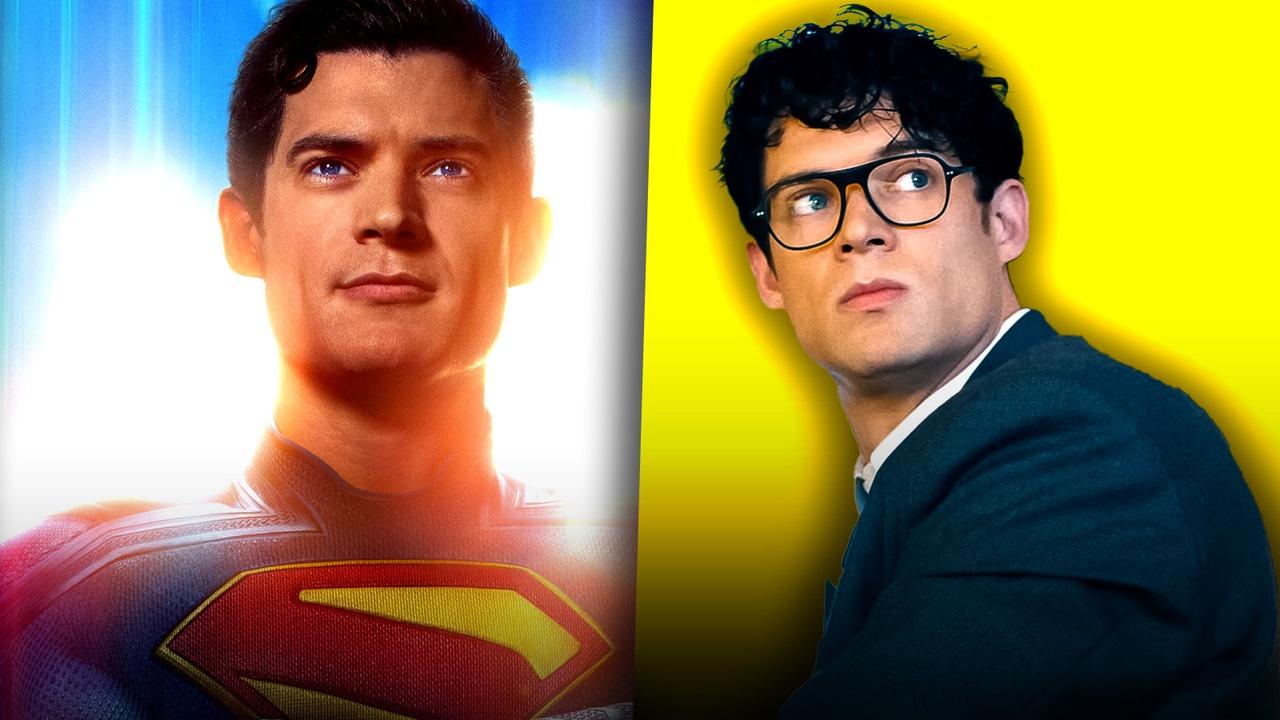
A Real Pain is the second film written and directed by Jesse Eisenberg (below right), best known in one demographic group as Lex Luthor in Batman vs. Superman: Dawn of Justice, and in another as Mark Zuckerberg in The Social Network. His characters are generally smart, fast-talking, and at least one step ahead of whatever character he’s interacting with. A Real Pain announces the arrival of a major director, one who is young and sharp without being condescending. Eisenberg seems to be this generation’s Woody Allen. He writes, directs, and acts in his own films. He is Jewish and isn’t hesitant to bring that into the forefront. Like Allen’s films, there is a refreshing indie feel to this film, with notes of great humor and the occasional deep dive into seriousness that fortunately lacks the older director’s fixation with death.

Considering the plot of the film, which has two cousins traveling to Poland to see where their grandmother, a survivor of the Holocaust lived, this film could easily have tipped in directions of unearned profundity, jarring frivolity, or a mashup of ingredients that don’t cohere. Miraculously, the ingredients do match in a fresh way. This film is a buddy movie, a comedy, a drama, a Holocaust movie, a family dynamic movie, an odd-couple film, a look at identity issues (especially Jewish identity in the light of WWII and the aftermath), as well as a travelogue through some glorious countryside. Yes, all those elements are here, and due to Eisenberg’s steady hand, nothing spins out of control. This film is stuffed with different people, differing issues, and more issues than most big-budget extravaganzas ever choose to address, yet the film is light and airy and (generally) easy to watch.

What is occasionally difficult to watch is Kieran Culkin’s performance, which is a work of art and will likely win him the Best Supporting Actor Oscar. Benji, his character, can be charming and flirty and engaging, but he can also be crude, rude, and cutting, often within seconds of those varying expressions. That’s the hard-to-watch part. You know that friend or relative that you love dearly, but often have to hold your breath around and occasionally apologize for their behavior? He’s that guy. In the hands of someone else, it could easily have been an uncontrolled parade of emotions and actions. But despite the incredible range of humor, embarrassing outbursts, and displays of selfishness that oftentimes greatly inconvenience others, Culkin roots everything deep into a humanity that never moves into thespian showmanship. Culkin and director Eisenberg give us one character here—complicated and often impossible to understand, but real.

Eisenberg takes on the quieter, more stable role that Culkin’s character is playing against, and he is excellent in the less showy role. As director, writer, end actor, Eisenberg holds down this mélange of personalities, actions, issues, and tone shifts with grace and a steady but not visibly controlling hand.

The Eisenberg/Culkin relationship is just the central personal one in a film nearly overflowing with comparing/contrasting issues. We have the horror of the Holocaust pitted against a group of tourists enjoying great food and comfortable accommodations while working to properly “remember” all that happened. The personality contrasts of the two central characters also bring up issues of “settling,” especially as it pertains to whatever one thinks the American Dream is. The question of what it means to be Jewish, too, is always playing underneath the action. Coincidentally, one of the travelers is Jennifer Grey, who famously had a nose job to look “less Jewish” after her triumph in Dirty Dancing, and hence lost her unique beauty. She has come to see that decision as the thing she most regrets doing, and she reclaims her Jewish identity in some respects with this performance. Note: I may have missed it, but I was looking to see when the film’s events take place. It seems like the present, but Grey doesn’t look old enough to have had a grandmother in the Holocaust. Just a thought…

Articles on films often spend an inordinate amount of time describing the plot. Not happening here. Knowing that we have two different cousins coming together to visit their ancestral home that happens to be the site of a concentration camp is enough to get one started. The unexpected ups and downs of the film are what makes it so enjoyable; a great group exercise among people who have seen the film would be to ask, “What is this film about?”

There might be as many answers to that questions as there are people in on the discussion. That’s what makes the film so interesting. What makes it great, however, is the writer/director’s ability to juggle plot points, performances, and deep historical issues into one enjoyable expression. Kudos to Culkin for establishing his reputation aside from famous brother Macauley (though his Emmy-winning work on HBO’s “Succession” strongly began that process), and to Eisenberg for resisting the showier role and for bringing order and delight to elements that might easily have spun out of all control in another director’s hands.

This film isn’t like anything else now, which may make it difficult for some to describe to others. It’s not reducible to anything simple. That’s its charm, and its triumph.

Posted in Film Reviews, Newer films | Tagged , , , , , , , , , , , , , | Leave a comment

Two and a Half Flicks: The Narrow Margin, Manhattan Melodrama, and Return to Glennascaul

Narrow Margin, 1952

Manhattan Melodrama (1934)

Return to Glennascaaul (1952, a short with Orson Welles)

Having spent the long weekend with best friend Clint Morgan and his wife, I knew that I would be treated to a series of classic film options, especially of the film noir variety. After reviewing a huge list of films I had hardly heard of, we decided to see The Narrow Margin, a film that redefines taut, snarky, lean-and-mean film noir.

Directed by Richard Fleischer (20,000 Leagues Under the Sea, Soylent Green, Fantastic Voyage, Conan the Barbarian, Barabbas, etc., plus an Oscar for 1948’s documentary Design for Death), The Narrow Margin stars bit-or-supporting-part actor Charles McGraw in a rare lead role as a tough detective with a challenging assignment. The lead female is tough-as-nails Marie Windsor in one of her strongest performances and best parts. The dialogue between them is almost surreal in its energy, intelligence, and hard-boiled attitude. It was nominated for Best Writing, Motion Picture Story, unusual for a B-bordering-on-A picture.

In short, the story is fast and takes some fascinating turns, and the pace by Fleisher is an economical wonder. It’s well worth watching for the story, the completely unsentimental and cynical dialogue, and the ups, downs, and surprises along the way.

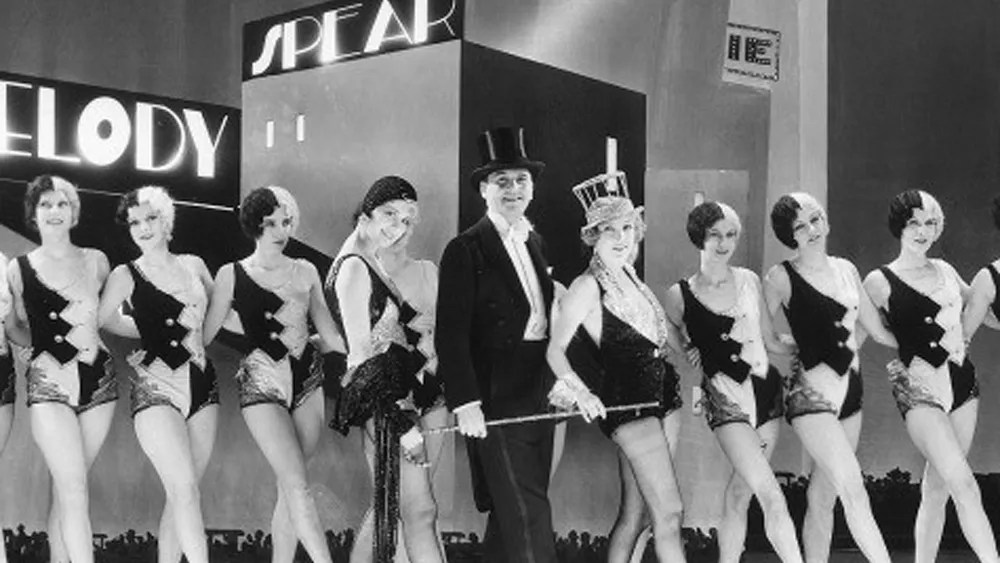
Manhattan Melodrama is perhaps best known now as the film that gangster John Dillinger had just seen before he was gunned down in Chicago. It’s also known as the first pairing of Thin Man stars William Powell and Myrna Loy. But it also stars Clark Gable, which clearly means that this is a different film, considering what was to come from the other two leads.

The credited director is W.S. Van Dyke, who went on to direct many of the Thin Man movies. But apparently Jack Conway and George Cukor had a hand in directing it as well. Film nerds, be alerted: Joseph L. Mankiewicz was one of the writers, and Donald Ogden Stewart was an uncredited one. Also, the film was produced by David O. Selznick, and the cinematography was by James Wong Howe. The name Slavko Vorkapich also jumped out at me, as he was a famous editor/special effects/montage expert who was clearly influenced with the great Soviet directors. The quickly edited montage sequences in the 1930s and ‘40s were often called “a Vorkapich.” Great names, all.

The story is one of the earlier sound films to incorporate the (eventually) tired trope of the two youngsters who are best friends, with one following a bad path and the other a good one.  (Note: the young Gable is played by a very young Mickey Rooney, who went in his own unique direction). Gambler/murderer vs. clean cut and honest politician. The girl (Loy) is first tied rather unbelievably to the bad guy (Gable, of course) but leaves him for the more stable Powell, a move that is almost equally unbelievable. Rather as incredible is that the film won the Oscar for Best Writing, Original Story in what must have been a weak year (Adapted Story Oscar of course went to the classic It Happened One Night), which also featured Gable in his only Oscar-winning performance.)

I’m a big Loy fan, so it was fun to see her in anything at this time, as she is usually the smartest person in whatever film she was in. As an actress (rather than the character she’s playing), she pairs well with Powell, though the emphasis here is on drama and ethics, and lacks the dynamism she enjoyed with Powell in the Thin Man films. No spoiler alerts here, but the film seems to head in a predictable but satisfying direction when it suddenly takes a strange and confusing term that ends up with more strangeness and confusion by the end. Both Loy’s and Powell’s characters make moves we didn’t see coming and which seem out of character and out of sense. The movie ends up being a head-scratcher by the time all is said and done.

If you’re a Powell/Loy completist, you may want to see it. If you’re a Gable completist, the same thing applies. If you’re looking to see all historically important films connected to the demise of real-life gangsters, you might want to see it. But if you want a see a promising film that looks great, is edited well, and acted by three stars about to explode, but has turnabouts that only confuse, this one’s for you.

Lastly, I was introduced to the 23-minute short Return to Glennascaul, featuring Orson Welles. It’s a quaint but fun ghost story with just the right amount of action and shivers. The set-up involves the real Orson Welles picking up a person with car trouble, who tells him the spooky tale. Directed by Hilton Edwards, who was an actor first and director last, it had to have been influenced by the great Welles. No spoilers here but keep your ears open for a hysterical throwaway line by Welles early on.

Posted in Film Reviews, Older Films | Tagged , , , , , , , , , , , , , , , , , , , , , , , | 1 Comment

Quick Takes on Two Netflix Movies: Back in Action and The Six Triple Eight

Netflix has two movies out right now (I can’t really justify calling them films) that are both second-rate. That works well for one, but not for the other.

The one it works for is Back in Action, a title that succeeds in describing the whole plot as well as the presence of the stars themselves. Jamie Foxx is back from the brink of death, and Cameron Diaz is back after more than a decade off the screen. Their chemistry is strong, and that is what keeps one’s interest. The plot has a small twist or two, but it’s pretty generic, which doesn’t mean that there aren’t a few moments of excitement.

Foxx and Diaz are aging as slowly as possible, and they are believable as parents of teens. They clicked well in 1999’s Any Given Sunday, and then worked together again in 2014’s Annie. They carry the film completely on their connection and charisma.

The many fight scenes are clearly designed for aging stars, and aren’t anywhere near the level of say, the Bourne films. They’re slow and pretty unbelievable. Plot-wise, there is almost nothing that can’t be anticipated by a viewer that’s paying even the minimum of attention.

But…there are surprise character/actors that show up that give the film a jolt of much-needed energy. They include a TV star, a well-respected English actor, and then a massively Oscar-nominated legend. Since their appearances are half the fun of watching the movie, you’ll have to see the movie to find out who they are.

The artistic mediocrity of the film works in that Back in Action doesn’t pretend to be anything beyond a fun ride.  I turned my brain off before watching it, and it was just what my wife and I needed that evening. There is absolutely nothing new here, but if your expectations are low, this is a wonderfully mindless and amusing two hours.

While Back in Action’s quality almost enhances its enjoyability, the other Netflix film’s failures are a disappointment with a long and sad history. It’s The Six Triple Eight, the story of the Women’s Army Corps’ all-Black battalion in World War Two, their struggles with racism and misogyny, and finally, their conquering of an almost impossible task that boosted soldiers’ and their families’ morale around the globe. Great story, very moving, and unfortunately done in the most pedestrian and clichéd manner.

The film follows a long line of powerful stories about Blacks in the military that present great stories that will always be tied, for a long time, in packages that don’t do justice to the stories that they’re trying to tell. Here, only lead Kerry Washington is the reason to see the film other than its story. Her fierce portrayal of Major Adams, like the two stars of Back in Action, is what holds the film together. The glue instead should be the story itself, full of feistiness, anger, passion, prejudice, commitment, and a meaningful victory.

Instead, we get a barely believable love story that peters out as soon as it takes hold, and the white equivalents of DW Griffith’s Black villains of more than 100 years ago; the white superiors (many of whom in real life came around to respecting Adams, the rest of the battalion, and the work they did) are almost uniformly big, fat, and ugly. They signal their racism and misogyny almost before they appear. So tired, so lazy, and so lacking in any kind of nuance or individuation. Such a lost opportunity. Even the title is lazy. Washington is quoted as (apparently) complimenting Perry’s approach as expeditious, but that can be interpreted as admitting that he is simply grinding out his films as quickly as possible. It shows.  

There are great films with similar story lines, such as Glory and A Soldier’s Story. But then there are Memphis Belle, Men of Honor, and the low point of Red Tails, all of which fail to present their stories in ways that match the power of the stories they’re presenting. The Six Triple Eight feels thrown together, and even its emotional climax was made up.

History will always be fascinating and if it doesn’t seem that way to filmmakers, they just need to keep looking to find the drama. The Six Triple Eight is engaging for its (somewhat fictionalized) central story and for a couple of performances, Washington’s being the best by far. But just go looking for the main story buried inside, not for anything else.

Posted in Film Reviews, Newer films | Tagged , , , , , , , , , , , | Leave a comment